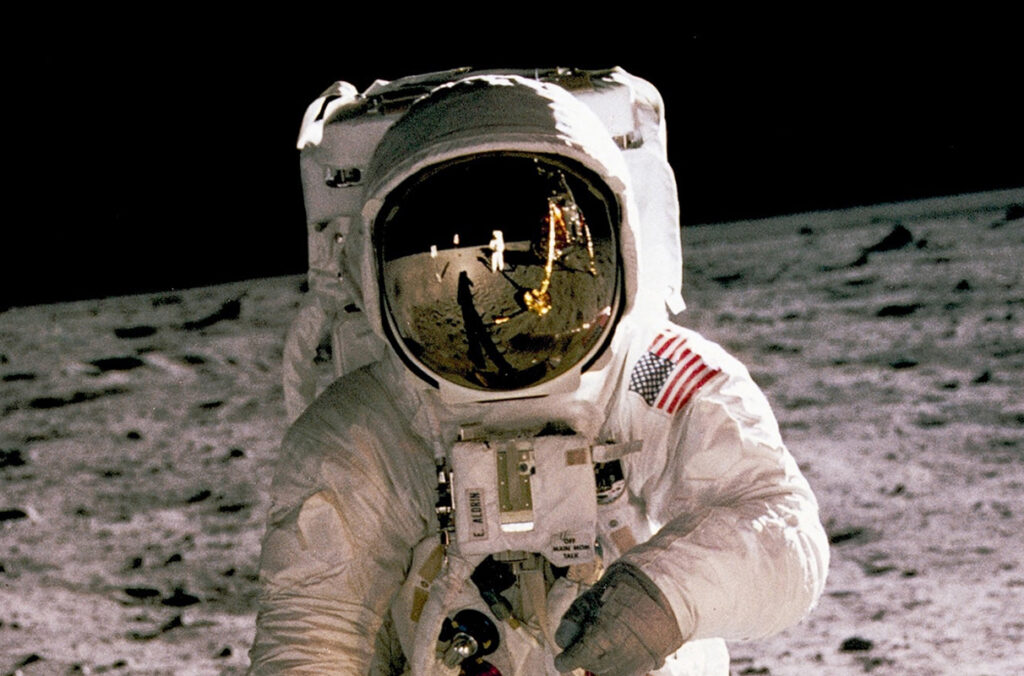
Washington State University researchers will play a pivotal role in a newly established consortium dedicated to better understanding biological responses to conditions found beyond Earth’s orbit.
The Biology in Space: Establishing Networks for DUrable & REsilient Systems Consortium, or BioS-ENDURES, is a partnership between WSU, the University of Washington and Pacific Northwest National Laboratory. It’s made possible by a provision in the Fiscal Year 2024 federal spending bill authored by Washington Sen. Patty Murray, which led to a $2.5 million NASA award to establish the consortium.
“As chair of the Senate Appropriations Committee, I am writing our funding bills to invest in Washington state’s growing innovation economy,” Murray said in a press release. “By establishing this scientific consortium here in Washington state, we are laying the groundwork to bring even more private and federal investment to our state’s growing aerospace industry. If we want to maintain our competitive edge, we have to stay at the forefront of scientific discovery — and this federal research partnership will help us do that. Investing in scientific discovery is an investment that pays off — this is a next chapter in a story of inquiry, invention, innovation, exploration, and discovery of new frontiers.”
Scientists are hoping to learn more about how time spent in space affects the biology of animals and plants, as well as the microbial communities that co-exist within and alongside them. To do this, the consortium will focus on developing better biomarker monitors, building predictive models of human-plant-microbe robustness and interactivity, and applications of what’s learned to protocols that enhance quality of life in space.
This work will have a direct contribution to humankind’s ability to travel — and live — in space.
Michael Wolcott, interim vice president of research
Washington State University
“This represents an exciting opportunity for the state of Washington to continue building our capacity for critical research to understand and improve human-plant-microbial systems for space habitation,” Michael Wolcott, interim vice president of research at WSU, said. “This work will have a direct contribution to humankind’s ability to travel — and live — in space. WSU is thrilled to be part of this collaborative effort with our colleagues at the University of Washington and the Pacific Northwest National Laboratory and looks forward to continuing this work with NASA.”
“There are many stressors experienced in space, such as exposure to ionizing radiation, microgravity, or low oxygen conditions,” said Erica Crespi, professor in the School of Biological Sciences and co-investigator on the project. “This new consortium will foster new interdisciplinary research collaborations across institutions through symposia and seed grants to catalyze new discoveries that will allow animals and plants will overcome these stressors to thrive in space.” She added, “But because some stressors like circadian rhythm disruption and feelings of isolation occur both in space and on earth, we also expect to make advances in human health that will benefit people right here on the ground.”