Washington State University political science researchers received a Department of Defense Minerva Research Initiative grant to help counter destabilizing disinformation campaigns and violent extremism in African crisis regions.
Over the next five years, researchers will study social cohesion and collect data in 20 communities across five African countries, each of which is dealing with a democracy in crisis and issues of domestic unrest and foreign interference.
The result will be one of the most complete over-time data sets of its kind and a predictive modeling tool designed to provide actionable insights into group and community dynamics. These insights can then be used to inform and improve anti-radicalization interventions and efforts to foster positive group formation in Africa and around the world.
“Our work will provide publicly available data that can help local NGOs, think tanks, and international development organizations seeking to strengthen democracy better understand how social cohesion can shield communities from anti-democratic threats,” said Jacob Lewis, lead researcher for the grant and an assistant professor in the WSU School of Politics, Philosophy, and Public Affairs.
Social science for a safer world
At the heart of Lewis’ research is a powerful methodology known as social network analysis mapping or SNA mapping. Similar to how an individual’s connections on a social media platform are a reflection of their personal network, SNA mapping reveals relationships and connections both within and between communities, and explores the strength, direction, and value of those connections.
“This is cutting-edge social science research,” said Lewis. “The goal is to provide critical information about how to define and measure societal cohesion across multiple levels—national, regional, and local—and be able to examine how societal cohesion affects the susceptibility of specific countries and communities to disinformation.”
The project will pair extensive on-the-ground field research in Nigeria, Niger, Mali, Zimbabwe, and South Africa with deep, desk-based research to measure disinformation, radicalization, and adversary influence; measure and predict societal cohesion; and better understand how cohesion influences group formation.
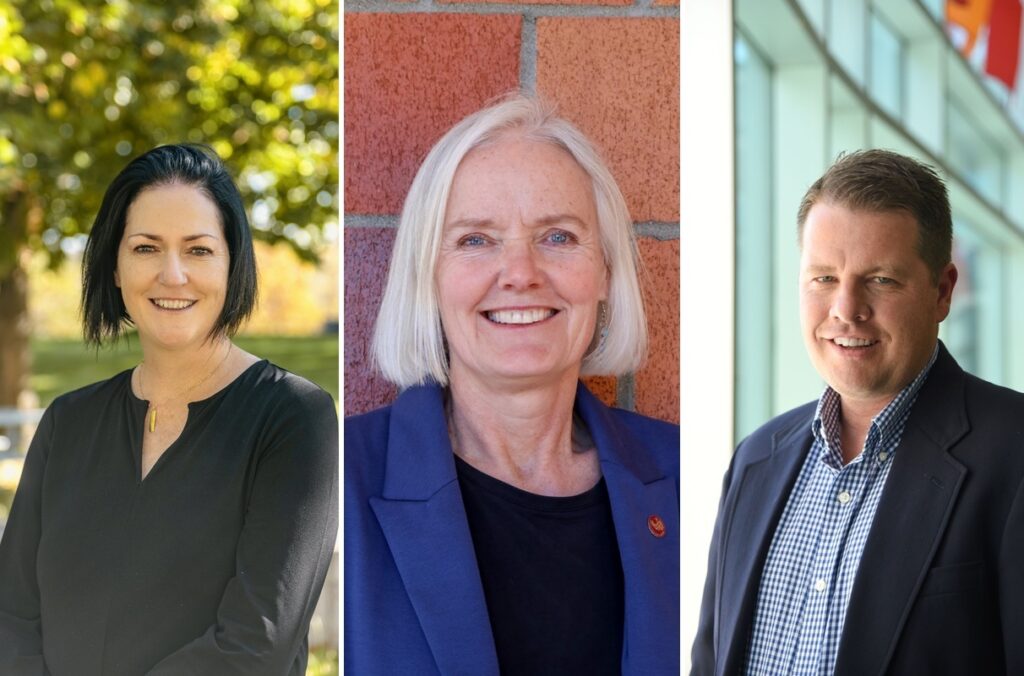
The research team includes Lewis, political science faculty colleague Anthony Lopez, and PhD candidate William Favell. Collectively they have more than 20 years of experience researching and working with communities in Africa. Lewis and Favell have previously conducted societal cohesion work across multiple countries in Africa; Lopez is an expert on the political psychology of collective action dynamics in warfare, with specializations in radicalization, political manipulation, and hybrid warfare.
“In a rapidly changing world, social science is essential for making sense of human behavior, guiding informed decisions, and understanding societal progress,” said David Montgomery, director of social science in the Office of the Under Secretary of Defense for Research and Engineering which funds the Minerva Research Initiative. “We need to explore and better understand the complex social dynamics that shape our world and provide insights useful to policymakers and others concerned with the social context of security.”
The WSU project is one of 19 university-based grants recently awarded by the Minerva Research Initiative to support basic research in social and behavioral sciences on topics relevant to U.S. national security.
Media Contacts
- Jacob Lewis, WSU School of Politics, Philosophy, and Public Affairs, 509-335-8701, js.lewis@wsu.edu