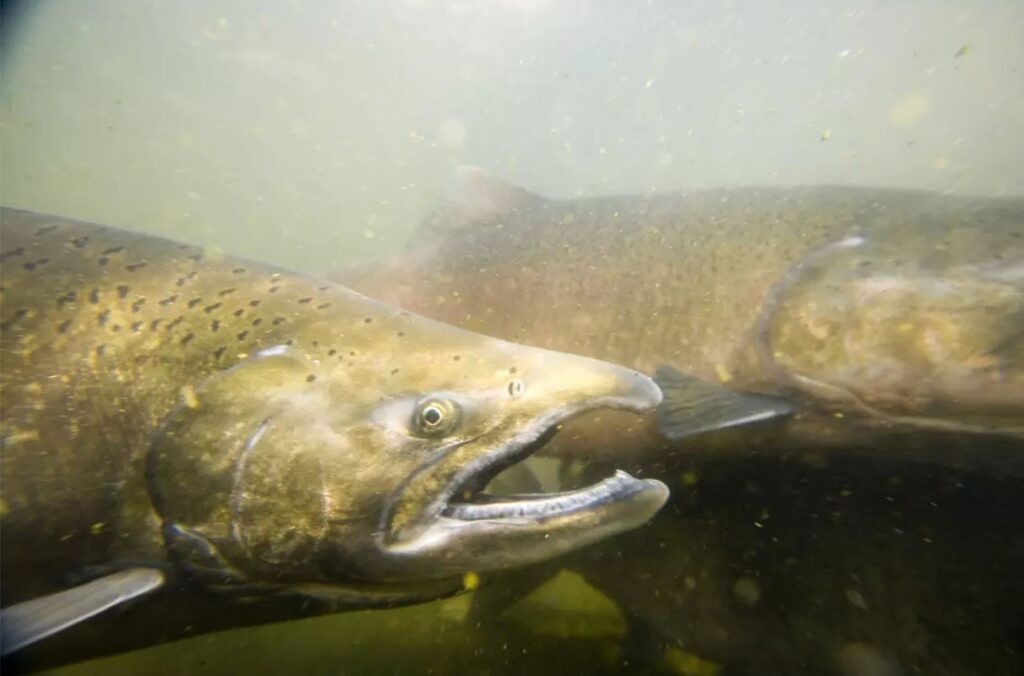
VANCOUVER, Wash. — Fish hatcheries are a critical part of the effort to restore salmon runs in the Pacific Northwest. But hatchery fish are less likely than wild ones to return from the ocean to spawn — and one reason may be hatchery noise.
That’s a key finding of new research from Washington State University Vancouver showing that hatchery-raised fall Chinook salmon that started life in noise-protected environments were more likely to complete the journey to the ocean and back than fish raised in noisy ones.
The work indicates that noise in a fish’s early life disrupts its ability to survive in the wild, and that the use of sound-dampening techniques in hatcheries could improve return rates.
“The hatchery system is really critical for the nation, ecologically and economically,” said Rikeem Sholes, a U.S. Fish and Wildlife fisheries biologist who led the research project as part of his graduate studies at WSU. “We spend millions upon millions of dollars raising these fish for various reasons, so we want to make sure that we’re sending them out with all their systems working so they have the best chance of making it back.”
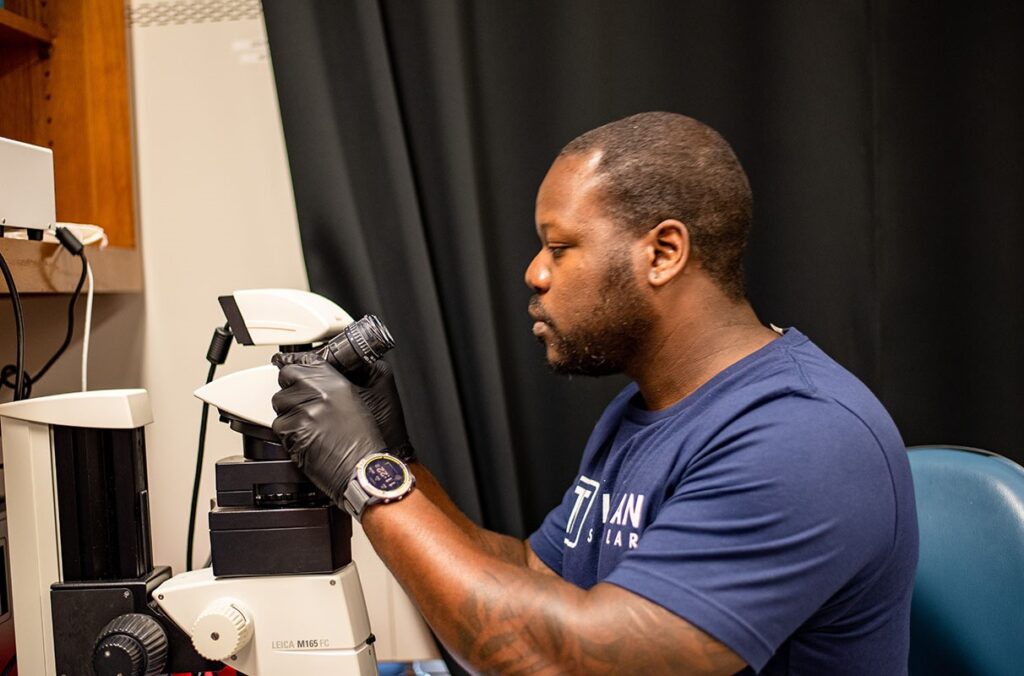
The findings were published in the North American Journal of Fisheries Management. Sholes conducted the research while completing his doctorate at WSU, working in the lab of Allison Coffin, who left WSU for a position at Creighton University in 2024. Coffin was a co-author of the new publication, along with Jonah Piovia-Scott, an associate professor of biology at WSU Vancouver, and a group of former undergraduates at WSU Vancouver: Teyline McLean, Alexandra Pederson, Susannah Schloss, and Olivia Molano.
The National Fish Hatchery System, comprised of 71 facilities nationwide, releases 125 million fish each year to help foster economic development, fulfill tribal trust obligations, and bolster endangered fish runs. However, hatchery-raised fish often exhibit lower fitness and survival compared to wild fish, and scientists are exploring hatchery environments for potential explanations.
One of those elements is noise. Hatcheries are noisy operations, with pumps, generators and aerators. They are also sometimes located near other sources of sound, such as roads. Past studies have linked noise exposure to hearing loss in some fish, disrupting their ability to perceive acoustic signals and survive in the wild.
For the recent project, researchers studied Tule Fall Chinook salmon raised at the Spring Creek National Fish Hatchery on the Lower Columbia River — a little more than an hour away from the WSU Vancouver campus. Tule Fall Chinook in the Lower Columbia are listed as threatened under the Endangered Species Act. The hatchery is near a train track and a state highway, so there is a relatively high amount of ambient noise.
Fish raised in a quiet environment were slightly more likely to return than those raised in ambient noise, and nearly twice as likely as those reared with continuous white noise.
In early 2022, the researchers began evaluating salmon fry raised in three separate environments: one where the noise was dampened with padding and other methods; one where white noise was played continuously; and one with the normal ambient noise of the hatchery.
The team examined the fish during the three months before their release. To their surprise, noise levels were not associated with significant differences in sensory development or swimming behavior, though there were moderate differences in fish size.
However, when they began tracking the return of adult salmon, they saw significant differences. Over the course of two years, fish raised in the quiet environment were slightly more likely to return than those raised in ambient noise, and nearly twice as likely as those reared with continuous white noise.
“That surprised me the most — when they started coming back, we saw differences in the return rates when we had seen very few differences as they were heading out to sea,” Coffin said.
The researchers said that more study is needed to tease out just what it is that causes that difference. It does suggest that noise-dampening techniques, such as padding tanks with felt liners, could improve return rates, but there is a great variety among hatcheries and any such solutions would depend on each individual facility.
Media Contacts
- Allison Coffin, Creighton University , AllisonCoffin@creighton.edu
- Rikeem Sholes, U.S. Fish & Wildlife Service, rikeem_sholes@fws.gov
- Shawn Vestal, WSU News & Media Relations, shawn.vestal@wsu.edu