For people living in shelters or on the street, getting medical care can be difficult or impossible. A new federal grant will help Washington State University train doctors to bring that care directly to them.
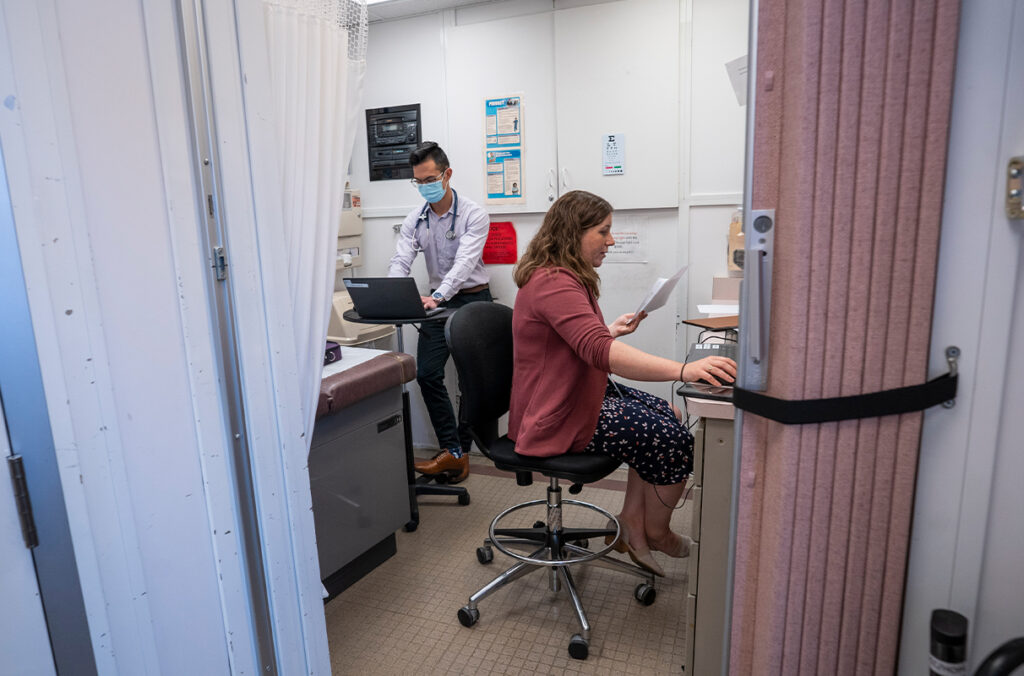
The $2.5 million, five-year grant from the Health Resources and Services Administration will establish street medicine rotations in Everett and Spokane for residents in the Internal Medicine Residency Program, a partnership between WSU’s Elson S. Floyd College of Medicine and Providence Regional Medical Center Everett. Each year, six to 12 doctors will learn to care for people experiencing homelessness in mobile clinics, shelters and other settings outside a traditional doctor’s office. It is this residency program’s first federal grant.
“When you see patients in the place where they live, you truly see the barriers they face, like not having refrigeration for medications or transportation to pharmacies,” said Dr. Delaney Goulet, associate program director of the Internal Medicine Residency Program. “You realize how much you need to change a treatment plan to actually get them the care they need.”
The training comes as homelessness and opioid use continue to strain communities across Washington. In Snohomish County, which includes Everett, the number of people experiencing homelessness rose 35%, from 858 in 2018 to 1,161 in 2024. Statewide, the number increased by more than 40% during the same period, from about 22,000 to 31,554. Meanwhile, opioid overdose deaths in Snohomish County nearly tripled from 2017 to 2023, reflecting a broader statewide crisis that claimed more than 2,800 lives in 2024.
“I would consider the two street medicine rotations a great success if they help our residents feel more confident in providing excellent care to people experiencing homelessness, whether they are seeing them in the hospital, in clinic, or in an outreach setting,” said Dr. Elizabeth “Izzy” Westling, a core faculty member who served as the grant’s principal investigator and took the lead on the grant application.
WSU faculty member Dr. Luis Manriquez and WSU clinic-based community organizer Riley Irish also helped develop the grant and are key members of the implementation team, with Manriquez coordinating the partnership with CHAS Health.
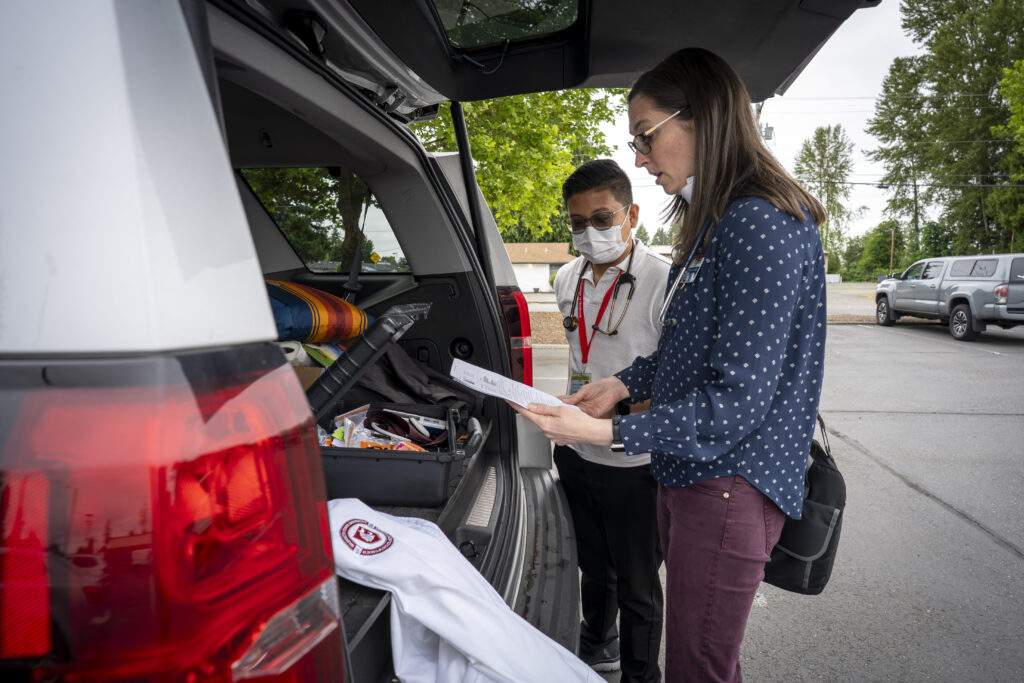
Residents in the new program will be able to choose between two rotations, where they will gain hands-on experience treating patients while learning how unstable housing can complicate even basic medical care. In Spokane, they will spend a month working with CHAS Health, which operates one of the most innovative street medicine programs in the state and leads the Cascadia Street Medicine Alliance.
In Everett, residents will work with several community organizations. They will provide care through Mercy Watch’s mobile medical van, treat patients at Conquer Clinics’ Health Engagement Hub and join Compass Health teams that bring behavioral health services to people who have difficulty reaching traditional clinics.
Dr. Matthew Hansen, program director of the Internal Medicine residency program, said the experience will help residents understand how factors outside a doctor’s office affect a patient’s health and become comfortable providing care in nontraditional settings.
“Sometimes the barrier for a practicing physician who might volunteer is discomfort in those settings,” Dr. Hansen said. “If we expose trainees early in their careers, it’s more likely they’ll practice that sort of medicine in the future and broaden the impact of our graduates on the community.”
The Everett residency program opened in 2021 with a goal of training doctors to serve Washington’s rural and underserved communities. Its primary care clinic began as a place where hospitalized patients without a regular doctor could receive follow-up care after discharge. Many of those patients face housing instability or live in shelters, vehicles or other temporary settings.
Program leaders hope the rotations will ultimately strengthen street medicine services in Everett, Spokane and elsewhere across the state. Dr. Goulet said the program will also explore whether bringing preventive care directly to people experiencing homelessness can improve their health and reduce costly hospital visits, helping make the case for continuing the work after the grant ends.
The street program is being developed with CHAS Health, Compass Health, Mercy Watch, Conquer Clinics, the Snohomish County Health Department and the Community Health Center of Snohomish County.