A Washington manufacturer increased production of one of its recreational vehicle hitches from about 30 per day to more than 200 after working with Washington State University students and faculty.
The gains emerged from two new industry-sponsored mechanical engineering courses that paired WSU students with employees from Torklift International. Together, they examined how the company designs and manufactures its products, then identified ways to improve efficiency without sacrificing quality.
“We have only scratched the surface of what we learned in those classes, and it has completely flipped our company 180 degrees,” said Joel Crawford, vice president of Torklift. “The students had all kinds of outside-the-box ideas, which was awesome because we were inside the box.”
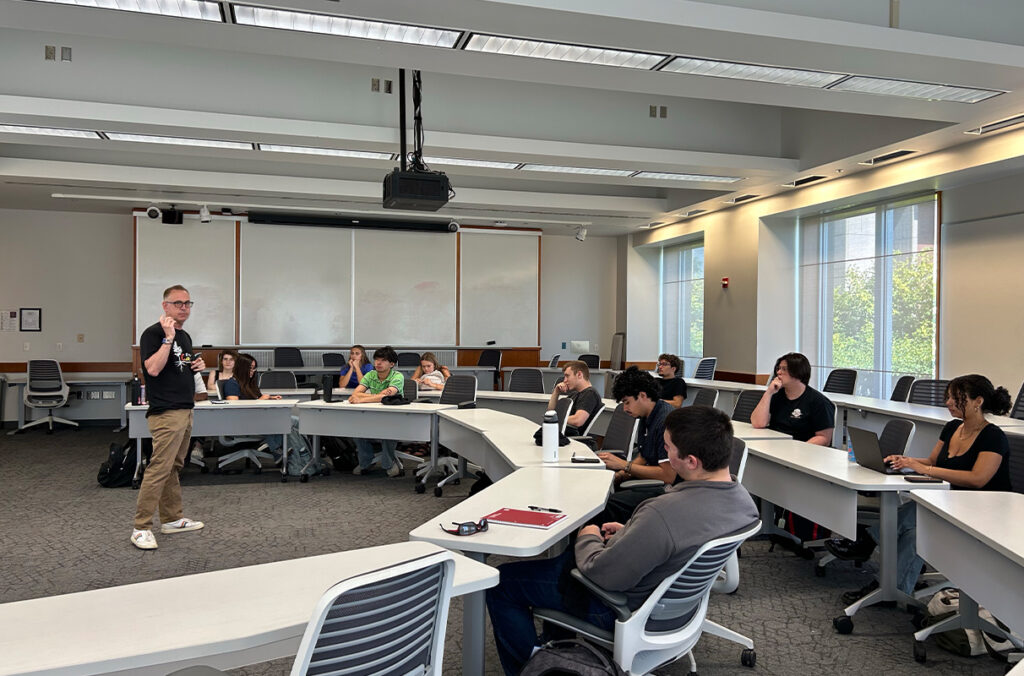
Students partnered with Torklift during the fall 2025 and spring 2026 semesters through two courses: Value Stream Engineering and Lean Manufacturing, and Design for Manufacturing. Company employees enrolled as nondegree-seeking students and participated alongside their WSU counterparts.
The courses were taught by Arda Gozen, George and Joan Berry Associate Professor in the School of Mechanical and Materials Engineering, and adjunct professor Darin Aaby.
Torklift is a family-owned manufacturer of RV components that began in Kent in the 1970s. The company now employs about 180 people at its Kent and Royal City locations and holds 13 patents.
Learning alongside industry
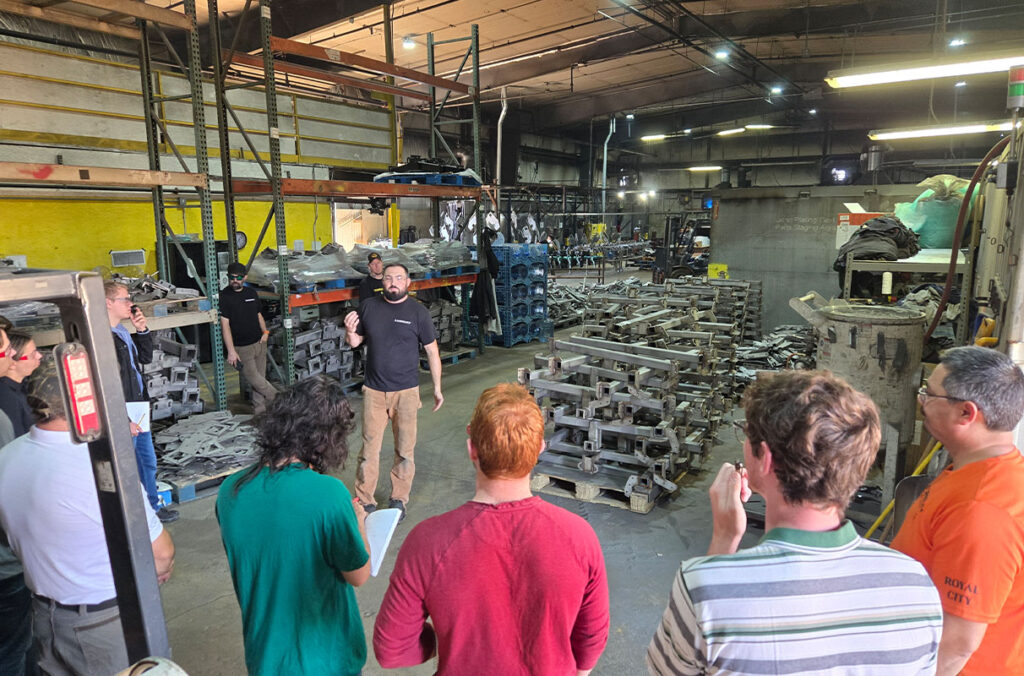
During the fall course, students studied a patented RV stair system manufactured at Torklift’s Royal City plant. They disassembled the product, examined each stage of production and developed a plan to improve the process. They also visited the facility to see the operation firsthand.
Torklift employees joined the course and worked through the same problems with students, explaining what was happening on the factory floor and responding to ideas in real time.
“They provided the industry perspective while students discussed issues back and forth,” Gozen said. “It was extremely fruitful.”
Julie Wilson, who graduated from WSU last spring, worked on the stair system as part of a team seeking to make it safer for people entering and exiting RVs.
“For me, the most valuable part was being able to work with real-life problems and people,” Wilson said. “Those types of experiences allow you to have real-world experience before you get out.”
Measurable production gains
The spring course included 69 students from WSU and its industry partners. Their project focused on redesigning both a Torklift hitch and the process used to manufacture it.
“We taught them the principles of designing a product while thinking about the manufacturing implications,” Gozen said.
Students evaluated how the hitch moved through production and proposed changes to improve its speed, cost and rate of manufacture while maintaining quality. After applying the principles covered in the course, Torklift increased production from about 30 hitches per day to more than 200.
“There is an immediate, measurable impact on a local industry and a small business in Washington,” Gozen said.
For Crawford, the physical changes to the hitch represented only part of the course’s value. The larger shift came from breaking down the company’s processes and reconsidering how work moved through the plant.
“We had never run it like that, and having the outside perspective of the students and the questions they asked sparked different theories on how we needed to attack it from the Torklift perspective,” he said.
Torklift is continuing to restructure parts of its operation around what employees learned, Crawford said, though changing long-standing practices takes time.
“It’s getting a whole herd to change direction and utilize information that we learned in a four-month period,” he said. “This will allow us to hit proper numbers that we’ve never been able to hit.”
Expanding the model
The courses train current and future members of Washington’s manufacturing workforce while helping a regional company solve production challenges.
The program will be offered again this fall, with the longer-term goal of developing it into a manufacturing capstone that gives more students sustained experience working alongside industry.
“We’re pushing for a long-term vision of being more industrially adjacent, project-based learning,” Gozen said.