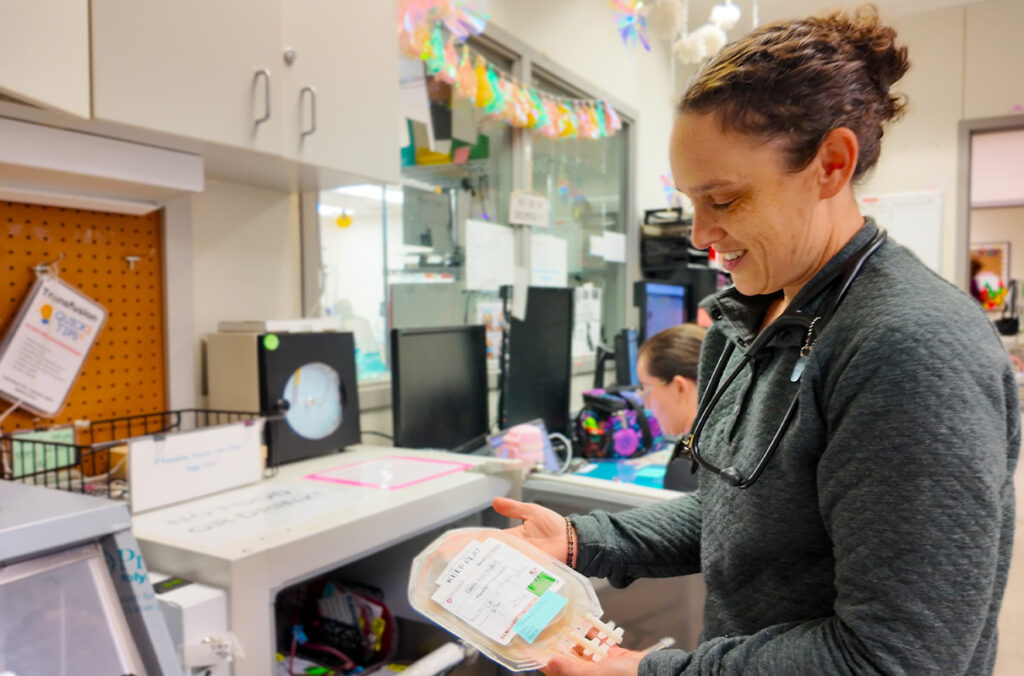
PULLMAN, Washington – Veterinarians often have limited access to one of the most effective tools for controlling life-threatening bleeding complications in dogs: platelets.
A study from Washington State University’s College of Veterinary Medicine could help change that by extending how long the specialized blood cells can be stored while still retaining their ability to form clots and prevent bleeding.
Published in the Journal of Veterinary Internal Medicine, the study found canine platelets can be processed, refrigerated and stored for up to three weeks while remaining effective in treating or preventing bleeding in the dogs studied, far exceeding the few days typically possible with traditional storage methods at room temperature. The findings represent the first clinical evidence that cold-stored platelets can be used effectively in dogs.
“It is hard to overstate how important the ability to transfuse platelets is,” said Dr. Jillian Haines, a small animal internal medicine veterinarian and director of the WSU Veterinary Teaching Hospital’s blood bank who led the research. “Many of us have seen patients die from bleeding complications because there was simply nothing we could offer them. We went from having essentially nothing available to now having a really viable product that we can use.”
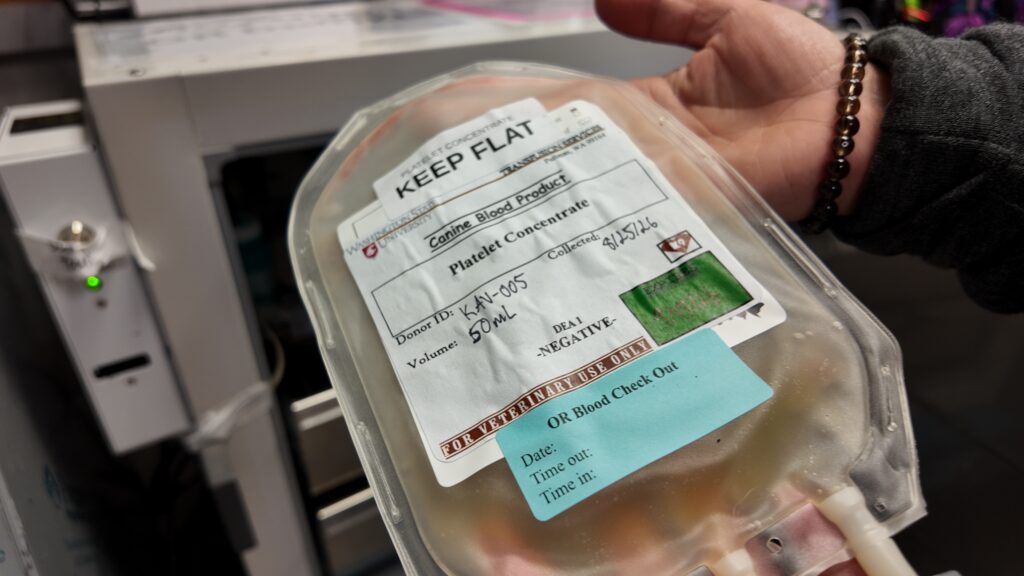
Platelet transfusions are often one of the few treatment options available for dogs experiencing severe bleeding or for those at high risk of hemorrhage due to immune-mediated thrombocytopenia, cancer, severe inflammation, trauma and other conditions.
For decades, though, veterinary professionals have operated under the assumption that platelets lose their effectiveness once refrigerated, leading to a reliance on platelet products that remain viable for only a handful of days while needing to be stored under constant agitation at room temperature.
Haines has been studying the potential of refrigerating platelets for years. Her earlier research showed refrigerated platelets could remain functional for up to three weeks in storage, however, because the products had not been tested in clinical patients, researchers still did not know whether they would be effective in treating bleeding.
The new study set out to answer that question. Her team evaluated the effectiveness of cold-stored platelet concentrates in 24 dogs being cared for at the WSU Veterinary Teaching Hospital. The platelets were administered to treat active bleeding, support surgeries and diagnostic procedures that otherwise would have carried significant bleeding risks, or to help manage severe hemorrhage. The study found the products improved bleeding or helped prevent bleeding complications in 70% of cases, and no transfusion reactions were documented.
In addition to their demonstrated clinical results and extended shelf life over traditional platelet products, Haines said cold-stored platelets are also less susceptible to harmful bacterial growth, do not require constant agitation and can be easily shipped.
The storage method requires only minor changes to existing blood-processing procedures, potentially making it easier for blood banks and veterinary hospitals to easily produce the products. WSU now routinely maintains a supply of cold-stored platelets at its blood bank. Haines said she has already trained veterinarians and blood bank personnel from other institutions on the technique, and interest is growing.
Haines hopes to continue researching how to determine optimal dosing, develop better ways to measure effectiveness in individual patients and evaluate whether the products remain effective beyond three weeks of storage.
“It’s not needed often,” Haines said, “but when it is needed, it is the only option. These products can be lifesaving.”
Media Contacts
- Jillian Haines, WSU College of Veterinary Medicine, jmhaines@wsu.edu
- Devin Rokyta, WSU College of Veterinary Medicine communications, 509-335-1911, devin.rokyta@wsu.edu