The Washington State University Psychology Clinic has expanded services and offerings at its Pullman-based location thanks to the generosity of a private donor committed to mental health. The donation will fund roughly 14 academic student employees over five years to serve as clinic assistants providing direct services to WSU students, as well as members of the wider community.
“These clinic assistants are advanced graduate students in our clinical psychology doctoral program, and the donation will cover their stipends while the graduate school has generously agreed to provide tuition waivers for these graduate students,” said David Marcus, chair of the WSU Department of Psychology.
Funds from the donation have also been used to help create a college-wide mental health online training course for faculty, staff, and students.
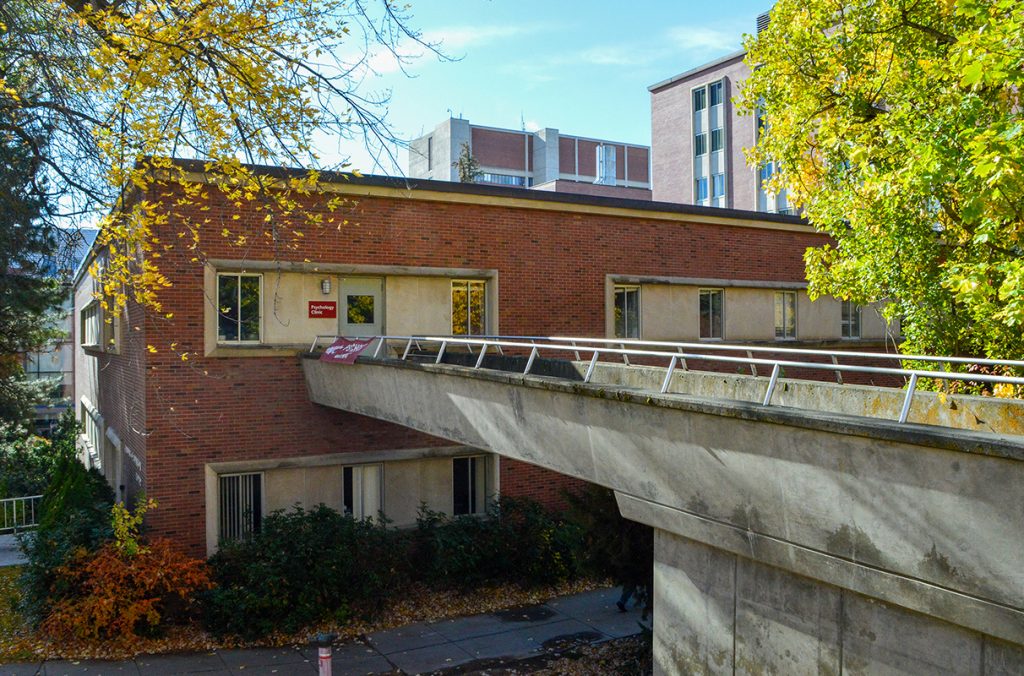
The WSU Psychology Clinic is part of the Department of Psychology, which hosts a APA-accredited doctoral program in clinical psychology. The clinic provides both psychotherapy services and psychological assessment services to the WSU student body as well as communities across the Palouse.
“Our training program is based on the scientist-practitioner model, meaning that our students are training to become both scientific researchers as well as clinicians working with clients,” said Cornelia Kirchhoff, director of the Psychology Clinic and a clinical associate professor in psychology.
Graduate students in the clinical psychology PhD program typically go through a multi-year clinical training sequence. The first year of the doctoral program focuses on classes in clinical skills and therapeutic approaches, while in the second year students are placed in rotations at Counseling and Psychological Services (CAPS). In their third year, some of these students are hired as clinic assistants and provide direct service to clients. Other clinic assistantships may be assigned to students during their fourth and fifth year rotations. Advanced students also engage in clinical practice at locations outside of the university.
“Faculty members who are licensed clinical psychologists supervise students in the clinic, providing oversight and discussing how the session went and what to prepare for the next session,” said Kirchhoff. “We use a developmental model for training and want our graduate students to feel like they can handle a range of clients. In the clinic most of the services are provided by the student therapist.”
Professors in the clinical psychology program say the clinic plays a vital role in training future psychologists while providing mental health services to Palouse residents. “It’s a great service that the Psychology Clinic provides to the community, but I want to acknowledge that our clients are helping to train our student clinicians by using these services,” said Walter Scott, professor and director of the clinical psychology training program. “The community is really supporting our educational mission and training future clinical psychologists by using this community resource.”
Along with the expanded services, the Psychology Clinic has also been developing a new mental health awareness training course in conjunction with the College of Arts and Sciences. Kirchhoff and doctoral student Arianna Gonzales worked to prepare a self-guided training for faculty, staff, and graduate students to learn how to spot mental distress in students or fellow community members.
“Mental health is essential to students’ ability to learn, build relationships, and succeed in college, and supporting their wellbeing is more important than ever,” said Courtney Meehan, dean of the College of Arts and Sciences. “Our college reaches undergraduate students across WSU through the courses we teach, giving us an important role in recognizing when students are struggling and connecting them with support when they need it most. Donor generosity is helping us strengthen that work while expanding access to affordable care in our community and preparing graduate students to provide it.”
The services provided by the Psychology Clinic extend far beyond the clinic walls. The clinic also supports Washington State’s Free Farm Stress Counseling Voucher Program, which provides confidential online therapy services for farmers, farm workers, and their families for no cost.
“We’re serving the Washington state agricultural community in partnership with this amazing program, which originated with Don McMoran in WSU Extension in Skagit County,” said Kirchhoff. “I’m now training our clinic assistants to be culturally responsive to our agricultural communities, because the more students we can have work with these populations, the better we can serve our agricultural communities across the West.”
To learn more about the WSU Psychology Clinic and its available therapy and assessment services, visit the clinic’s website.