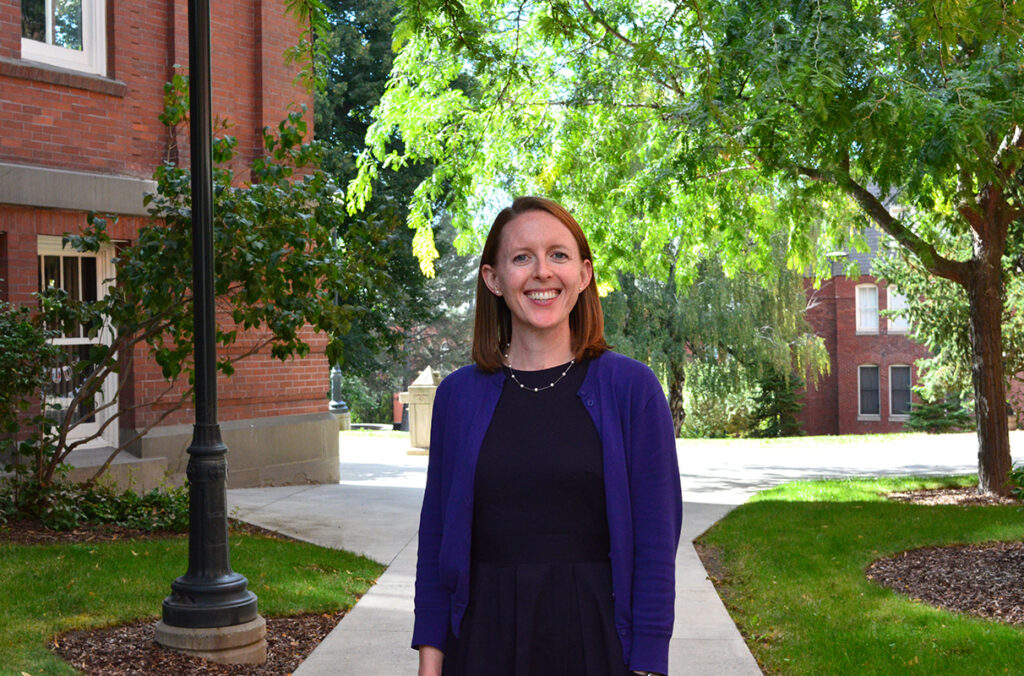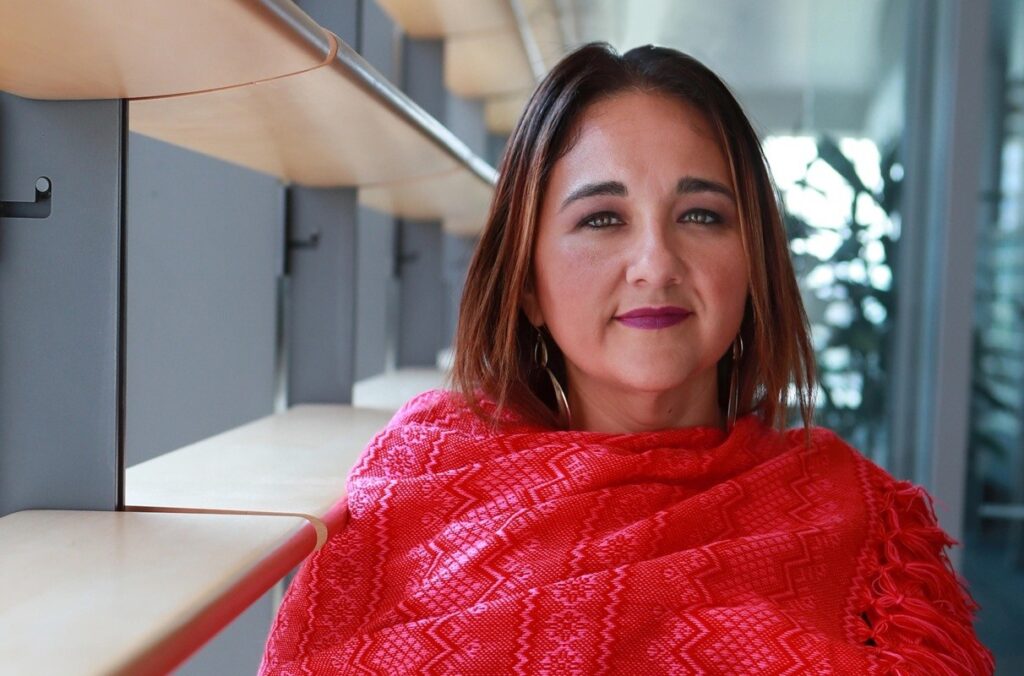
Kimberly McKeirnan didn’t set out to battle a pandemic.
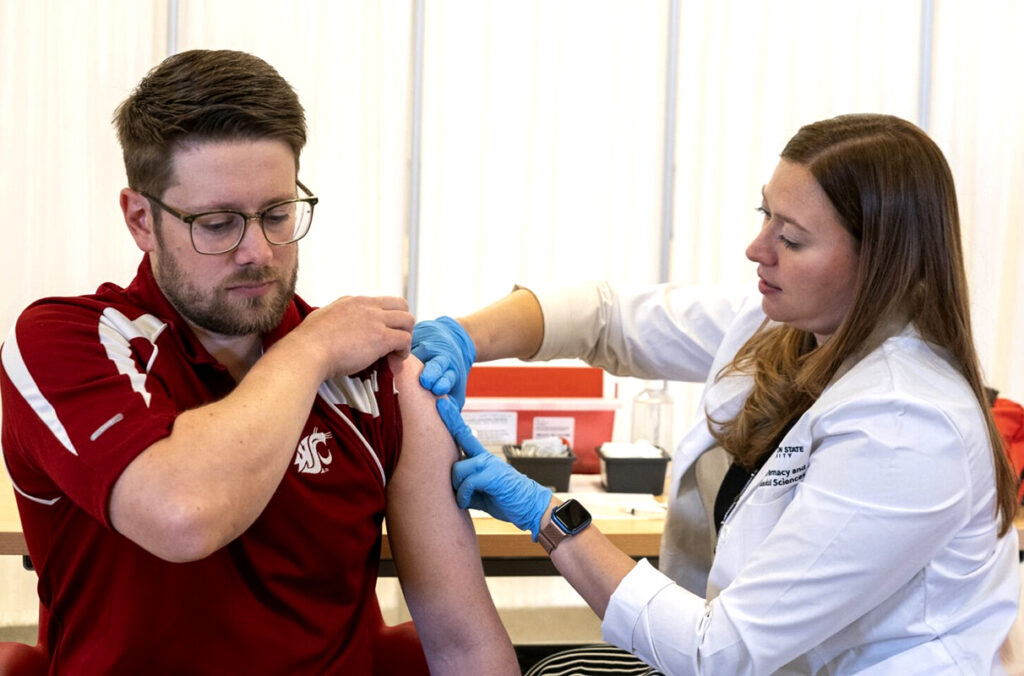
She began with a simple question: Why not employ pharmacy technicians to give vaccinations, to help overworked pharmacists and improve patient care?
Other medical assistants give injections, after all. Parents give shots to their diabetic children, and many people give themselves shots. Also, around the time this possibility was germinating in her mind, she learned that Idaho was considering making it legal for pharmacy techs to give vaccines.
She responded by creating a training program in 2016 that has since been used by some 170,000 pharmacy techs, resulting in millions and millions of vaccinations while bringing more than $10 million in royalties to Washington State University — the second-most of any commercialized innovation at the university. The program gained steam during the pandemic, adding a crucial new tool just as the need for rapid, large-scale vaccinations became paramount.
“As a researcher, you really hope to have an impact on your profession,” said McKeirnan, a professor and interim chair of the Pharmacotherapy Department, in the College of Pharmacy and Pharmaceutical Sciences. “It was pretty amazing to feel like, in some small way, I got to be part of that huge effort all over the world to vaccinate people. Maybe there’s somebody out there who got vaccinated by a pharmacy technician who wouldn’t have if it wasn’t for the work that I was doing. That just blows my mind.”
It was pretty amazing to feel like, in some small way, I got to be part of that huge effort all over the world to vaccinate people.
Kimberly McKeirnan, professor and interim chair
Pharmacotherapy Department
WSU College of Pharmacy and Pharmaceutical Sciences
The seeds of McKeirnan’s program lay in the high regard she developed for pharmacy techs she worked with as a pharmacist in Spokane, before she joined the WSU faculty in 2013. McKeirnan found was that they were often connected to the community in powerful ways.
In Spokane, for example, she had techs who came from the city’s Russian and Ukrainian communities. Their ability to navigate cultural and language differences was important in connecting with patients. Such relationships can be important in overcoming vaccine hesitancy, for example.
In addition, McKeirnan thought that adding meaningful tasks to the techs’ jobs might help keep them in their positions longer.
“I worked with pharmacy technicians who were just excellent people, but they very much hit a ceiling in what they’re able to do,” she said. “You see really good ones kind of get bored and move on to other careers.”
Initially, McKeirnan thought her training regimen might be offered at WSU, perhaps as a certification program. But a longtime mentor, Linda Garrelts MacLean, a former professor and administrator in the College of Pharmacy and Pharmaceutical Sciences, helped her see the possibilities of taking it to a wider market.
“I couldn’t have done what I did without that mentorship,” said McKeirnan. “I’ve had excellent male colleagues and mentors as well, but there’s something really special about looking at your mentor and feeling like they look like you, and maybe someday that’s a person that I aspire to be.
“So I think it is important for newer women faculty to have, if possible, a woman faculty mentor, because they’ve gone through the same challenges with work-life balance, questions about having a family, and how do you manage that.”
McKeirnan said two recent PharmD graduates were important to the work as well — Kyle Frazier, who is now a pharmacist, and Taylor Bertsch, who is now on the pharmacy faculty at WSU. The program was developed in partnership with the American Pharmacists Association.
The program took root before the COVID-19 pandemic, but it expanded rapidly once vaccinations became available in late 2020. Congress passed legislation allowing pharmacy techs to give shots, which eliminated what had been a patchwork of different regulations from state to state.
McKeirnan’s training program was there to meet the moment. Driven by partnerships with Walgreens and CVS, it put tens of thousands of new vaccine-giving techs into the pandemic fight.
She is continuing to do research linked to pharmacy techs, canvassing them for their attitudes about using the program she created.
“Of course, pharmacies want to know if it reduces attrition,” she said. “But I also want to know, does it create job satisfaction? So I’m interviewing technicians who have been vaccinators for a while to ask: Do you like this? Has it turned into yet another thing you have to do or does it make your day a little better?”