PULLMAN, Wash. – Washington State University professor Katrina L. Mealey has been elected a fellow of the National Academy of Inventors – a prestigious group of scientists that includes 27 Nobel laureates.
She discovered a potentially fatal gene mutation in dogs, developed a test for it and has established a unique program at WSU of individualized medical treatment for pets. Her nine national and international patents, licensed on four continents by eight different companies, have generated more than $1 million in royalties and licensing fees for WSU.
“Dr. Mealey’s research in veterinary pharmacogenetics has generated discoveries that truly are ‘bench to bedside’ and are used globally to prevent adverse drug reactions in dogs and cats,” said WSU veterinary college Dean Bryan Slinker. “Becoming a fellow in the NAI is quite uncommon for veterinarians, and we could not be more proud of this honor for Katrina and her team.”
Discovered MDR1 gene mutation
The academy cited her for demonstrating “a highly prolific spirit of innovation in creating or facilitating outstanding inventions that have made a tangible impact on quality of life, economic development and the welfare of society.”
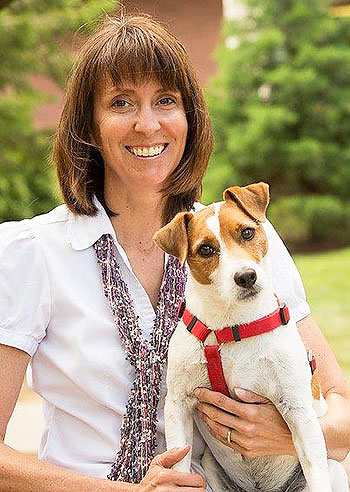
“While I am honored to be a fellow in the National Academy of Inventors, it is equally rewarding because this validates the impact of pharmacogenetics and precision medicine in the veterinary profession,” said Mealey.
She discovered the MDR1 gene mutation and is the inventor of a subsequent genetic test for the mutation. Knowing a pet dog has the mutation prevents it from suffering from a profound and potentially fatal toxicity to certain medications a veterinarian might normally administer.
She launched the world’s first coordinated research effort in individualized veterinary medicine. The program in individualized medicine (PrIMe) has established WSU as the preeminent institution in veterinary pharmacogenetics.
Optimizing drug therapy for individual patients
PrIMe employs a dedicated core faculty, technical staff and collaborators in the WSU College of Veterinary Medicine that optimizes drug therapy for individual patients. PrIMe faculty share their expertise via education and outreach activities for veterinarians, breeders and the pet-owning public worldwide.
The PrIMe team is changing the way animal research is conducted: “We are developing novel ways to determine the effects of drugs within the population of consenting client-owned animals, not research animals,” explained professor Michael Court, a veterinary anesthesiologist and researcher. “Ideally, we want to be able to provide benefit to dogs and cats with the full knowledge of their owners by providing optimized medicines and dosing regimens.”
PrIMe is focusing on animals sensitive to known anesthetic agents and searching for gene mutations that, like the MDR1, can be used to predict and prevent serious adverse drug reactions. Also under study, and of perhaps greater concern, is the class of drugs known as non-steroidal anti-inflammatories or NSAIDs.
The NAI is a nonprofit member organization comprising U.S. and international universities and governmental and nonprofit research institutes. It has over 3,000 inventor members and 757 fellows from 229 institutions.
The induction ceremony for the new class of NAI fellows is scheduled for April 5-7 in Boston.
News media contact:
Charlie Powell, WSU College of Veterinary Medicine communications, 509-335-7073, cpowell@vetmed.wsu.edu