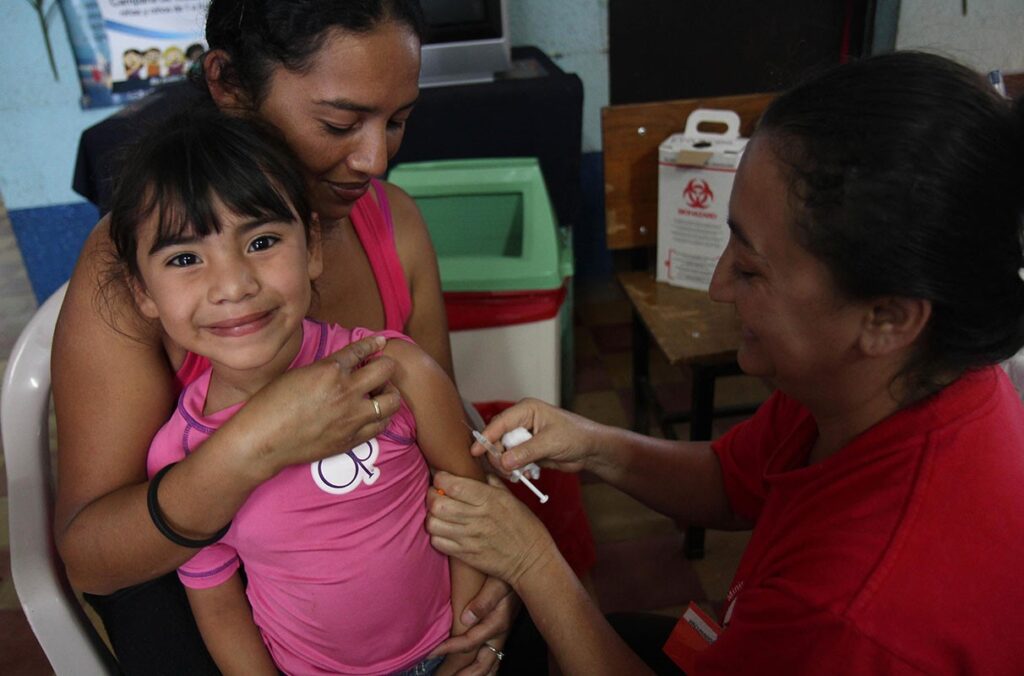
PULLMAN, Wash. — Children in Guatemala who received a common vaccine that helps prevent pneumonia were less likely to carry antibiotic-resistant bacteria, according to a new study led by Washington State University researchers.
The team examined whether rotavirus (RV) and pneumococcal (PCV13) vaccines reduce gut colonization by a group of bacteria that includes Escherichia coli and resists critical antibiotics used to treat severe infections. Colonization occurs when the bacteria are present in the body, often in the gut, without causing illness, yet they can persist and later cause infections or spread to others.
While rotavirus vaccine results were inconclusive, children under 5 who received the pneumococcal vaccine had significantly lower colonization rates. These antibiotic-resistant bacteria — known as extended-spectrum cephalosporin-resistant Enterobacterales (ESCrE) — were less common in vaccinated children largely because they made fewer visits to health care facilities, a factor previously linked to higher rates of antimicrobial-resistant bacteria. The team’s findings were published in the journal Vaccine.
Antimicrobial resistance is one of the world’s most urgent health threats, contributing to millions of deaths annually.
“Most vaccine studies on antimicrobial resistance focus on infection and how vaccines prevent illness and reduce antibiotic use, thereby reducing selection processes of antibiotic resistant bacteria,” said Dr. Brooke Ramay, lead author of the study and a researcher in WSU’s College of Veterinary Medicine’s Paul G. Allen School for Global Health. “We took a different approach by looking at colonizing bacteria and we found vaccination reduced antimicrobial resistance through a completely different mechanism: vaccination prevented clinic visits and resulted in a lower probability of colonization with antibiotic resistant bacteria. We think this may be because individuals had less exposure to environments where these resistant bacteria are present.”
Antimicrobial resistance is one of the world’s most urgent health threats, contributing to millions of deaths annually. Resistant infections are harder to treat, often require longer hospital stays and increase the risk of complications and death. Previous studies in Guatemala have shown that children who visited hospitals or clinics for illness were more than twice as likely to carry antibiotic-resistant bacteria, while antibiotic use itself was not found to be strongly associated with colonization.
The new study was conducted in Guatemala’s Western Highlands, where researchers analyzed stool samples, vaccination records and health data from 406 children.
Researchers were unable to conclusively determine the effects the rotavirus vaccine — which helps prevent rotavirus infection, a leading cause of severe gastroenteritis in infants and young children — largely because reports of diarrhea were scarce, likely due to recall bias. Ramay said the rotavirus vaccine may provide the similar indirect protective effects by preventing diarrhea and gastrointestinal inflammation, though it is important to collect clinical data on diarrheal events before any conclusions can be made.
Researchers also identified several additional factors that influenced colonization. Children who reported diarrhea in the previous month, for example, were significantly more likely to carry ESCrE. Researchers suspect this is due to inflammation in the gut, which creates conditions that favor the growth of hardy bacteria like E. coli.
On the other side, yogurt consumption appeared protective, suggesting beneficial bacteria from probiotic foods may help maintain a healthy gut environment and reduce colonization by resistant bacteria.
Environmental exposure also appears to play a role, as children from households that used land for agriculture had a higher risk of colonization, likely due to contact with soil and water contaminated by fecal matter from animals or humans. Ramay said her team plans to follow up with additional studies to better understand how agricultural land use and environmental exposure influence colonization with resistant bacteria.
The study was completed in partnership with the Universidad del Valle de Guatemala and was supported by the Centers for Disease Control and Prevention and Wellcome Trust, a charitable foundation focused on health research based in London.
Media Contacts
- Brooke Ramay, WSU College of Veterinary Medicine, brooke.ramay@wsu.edu
- Devin Rokyta, WSU College of Veterinary Medicine communications, 509-335-1911, devin.rokyta@wsu.edu