College students typically spend their summer breaks taking extra classes, working temporary jobs, or simply enjoying some much-deserved rest and relaxation.
Connor Reschke, Haley Boileau, and Josephine Gordon opted for a different approach. Representing the WSU Chapter of Engineers in Action, the three Cougs spent two months in Bolivia helping to bring clean water to the remote town of Altamira.
When the three WSU students arrived along with their peers from the University of British Columbia Okanagan and the University of Colorado Boulder, the town’s 150 or so residents had to walk two miles roundtrip to collect water at a nearby well. Upon their return, they needed to boil the water to make it safe to drink.
A video highlighting the summer project is available on the WSU Chapter of Engineers in Action’s Facebook page.
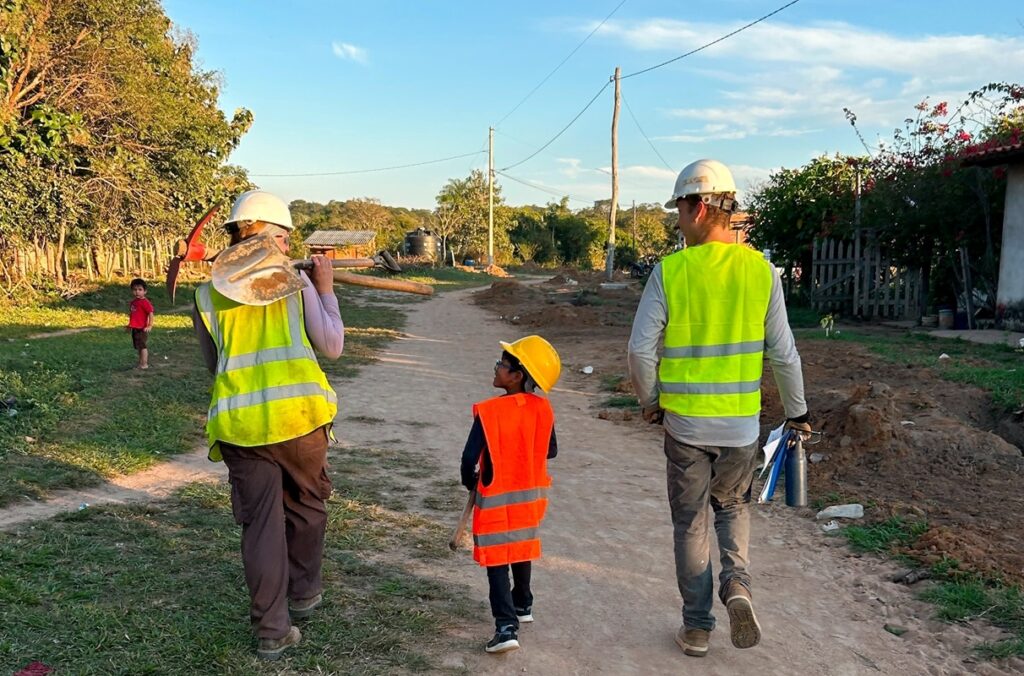
The students’ task was to design and build a gravity-fed water distribution system. Working six days a week for two months alongside the people of Altamira, the students fine-tuned two kilometers of trenches that had been dug prior to their arrival. Once the trenches were deep enough and level, the team laid pipes and made connections to 30 households as well as the school and community center and backfilled the excavated sections.
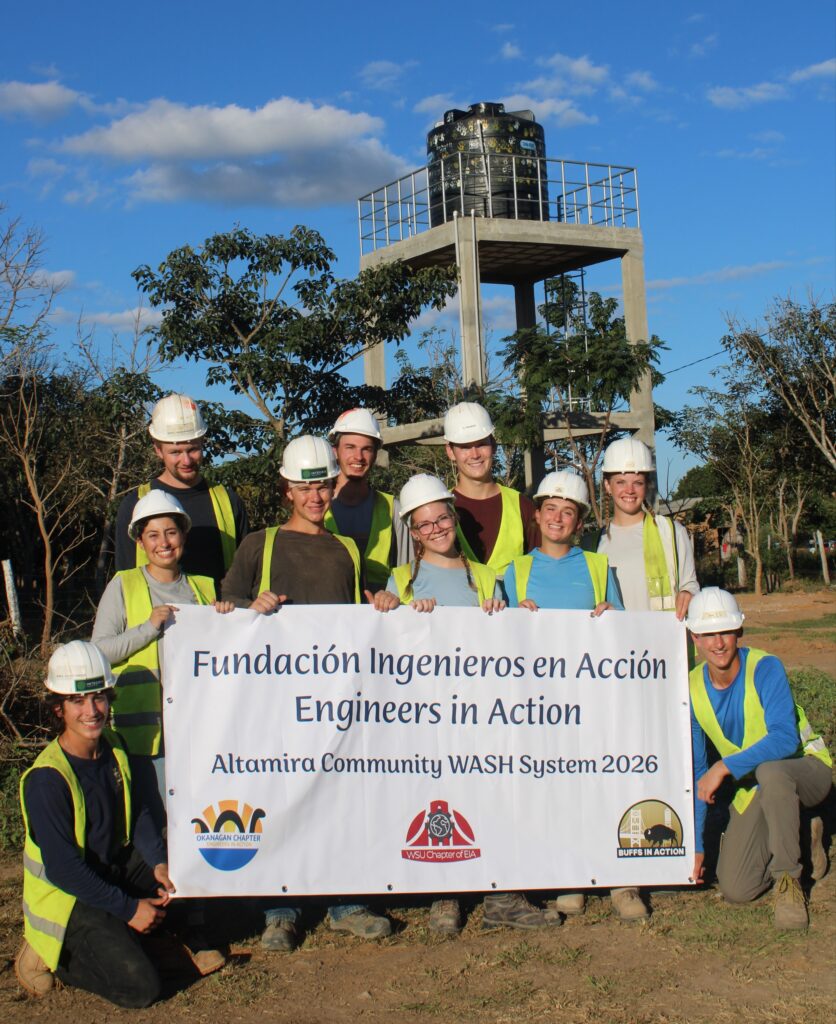
“One of the nice things with Engineers in Action is that these are community-led projects,” Reschke, the club’s president, said. “The students give their engineering input and design these projects and then we’re in the trenches with them, digging together, listening to music, and playing soccer at the end of the day.”
Projects like these also provide students with a vital opportunity to get out of the classroom and put their skills to work, according to Jonathan Steffens, a co-advisor to the WSU chapter.
“For most engineering students, they go through these four years of school learning a bunch of theory and math,” he said. “But the experience of going out into the world and using engineering in ways that meaningfully and visibly affect communities has a big impact. It’s a real concrete example of the kind of work they can do.”
The students working on the project lived in a donated house, spending their nights wrapped in sleeping bags covered in mosquito netting. Reschke quickly got over his lifelong fear of spiders as a matter of necessity. When they weren’t working, the students spent time watching the World Cup on the community TV as well as answering questions from the town’s curious kids.
“They would ask about English words and so we did some English and Spanish lessons back and forth, which I found very helpful,” Boileau said. “They also liked playing games and would come to the house and ask what we were doing if we were playing cards or while we were working.”
After the groundwork was laid, the students pressure-tested and chlorinated the water. Once they were sure the project was done, the students held a toast alongside the community to celebrate.
“It’s wonderful knowing that these kids were going to grow up with clean water,” Boileau said. “It was amazing to see how grateful the community was for us and the water. I know we went to the right place to help.”
While it was incredibly fulfilling to see the project completed, Reschke said it was also bittersweet knowing that their time together working on the project, eating meals and becoming a community was over, at least for now
The club raised approximately $15,000 through working at different athletics events and organizing fundraisers to make the trip to Bolivia possible. The WSU Chapter of Engineers in Action is hoping to continue to grow this fall and has already heard from more than 50 students interested in learning more.
Both Boileau and Reschke said the experience has only intensified their desire to use their engineering skills and training for the common good.
“My post-graduation plans are up in the air, but whatever I’m doing is going to be meaningful to a community,” Reschke said.
Boileau came to WSU wanting to study social work. While she pivoted to engineering, she maintains that desire to positively impact people.
“My hope is to work for a non-profit in the engineering space,” she said. “I want to be able to help people.”