Washington State University researchers used artificial intelligence to find a more efficient, less expensive way to 3D-print a high-performance metal alloy, saving researchers from needing to painstakingly test more than 100 million options.
The findings could someday allow the alloy, which is common in the aerospace industry but has many other potential applications, to be printed using widely available commercial equipment. And the AI techniques used could be applied in a variety of fields, including drug discovery.
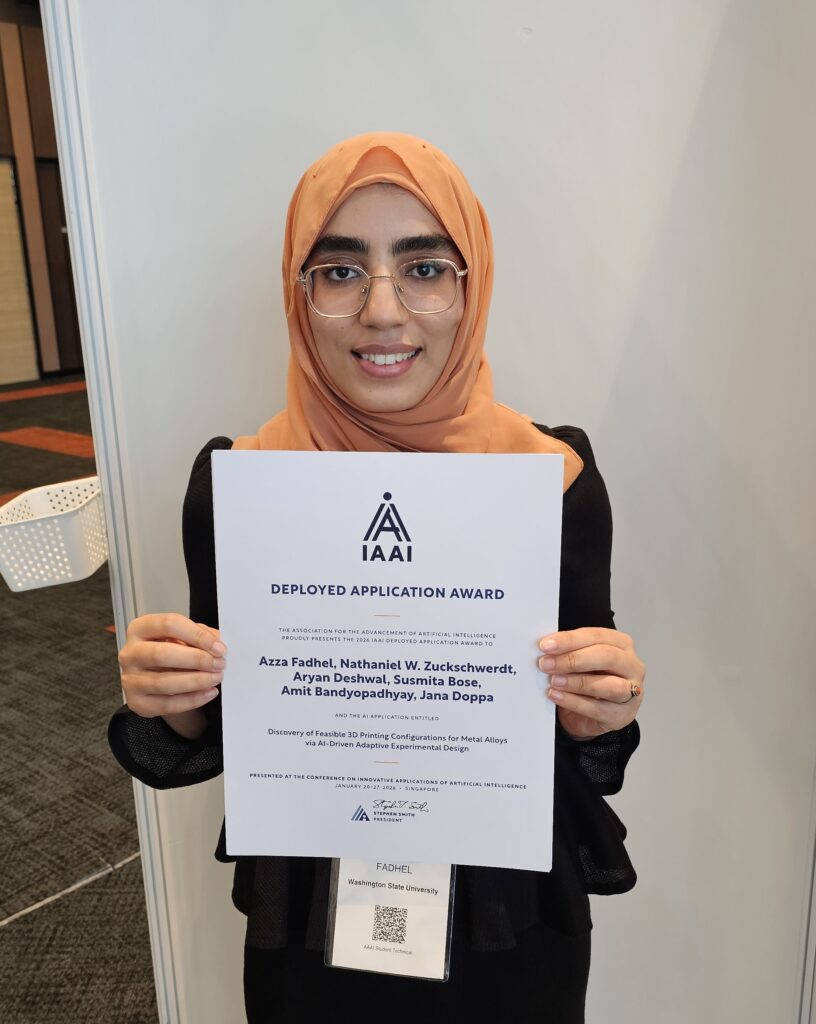
The research team, from WSU’s School of Electrical Engineering and Computer Science and the School of Mechanical and Materials Engineering, published their work in the Proceedings of the AAAI Conference on Artificial Intelligence and received the Innovative Deployed Application Award at the group’s annual conference.
“Ninety percent of commercial printers cannot print this metal alloy, so given that we were able to find these feasible process parameters, it allows us to use those commercial printers, and we are essentially democratizing the printing of this alloy,” said Jana Doppa, Huie-Rogers Endowed Chair Professor of Computer Science and Berry Distinguished Professor in Engineering who led the research.
The alloy, called GRCop-42, is made of three metals – copper, chromium, and niobium. Developed by NASA, it has high thermal conductivity and remains strong under extreme heat, so it is used in the aerospace industry, such as in liquid rocket engine combustion chambers. Although it’s a highly desirable material with many potential applications, it’s expensive and energy-intensive to print, requiring a significant amount of laser power.
Researchers have tried unsuccessfully to print the alloy at the lower wattages and laser powers that are used by more common commercial printers, but testing different configurations requires expensive materials, specialized equipment, and significant human labor. A single printing run can cost hundreds of dollars, while detailed post-print quality analysis can take days.
“Sometimes they printed a certain configuration, and the product just melted,” said Azza Fadhel, first author of the paper and a PhD student in computer science. “It wasn’t really printable, and even with time and money, they wouldn’t be able to try all 100 million options. What we were doing in our collaboration is to apply the AI so that we efficiently choose candidates from this very large search space.”
For the study, the team began with results from 37 unsuccessful configurations previously tested in the School of Mechanical and Materials Engineering. They then developed an approach using those results to estimate the likelihood that an untested configuration would produce a successful print. Their model then selected small batches of new configurations that balanced two goals: testing promising options and exploring uncertain areas that could improve the AI model.
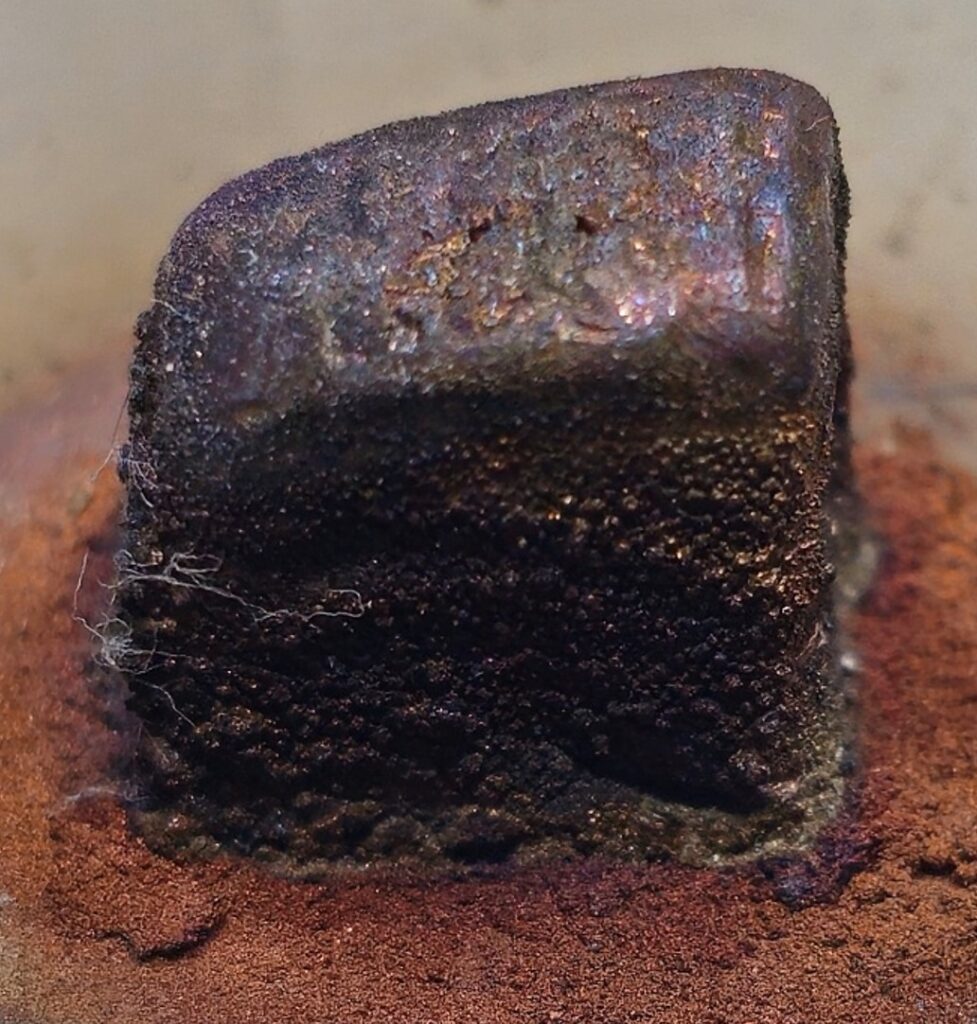
Working with Nathaniel Zuckschwerdt, Susmita Bose, and Amit Bandyopadhyay in the School of Mechanical and Materials Engineering, the team used the AI-selected process configurations to print GRCop-42 and evaluated the resulting samples. Aryan Deshwal from University of Minnesota also collaborated on the project.
“They would give me back the results, and I liked all of them – even if they failed — because every result improved our AI model,” said Fadhel.
Printing at lower laser power could reduce energy use, equipment wear, and post-processing costs while making GRCop-42 accessible to universities, small laboratories, and companies that do not own specialized high-power equipment.
The researchers knew that only a very small fraction of the more than 100 million configurations would be successful.
“It’s a very challenging case for AI,” said Doppa. “Every time you try, you basically get a binary success or failure signal, and you are trying to minimize the number of tries that you have so that you get to those successful needles very quickly.”
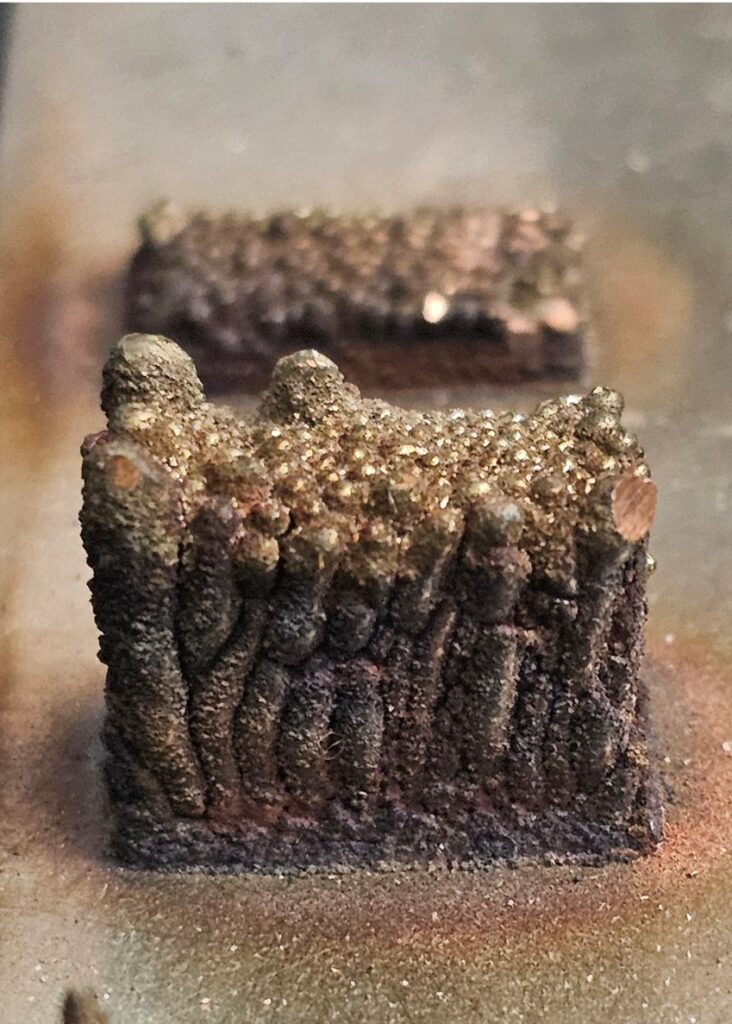
Over three months and within a total budget of 40 experiments, the team identified six successful configurations over different laser power levels. The team successfully printed the alloy at 500 watts for the first time.
The researchers believe the same AI-guided framework could be adapted to discover processing conditions for other metal alloys and additive-manufacturing systems. More broadly, it could support scientific discovery problems in which successful outcomes are rare and experiments are too costly to test every possibility.
“There’s always uncertainty when you are deploying something where real people, materials, and physical costs are involved,” said Doppa. “We didn’t know whether we would succeed or not, and there is always that risk. There are real stakes. I was very surprised that we were able to do this so well.”