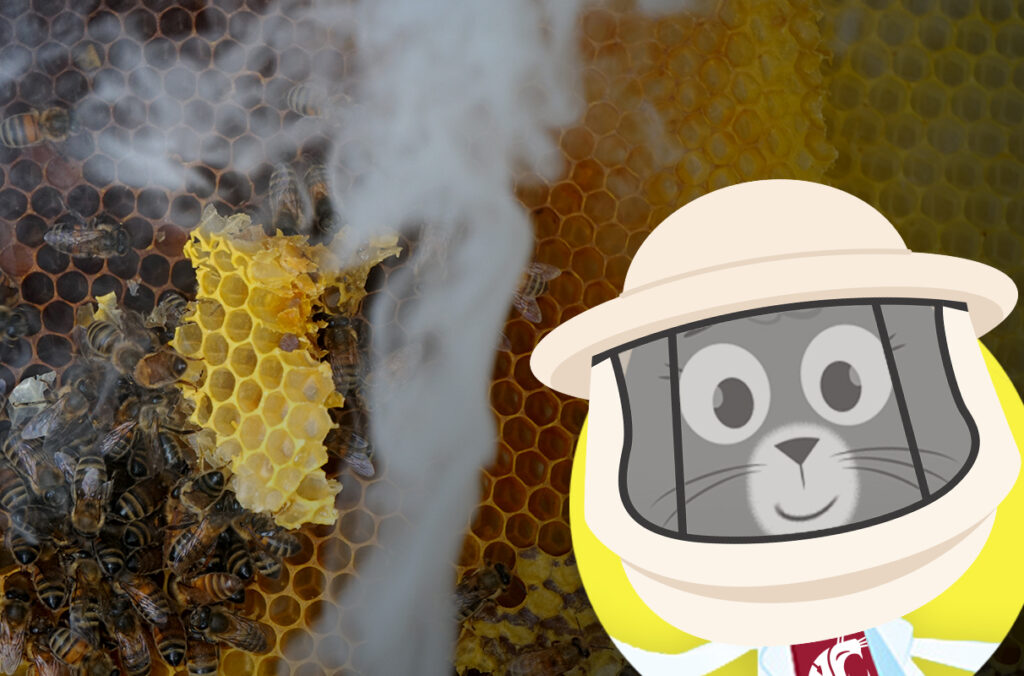
Washington State University’s resident feline scientist, Dr. Universe, answers a question from Kovas, 10, of Washington state: Why does smoke make bees calm?
With help from WSU honey bee researcher Brandon Hopkins, Dr. Universe explains that smoke interferes with the chemical messages bees use to detect and respond to threats, making it more difficult for them to coordinate a defensive response when a beekeeper opens the hive.
Readers also learn how honey bee colonies function as “superorganisms,” relying on chemical signals called pheromones to communicate about food, reproduction, temperature control, and danger. The story explores how alarm pheromones help protect the hive, why honey bees die after stinging mammals, and how smoke allows beekeepers to work more safely around their colonies.
Along the way, Dr. Universe breaks down complex concepts in animal behavior and chemical communication into kid-friendly explanations, showing how thousands of individual bees work together as a single, highly organized community.
Ask Dr. Universe is a science education project from WSU that answers real questions from curious kids around the world. Readers and listeners can submit their own questions and explore more columns, videos, and the Ask Dr. Universe podcast online.