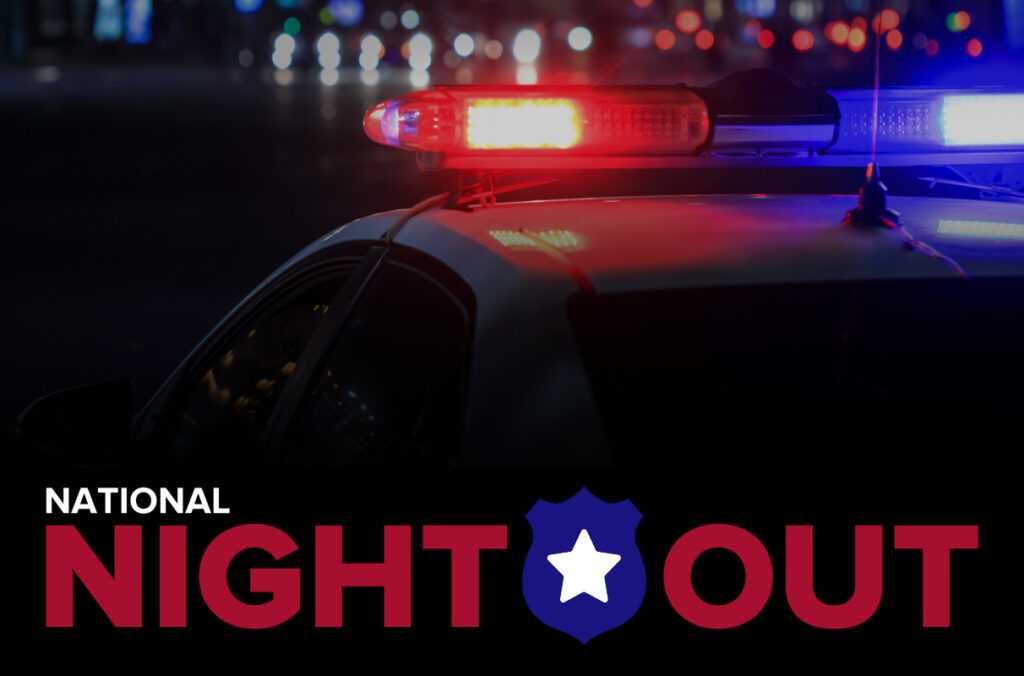
The Washington State University Police Department is partnering with the Pullman Police Department to co-sponsor this year’s National Night Out, a community event focused on strengthening relationships between law enforcement and the community.
The free, family-friendly event will take place Tuesday, Aug. 4, from 6–8 p.m. at Reaney Park. Community members of all ages are invited to attend and enjoy games, activities, treats, and opportunities to meet local first responders and public safety personnel.
National Night Out is a nationwide initiative designed to promote police-community partnerships and neighborhood connections that contribute to safer communities. In Pullman, the event brings together residents, families, and public safety agencies in a relaxed setting that encourages conversation, engagement and building meaningful connections.
As a co-sponsor, the WSU Police Department joins the Pullman Police Department in supporting outreach efforts that help build trust, foster collaboration, and strengthen public safety across both the campus and broader Pullman communities.
The event is free and open to the public. Attendees can expect an evening of fun, community engagement, and opportunities to learn more about the public safety organizations serving Pullman and WSU.