A group of landscape architecture students recently presented designs to address issues of housing, infrastructure, river health, resilience, and sustenance in the Columbia River Gorge region.
As part of their senior projects, the students worked with community members in and around the city of White Salmon, Washington, for their capstone studio and urban planning courses. White Salmon and the Columbia River Gorge are home to more than 80,000 residents, a large hydroelectric dam that has a large community impact, and long-time indigenous cultures and legacies.
Students learned about pressing regional issues, identified and researched a project site, and developed individual designs. In the process, students gained understanding about the region’s unique ecologies and engaged with tribal members, city officials, business owners, the Underwood Conservation District, the Columbia River Gorge Commission, and other interested citizens.
“Through the capstone, students bolstered their capacities to read the landscape and communicate with multiple knowledge holders. Such skills are essential to landscape architectural practice,” said Professor Jolie Kaytes, who taught the class. “Ultimately, the capstone course allowed students to integrate all the skills they learned in the landscape architecture program. It also challenged them to expand these skills and develop new ways to approach a project.”
Earlier this year, the students traveled to the area for an immersive three-day visit, where they experienced the landscape and interacted with community members.
“The tour served as a venue for open ended conversations about the design needs and opportunities in the region,” said Kaytes.
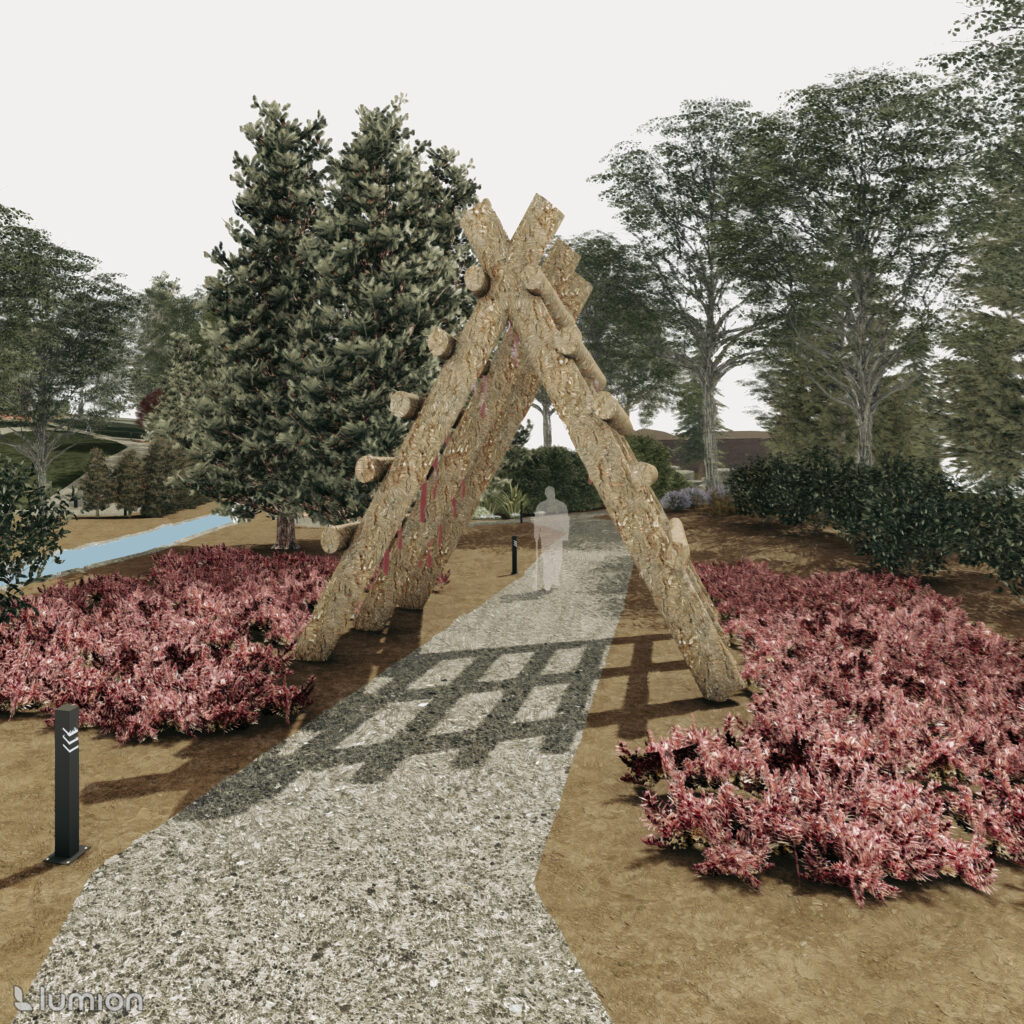
For his project, senior Jack Garfield developed Legacy Oaks, a plan for a communal garden on the southern side of White Salmon. The project, through three themed zones on a 1.5-acre site, guides visitors to spatially experience natural and cultural histories, indigenous presence, and Western settlement.
“It is a place for stories and narratives of the land to unfold, where communities can gather within the site,” he said. “It allows the history of the land to become a living part of the community — one that visitors can interact with and learn from.”
Garfield said he most enjoyed working with people in the region and community.
“This project pushed me to move beyond the present, drawing from both the past and the future to uncover and express narratives on a deeper, more meaningful level,” he said. “It also allowed me to build on my portfolio of creating place within the landscape, prioritizing human interactions with the land.”
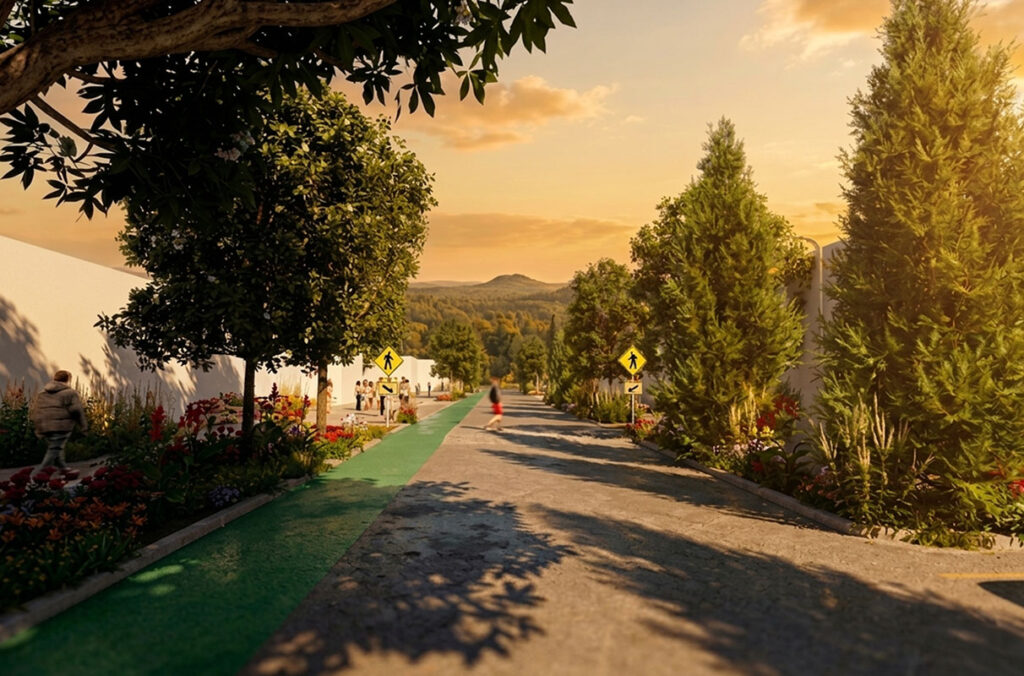
Emma Diaconu, another student in the class, designed a street to connect downtown White Salmon to nearby natural and recreational spaces. Her project integrated greenery, pedestrian friendly streets, and public spaces to promote social interaction and economic activity.
“My favorite part of the project was seeing how it could connect downtown to visitors, small business, and residents,” she said. “Designing a space that blends pedestrian activity, planting design, and social gathering areas into one experience was especially exciting.”
The project, she said, allowed her to combine landscape architecture, urban planning, research, and planting design to provide value to a community.
“It allowed me to think critically about the space, and how people and pollinators can benefit from each other in the same area,” she said.
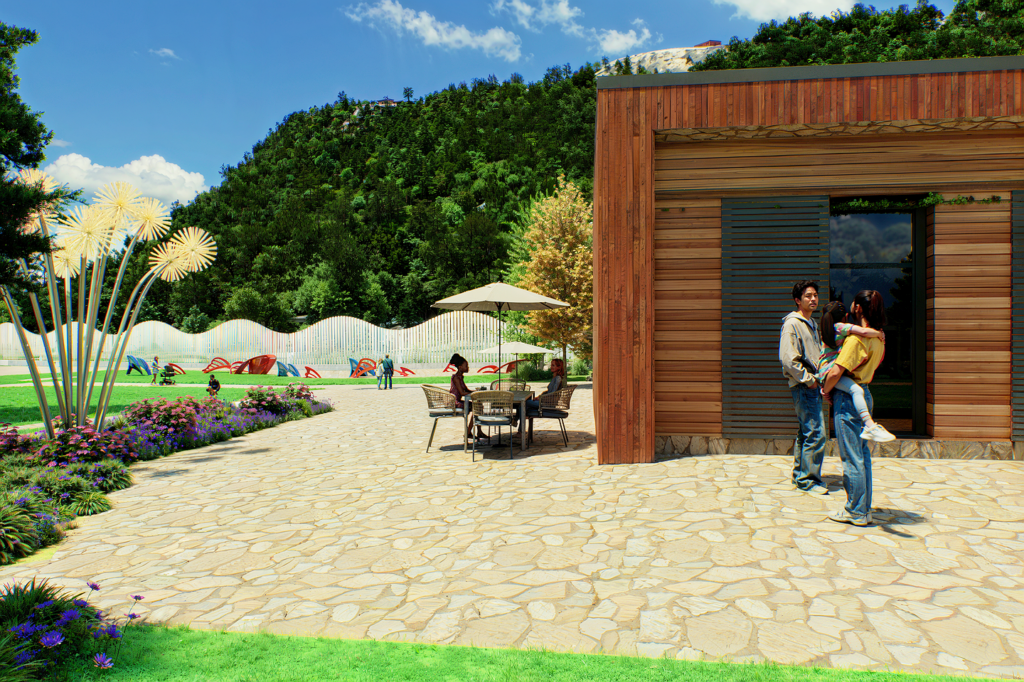
Student Sophia Silveria, meanwhile, designed a community park to strengthen the connection between the waterfront and town.
“The main goal was to create a space where people can gather, relax, and reconnect with nature while also contributing positively to the local environment,” she said.
The students spent a lot of time researching the community, meeting people, and connecting to the local experience before beginning their design process.
“Immersing myself in the local experience allowed me to better understand community needs and design a solution that is both meaningful and responsive,” she said.
Along with generating individual design projects, through their Principals of Planning course taught by Associate Professor Steve Austin, the students also developed three model ordinances for the city of White Salmon — for shared streets, for mobile vendors, and for residential access standards.
The student efforts with the planning department “provided opportunities for students to dive into legal regulatory process and to meaningfully engage with the city,” he said.