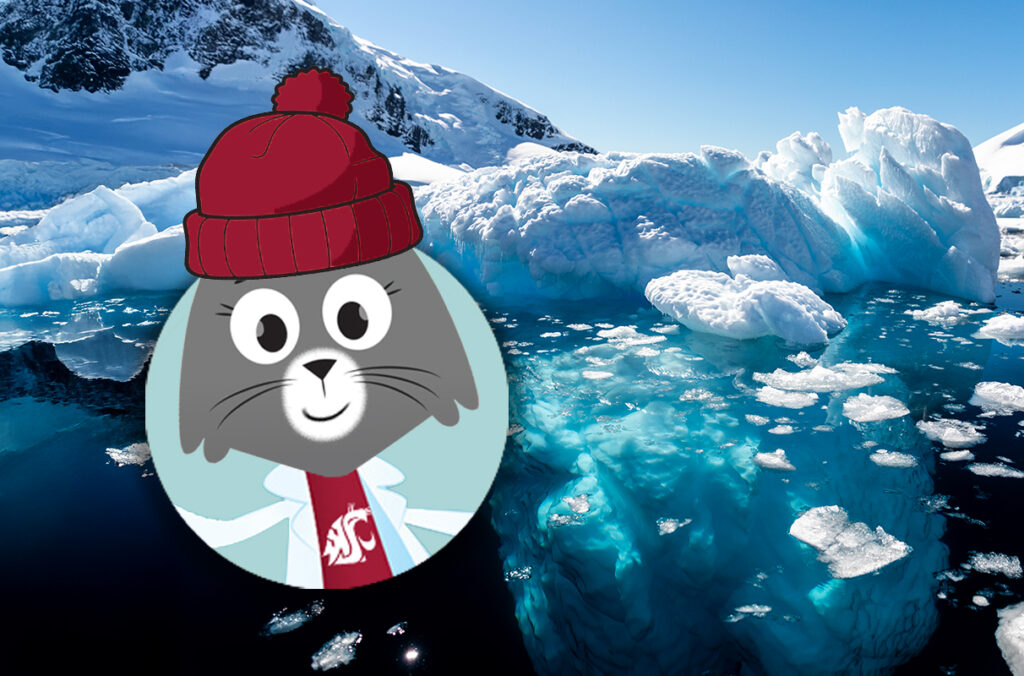
Washington State University’s resident feline scientist, Dr. Universe, travels to the frozen edges of the planet to answer a question from Kenton, 8, of Washington state: What creates icebergs?
With help from WSU polar scientist Von Walden, Dr. Universe explains how glaciers — massive rivers of compacted snow and ice — slowly flow across land under their own weight. When pieces of these glaciers break off and fall into nearby lakes or oceans, they become icebergs, sometimes large enough to dwarf houses.
Readers learn why about 90% of an iceberg remains hidden beneath the water’s surface, how glaciers can suddenly speed up in events called surges, and why breaking ice from the end of a glacier — a process known as calving — can send enormous chunks drifting out to sea. The column also explores how scientists study ancient ice by drilling cores that contain tiny bubbles of trapped air, offering clues about Earth’s climate hundreds of thousands of years in the past.
Ask Dr. Universe is a science education project from WSU that answers real questions from curious kids around the world. Readers and listeners can submit their own questions and explore more columns, videos, and the Ask Dr. Universe podcast online.