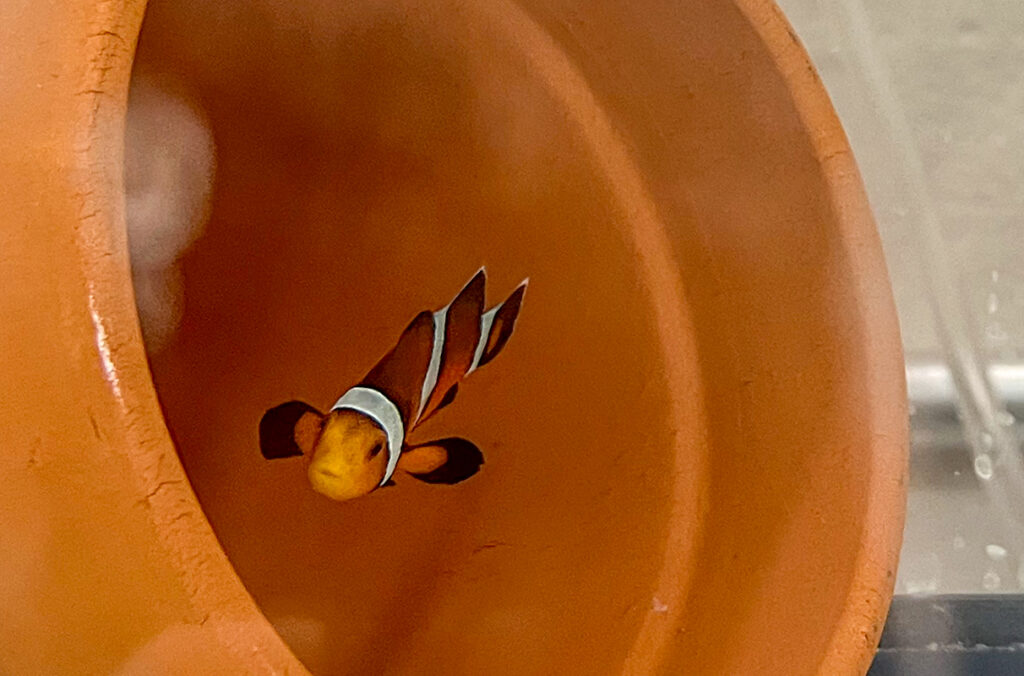
When Katherine Corn first stepped into a research lab as an undergraduate, she had no idea she’d one day be leading one. Now an assistant professor of biology at Washington State University, Corn credits her early experience in an NSF Research Experience for Undergraduates (REU) program with helping launch her career. This summer, she’s come full circle, guiding students of her own through the same kind of hands-on scientific experimentation and discovery.
“My REU was one of the most important experiences early in my scientific career,” she said.
Corn is one of eight WSU faculty mentors in the university’s Robustness and Resilience of Aquatic Biosystems REU where students from across the country spend 10 weeks diving into real-world research, investigating everything from feeding behaviors in tropical fish to preventing viral outbreaks in frogs. More than a crash course in lab work, the program helps students build the critical thinking, collaboration, and confidence it takes to become scientists, while supporting WSU researchers in advancing their own projects.
Led by Erica Crespi, a biology professor at WSU, the aquatics biosystems REU is making good use of the new Aquatics Phenomics Research Center and includes 13 students (three from WSU and 10 from other institutions) and six graduate student mentors in addition to WSU faculty members participating in the program.
Getting what it takes to be a scientist
Sofia Yildirim (’27), an environmental science and biology major at Saint Mary’s College of California and an REU student at WSU, is working with Corn to study the roles of damselfish in their environments. Their work has implications beyond damselfish themselves.
“Understanding where an organism fits in a larger mass really helps you to keep and protect these larger biological systems as a whole,” Yildirim said.
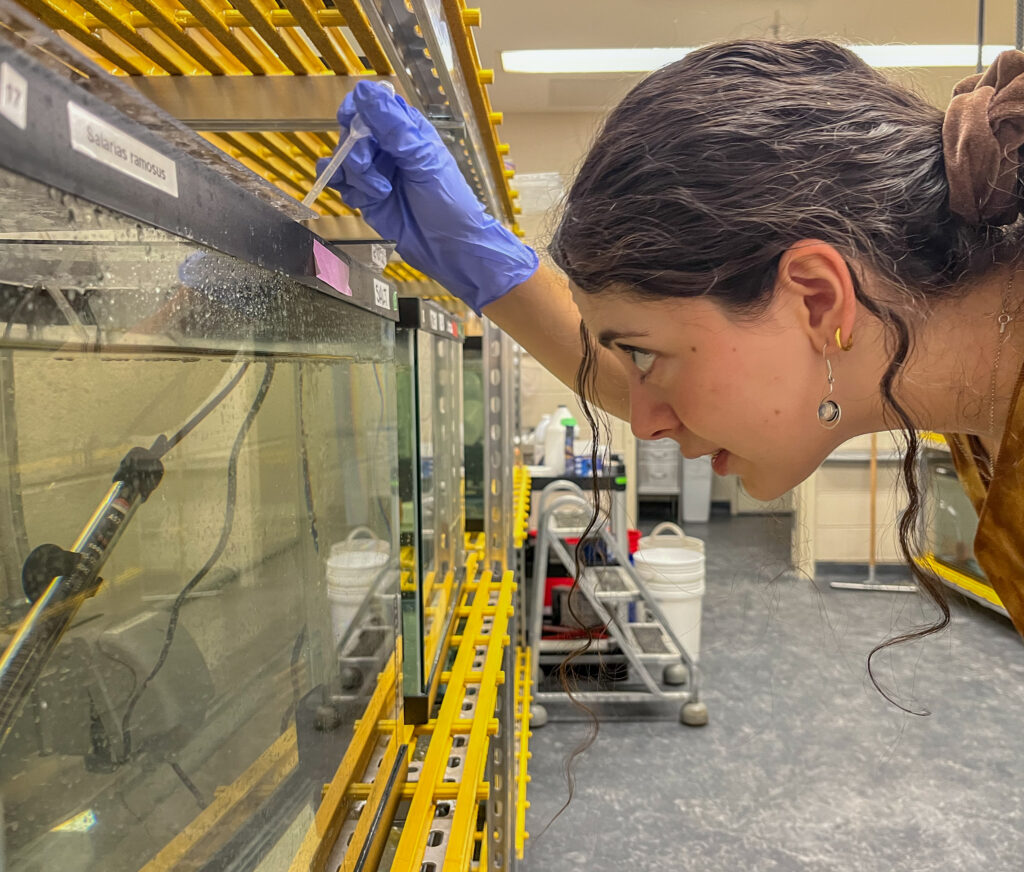
Yildirim is learning about the damselfish’s roles in their ecosystems by investigating how much food they can eat out of five different feeding structures, from a box with crevices to a coral-shaped structure. She’s also video recording the fish to count how many times they take bites from the structures and to characterize the bites.
Yildirim loves working with fish. But they come with their challenges. One, which she affectionately described as her “dumbest fish” didn’t eat at first. Unaccustomed to the food from the structures, floating pieces would even “hit him on the head, and he wouldn’t realize it,” said Yildirim. After much worry that the fish wouldn’t learn and the research would be delayed, the fish finally began to eat.
Corn has seen Yildirim and her other student, Ruby Moore, flourish this summer. In particular, they have developed the intuition to design and modify an experiment.
“That’s what it takes to be a scientist,” said Corn.
A true collaboration
Meanwhile, in the Brunner Lab, two other REU students are studying how simple practices like disinfecting hands and nets could prevent the spread of ranavirus, a virus that kills frogs and other cold-blooded animals. Frogs are grown around the world for their meat, are kept as pets, and are used for research. Many best practices for preventing ranavirus spread in these settings are ignored because they are time consuming, expensive, and have little evidence backing them up. So, the students are studying alternative ways to prevent ranavirus transmission that would be quick and inexpensive.
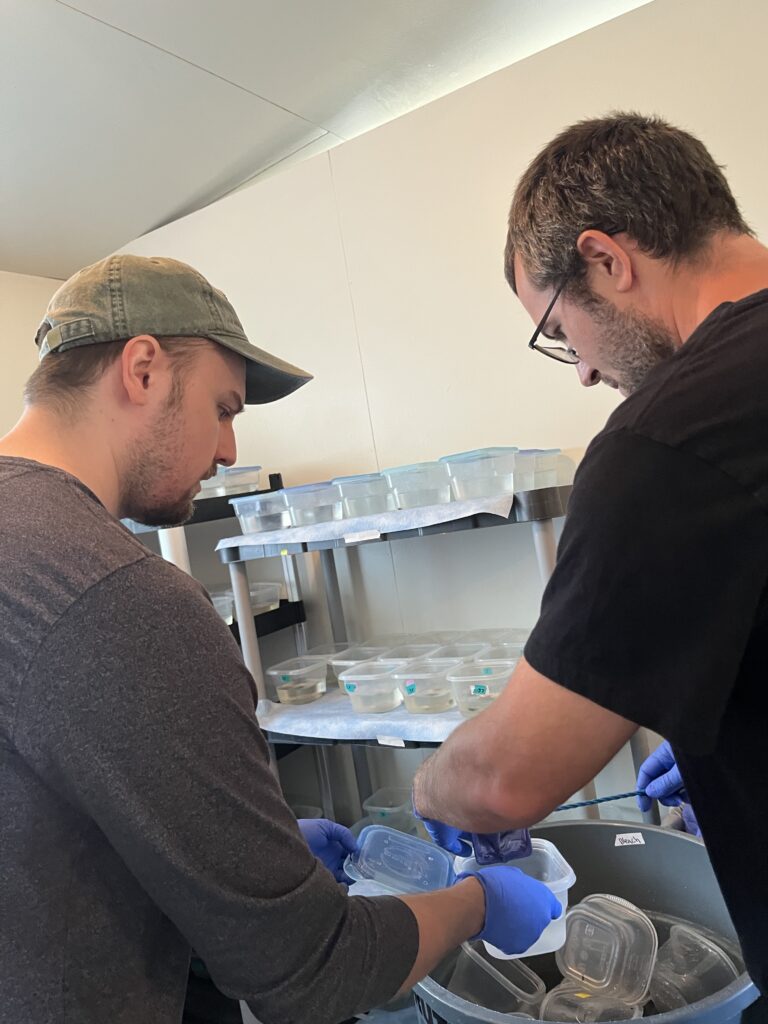
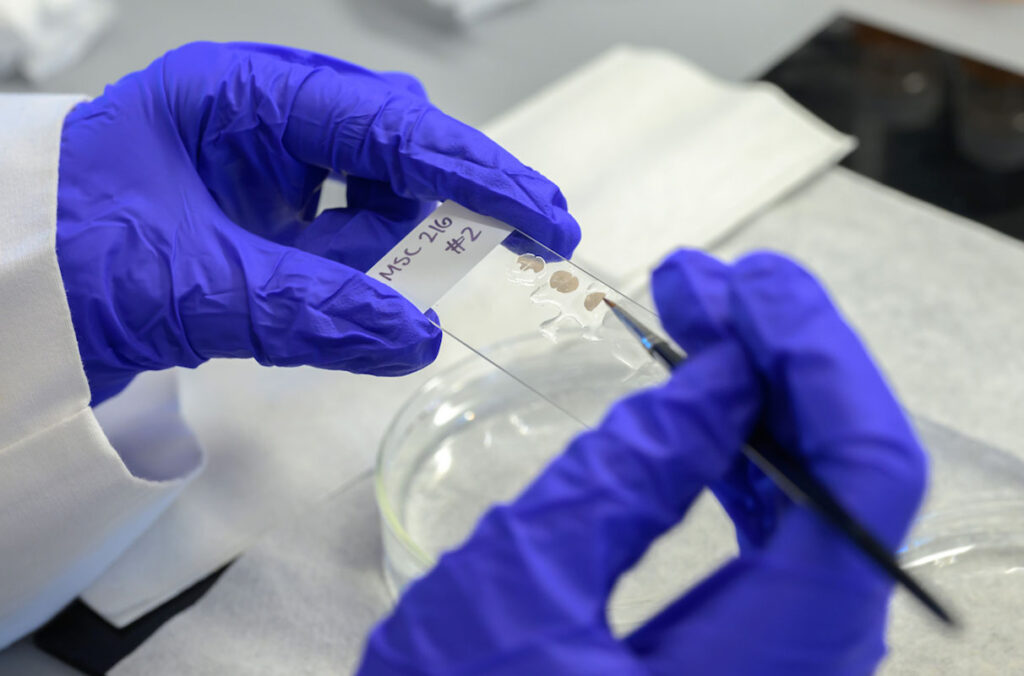
Nick Kessler (’26 Biol.) tested how ranavirus spreads by using a net to transfer a single infected tadpole, followed by three uninfected ones — first without disinfecting the net, then repeating the process while disinfecting between each transfer. He extracted DNA from each tadpole to determine which had been infected and whether disinfecting the net reduced transmission.
Chris Close (’26), an environmental science major at Eastern Washington University, used the same process as Kessler but instead of a disinfected and non-disinfected net, he used disinfected gloves and bare, unsanitized hands.
Kessler and Close found that the contaminated nets and hands put all the subsequent tadpoles at risk for infection. Disinfecting the nets and hands, however, cut that risk in half.
Bob Pearhill, a fourth year PhD student at WSU and an REU mentor, plans on using the results of Kessler and Close’s work to inform his dissertation. He’s also planning to teach in the future, and he’s been able to practice that as an REU mentor.
Pearhill said, “We’ve all been learning as we go.”