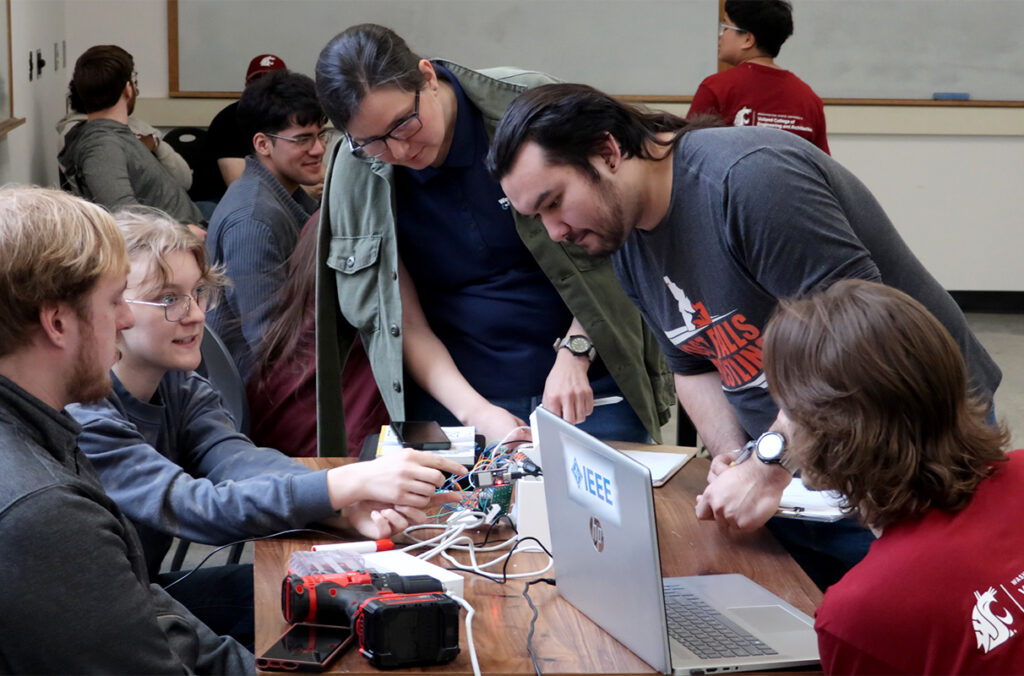
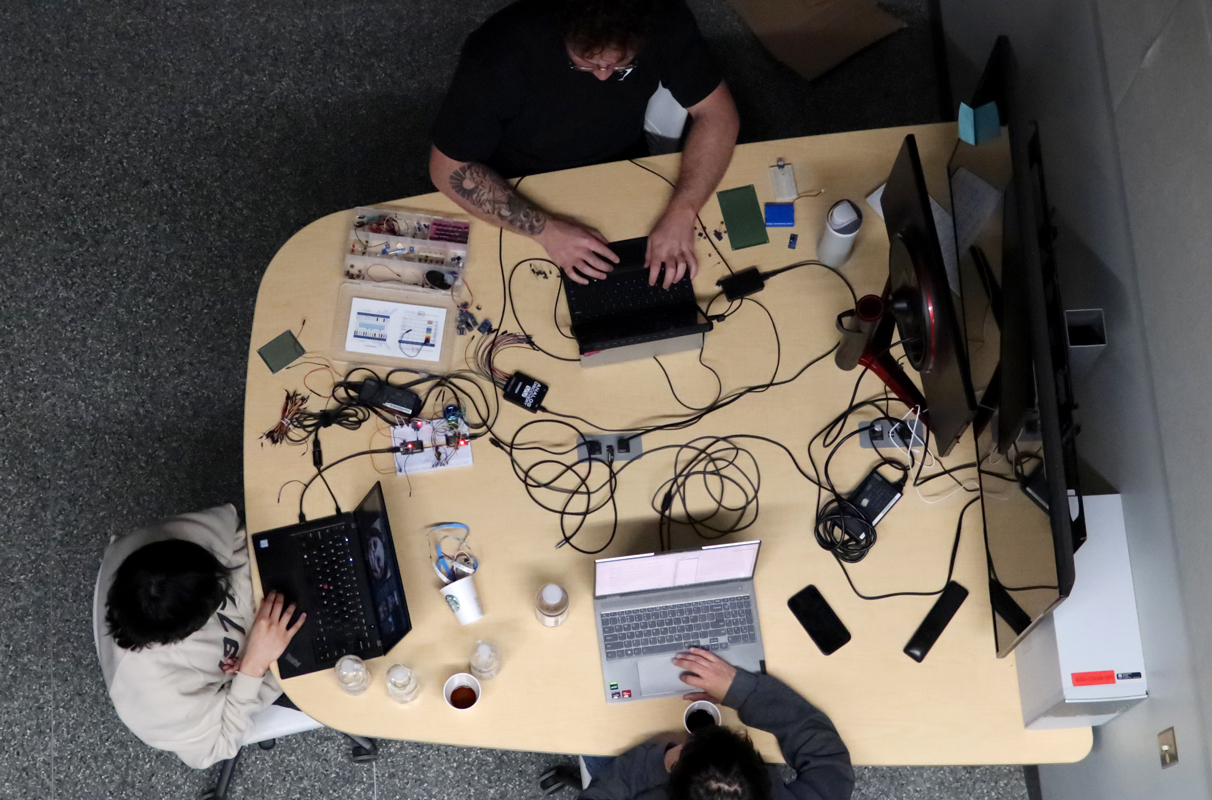
Every spring, Dana Hall and the Spark on the Washington State University Pullman campus transform from quiet weekend hallways into buzzing hives of activity. Lab tables fill with students hunched over laptops, whiteboards get covered edge to edge, and pizza boxes stack higher than anyone planned. The hackathon is underway.
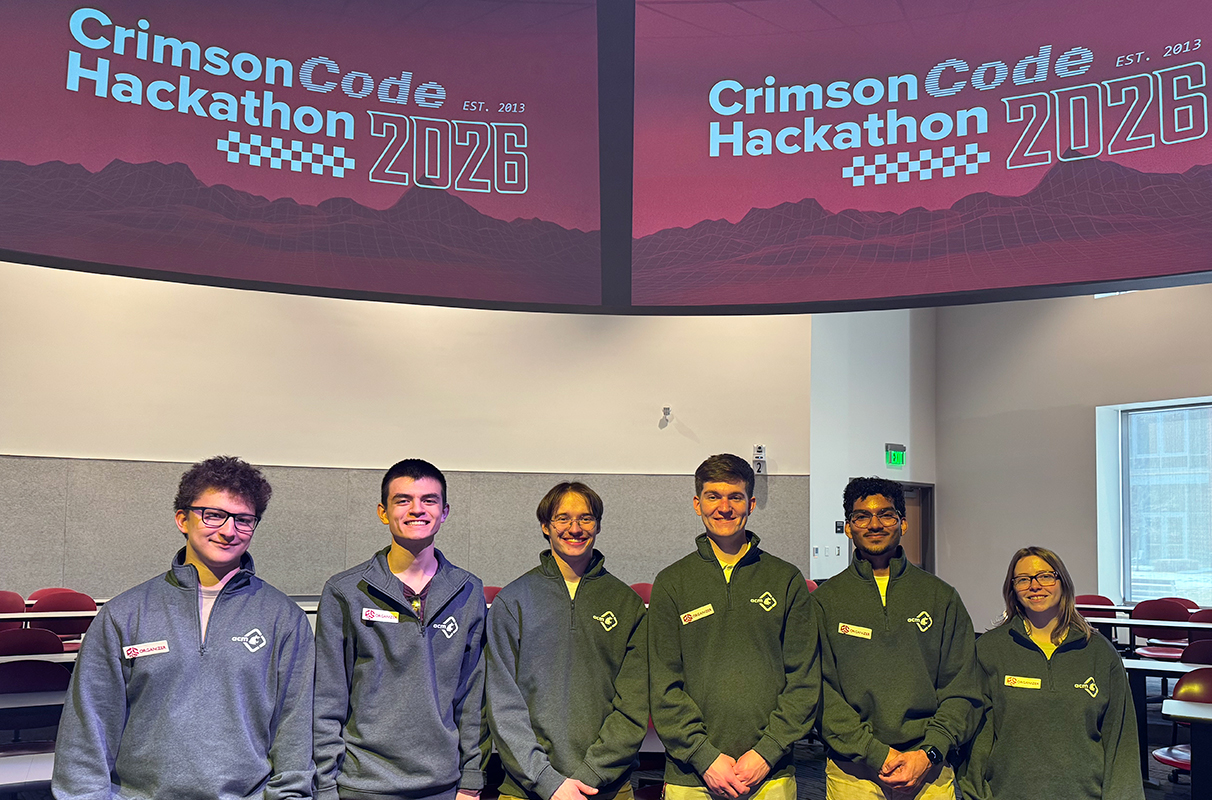
At WSU, hackathons have become a defining space for student innovation. This semester, two major student-run events took center stage: CrimsonCode, organized by the Association for Computing Machinery (ACM), and the Hardware Hackathon, organized by the Institute of Electrical and Electronics Engineers (IEEE). Together, they demonstrated how students from widely different backgrounds can collaborate, build, and deliver functional solutions in just 24 hours.
CrimsonCode: “Reinventing the Wheel”
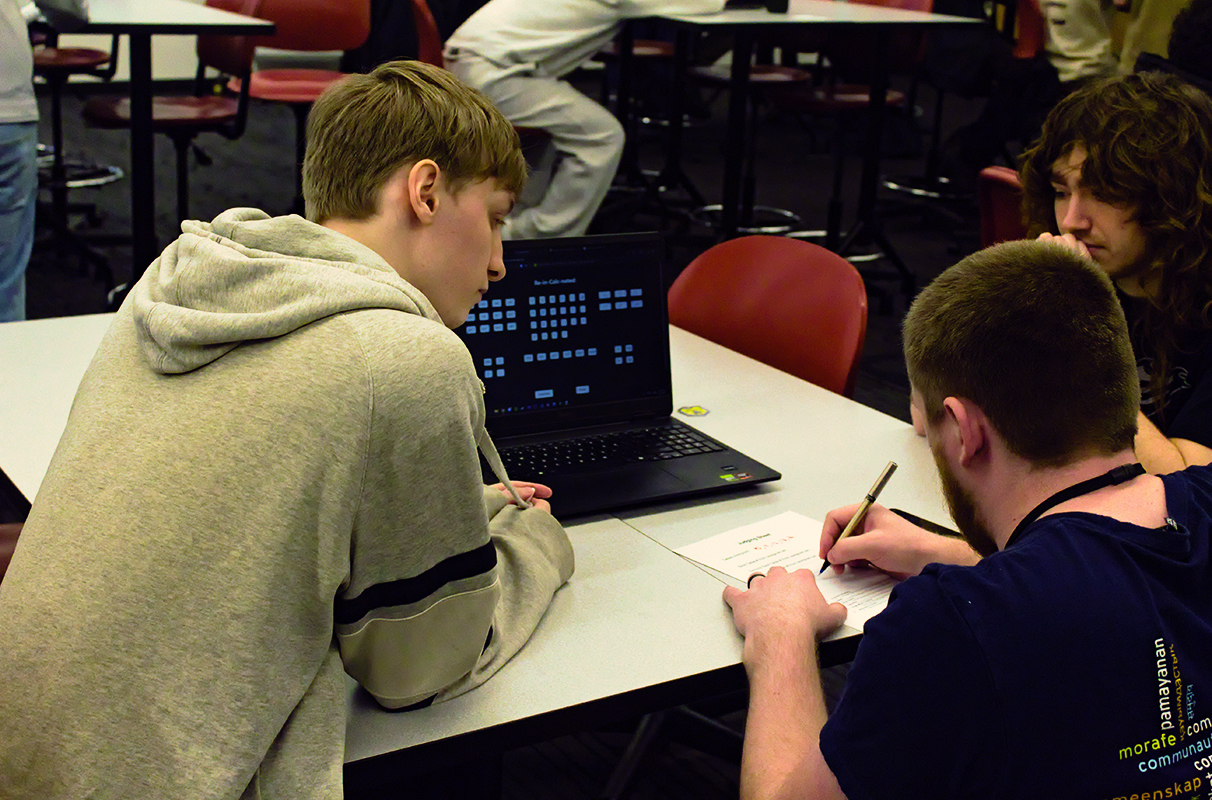
ACM challenged participants with the theme “Reinventing the Wheel,” asking teams to take an existing idea and meaningfully improve it. The results were inventive. One team built an AI-powered driver-assistance system that detects drowsiness and actively engages the driver to stay alert. Another created a gesture-based emergency alert system that works through existing security cameras, bypassing the need for phones or panic buttons entirely. A third team developed a platform that allows anonymized patient data to train machine learning models for identifying health risks while maintaining strict privacy standards.
IEEE Hardware Hackathon: “Seamless Living”
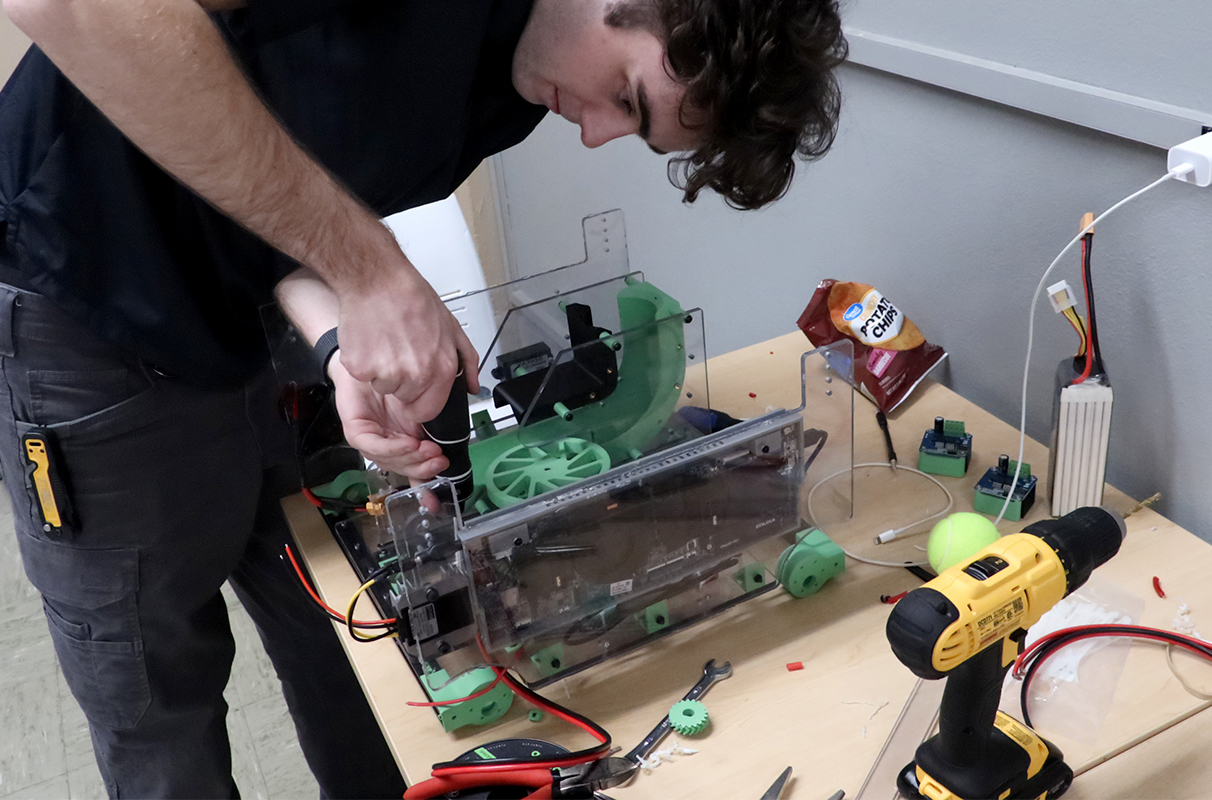
The WSU IEEE club chose the theme “Seamless Living,” focusing on solutions that reduce everyday friction and improve accessibility through automation. One team built an enhanced smart cane equipped with sensors that communicate proximity to obstacles through directional vibrations, giving users richer environmental feedback. Another developed a climate-controlled mini greenhouse that automatically monitors and adjusts temperature and humidity for optimal plant care. A third team engineered a mechanically intricate tennis ball launcher, complete with a supporting website and a polished product-style presentation.
Hackathons produce more than projects. Students learn to pitch ideas under pressure, iterate quickly when things break, collaborate across disciplines, and recover when a plan falls apart entirely. Industry judges from companies including Amazon, Microsoft, Apple, and SEL, alongside faculty mentors, gave participants direct feedback and rare networking access. For many, these events become resume highlights, internship talking points, and the spark behind long-term career directions.
“Engineers, especially these days, aren’t made in the classrooms,” said Cade Ueland, vice president of WSU’s IEEE club. “They must get out there and design, build, get a product made, or put parts together into something that works.”
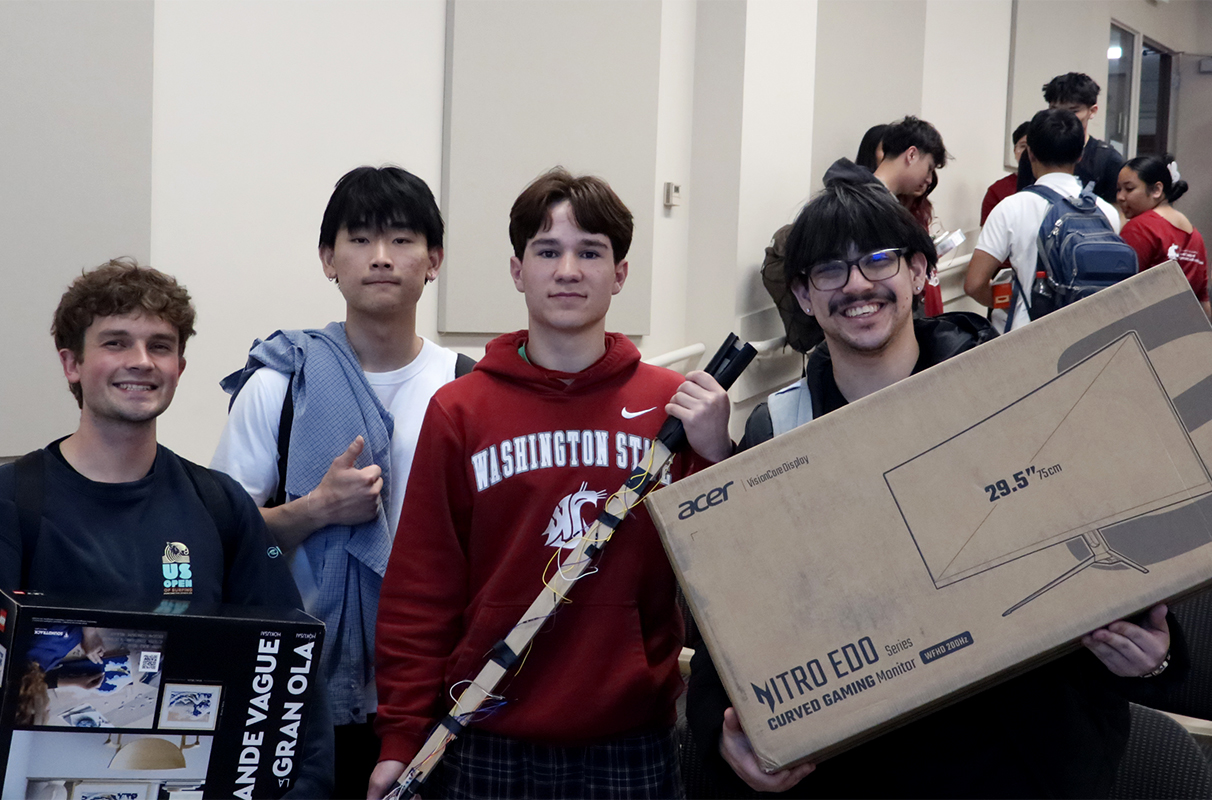
Both ACM and IEEE host regular workshops to equip students with essential technical skills, covering everything from software stacks to hardware tools like CAD modeling and 3D printing. The hackathons are open to all majors.
“There is a misconception that you need to know coding to join a hackathon,” said Apurv Rane, president of WSU’s ACM club. “A successful project isn’t just code. Design, presentation, data analysis, and communication all matter. We’ve seen communication majors and designers play critical roles in winning teams.”
Despite their differences in format and focus, both hackathons shared a common challenge: the hours after midnight.
“There’s this false sense of energy at night,” said Joshua Chadwick, treasurer of WSU’s ACM club. “Students think they can power through, but burnout hits hard by morning.”
CrimsonCode organizers now actively encourage teams to rest, emphasizing that clear thinking and a strong final presentation matter as much as technical execution.
For IEEE, the biggest challenge is the gap between hardware complexity and software capability.
“A lot of teams can build great physical designs,” Ueland noted, “but without someone confident in coding, they can hit roadblocks fast.”
Still, those roadblocks are part of the point. Sometimes, all it takes is a free weekend, a shared idea, and a few too many boxes of pizza.