A bah-humbug attitude could cost you this holiday season — either out of pocket or under the tree. That’s the surprising conclusion from recent research in WSU’s College of Business and Economics.Turns out that those who love Christmas enjoy shopping more (no surprise there), but researchers were surprised to discover that while both Santas and Scrooges tend to give the same number of gifts, Santas end up getting more in return.Interestingly, says David Sprott, principal investigator on the study and the Gardner O. Hart Faculty Excellence Distinguished Professor in marketing, your attitude toward Christmas doesn’t seem to influence how much you’ll spend.“If anything, a low level of Christmas spirit may lead you to pay more,” he said. Sprott speculated that perhaps people who enjoy Christmas are more focused on finding a meaningful gift (think “Gift of the Magi,” he said) and less prone to impulse buys. Ins and outs of givingFor this study, Sprott and co-author Eric Spangenberg, dean of the College of Business and Economics, along with former doctoral student Bianca Grohman, surveyed 243 people ages 14 to 73 to determine how many presents they typically receive, how many presents they typically give and how much money they typically spend.Participants also were asked about their attitudes toward gift giving, receiving and shopping to determine if there was a correlation. And there was. The more you like Christmas, the more you get, but the less you spend.Gift giving has long been an interest of Sprott’s. “So many fascinating processes drive what we give to people and what we receive,” he said. “It’s immensely complicated.”Simultaneous sensesThis is not the first time Sprott and his colleagues delved into the whys and wherefores of Christmas shopping decisions. In 2000, the research team investigated whether shopping behaviors are influenced by the sounds and smells of Christmas.While other researchers had investigated single-sense marketing strategies, such as music alone or scent alone, this was one of the first studies to look at what happens when retailers attempt to appeal to two or more senses simultaneously.Music and fragrance were among the first Christmas gifts, Sprott and Spangenberg pointed out in their study, but do sounds and scents — working together — have the power to turn browsers into buyers?According to their research, yes, if they do, in fact, work together. Congruency is the key.Holidays don’t mixFor this experiment several groups of undergraduates were asked to look at 80 slides and rate the desirability of merchandise and the appeal of a store that was considering opening in Pullman. But, the focus of the experiment was on how the responses varied according to the presence or absence of Christmas music and a “Christmas” scent.Their research revealed that Christmas music paired with a Christmas scent results in higher desirability ratings, but that a Christmas scent paired with non-Christmas music seemed to be off-putting.“This idea of congruency is powerful,” Sprott said.“We want to approach situations where we are comfortable and relaxed,” he said, and consistency and congruence make us relaxed.So, if it bugs you to hear “Deck the Halls” while you’re still buying Halloween candy, don’t worry. You’re not a Scrooge; you’re only human.
Next Story

WSU bee scientist hosting international pollinator conference in Pullman
The June conference will bring global experts together for the first North American meeting of a group focused on tackling honey bee colony collapse around the world.
Recent News

Extreme microbe may change how apples are protected
A compound derived from an extreme microbe is being tested by WSU researchers as a potential new way to protect apples from fire blight and Listeria.

WSU researchers test AI‑driven spectral imaging for identifying recyclable plastics
The method offers promise for more effective separation of plastics at recycling centers, which would help reduce landfill waste.

Donor-funded $2 million scholarship match supports future doctors at WSU College of Medicine
The funding, provided by longtime WSU supporters Tom and Barbara Wilson and first-time donor Barbara Stephanus, will match philanthropic contributions to student scholarships through the college’s Medicine Multiplied campaign.

Joseph Scott Gladstone advances global collaboration in Indigenous business research
WSU scholar Joe Gladstone is partnering with the University of Melbourne to advance global research on how Indigenous values shape business leadership, entrepreneurship, and community-focused decision-making.

Selling the city: Students elevate Vancouver’s tourism strategy
WSU students partnered with Visit Vancouver to develop real-world tourism strategies, identifying new event opportunities and marketing ideas that highlight the city’s growing potential as a regional destination.
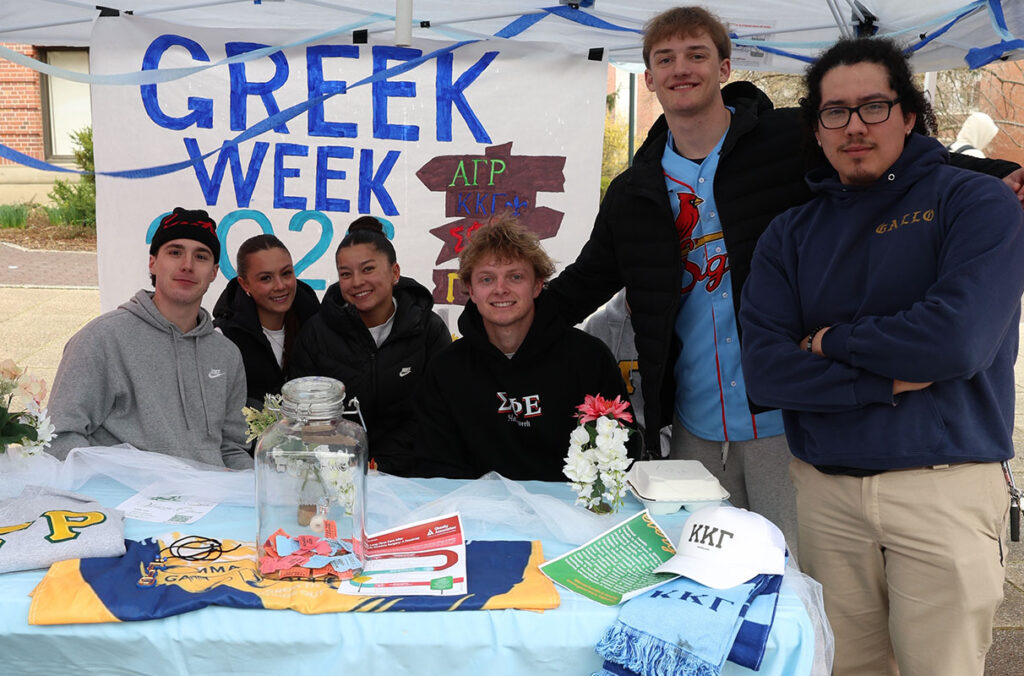
Greek Week success provides big support for Pullman downtown businesses
WSU students contributed more than 250 hours of service and raised over $10,000 to support Pullman businesses, strengthening ties between campus and the community.