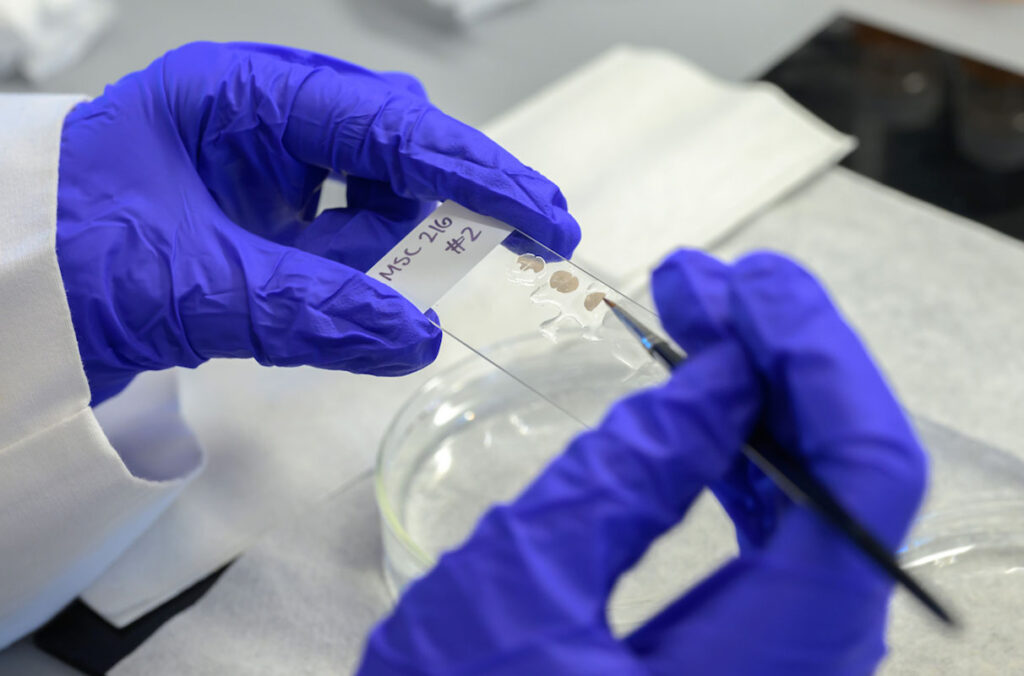
You are all cordially invited to a MALDI Imaging seminar TODAY (Tuesday, 12/03) from 10-11 am. MALDI imaging is a technique that allows the histological mapping of compounds such as proteins, peptides, lipids and metabolites without the need for molecular probes. The technique is fully compatible with conventional histological techniques and gives a unique molecular insight in tissue sections. This imaging uses Novel Workflows, based on Ultra-High Resolution Mass Spectrometry.
Please share this information with people you believe might be interested in attending.. The presentation will be broadcast via WSU’s AMS/WHETS polycom system to the following sites:
DAY/TIME: Tuesday (12/03); 10-11 am
FROM: WSU Pullman/VBR 305 (Science Forum)
TO: WSU Spokane/SHSB 260
TO: WSU Vancouver/VCLS 208J
TO: Prosser REC/Faculty Conference Room
TO: Mt. Vernon REC/Conference Room
TO: Puyallup REC/Kalkus 103A
TO: Wenatchee TFREC/Small Conference Room-Unit MBL3
AMS Dial-Up #: 5708891
If you have any questions or concerns, please contact: Dr. David Gang/Institute of Biological Chemistry (509-335-0550; gangd@wsu.edu)