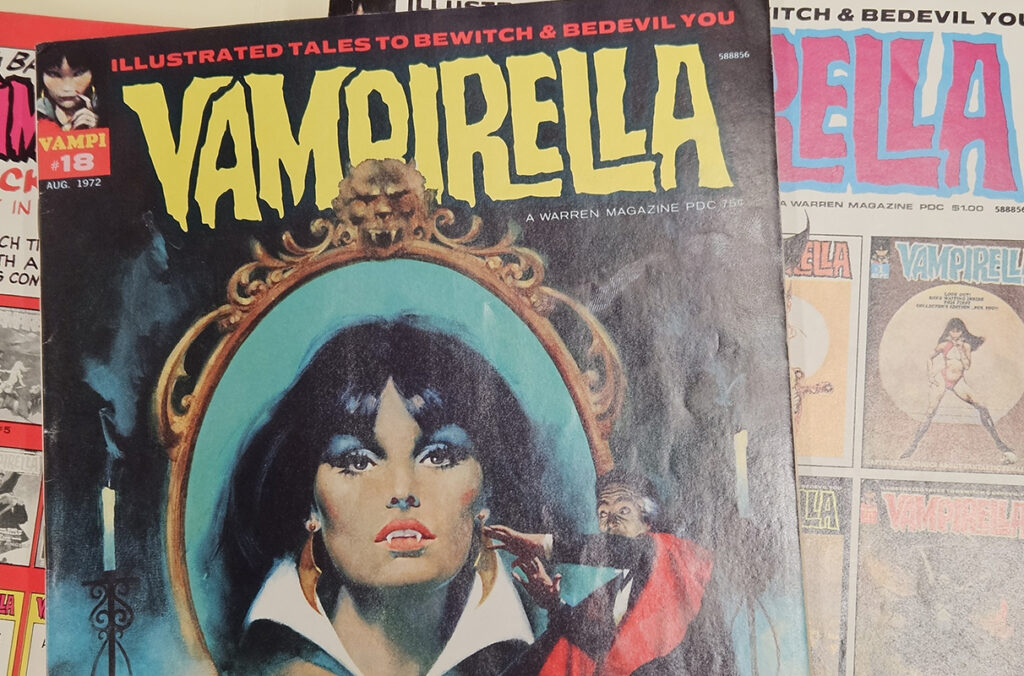
Washington State University graduate student Cecil Decker spent a month this past summer working with a collection of “underground comix” in Manuscripts, Archives, and Special Collections (MASC) that were part of a movement starting in the 1960s to preserve creative freedom from efforts to censor the content of comics.
Decker will hold an Underground Comix Showcase from noon–2 p.m. on Thursday, Sept. 17, in Terrell Library’s ground-floor MASC reading room to give a short talk and share selected works from the Joseph M. Shea Comix and Small Press Collection, 1962-2010.
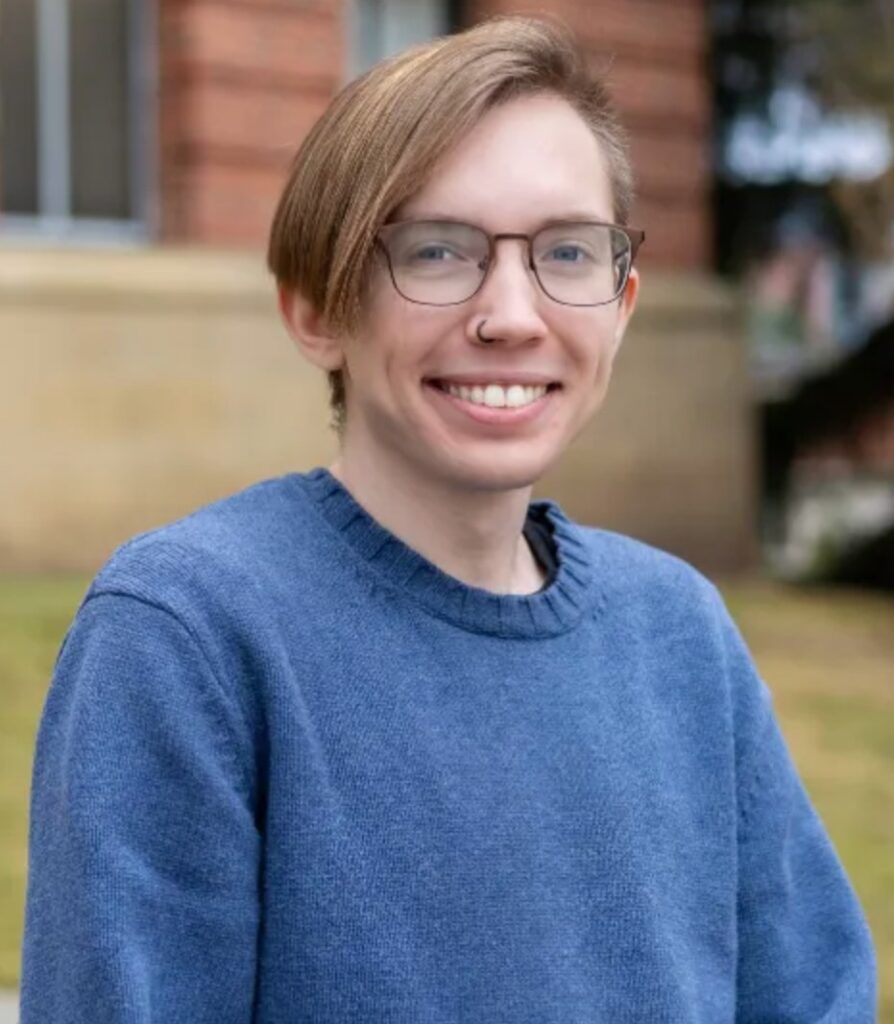
An English literature master’s student, Decker assisted with cataloging the collection through the Lawrence R. Stark Graduate Fellowship, an endowment created in 2008 to honor the former university archivist. The monthlong research project fit very well with Decker’s degree; his thesis focuses on queer horror, particularly the ways disability and gender become enmeshed in interpretations of the body. He is working on a survey of body horror literature and film released since 2020.
The Shea Collection and other MASC underground comix collections represent resistance against the Comics Code of 1954 written by the Comics Magazine Association of America, a “voluntary” program of controlling comics’ content to develop “wholesome entertainment.” The code policed comics’ dialogue, religious references, costumes, and marriage and sex. Depictions of crime, law enforcement officers, judges, and government officials were strictly outlined.
In response, comics book creators published small-press titles featuring themes of satire, social and political protest, sexuality, and violence prohibited in mainstream comics publishing.
As Decker organized and itemized individual titles from the Shea Collection, he became more familiar with recurring artists. The collection captures a subset of people attempting to share their creative and intellectual work with likeminded artists across the United States, he said.
“There’s a sense of mail culture that surprised me initially, but in particular it was intriguing to get a glimpse into a group of people’s work to create and share projects that were explicitly and purposefully not commercial,” said Decker, who is also the WSU LGBTQ+ Center assistant coordinator. “Connecting the threads between different names and places took on a life of its own, building upon itself each time I read back through the collection items.”
Among his favorites in the Shea Collection are the Vampirella horror magazines, created by writer Forrest J. Ackerman and artist Trina Robbins starting in 1969. Vampirella was a strong female lead in a genre dominated by male characters.
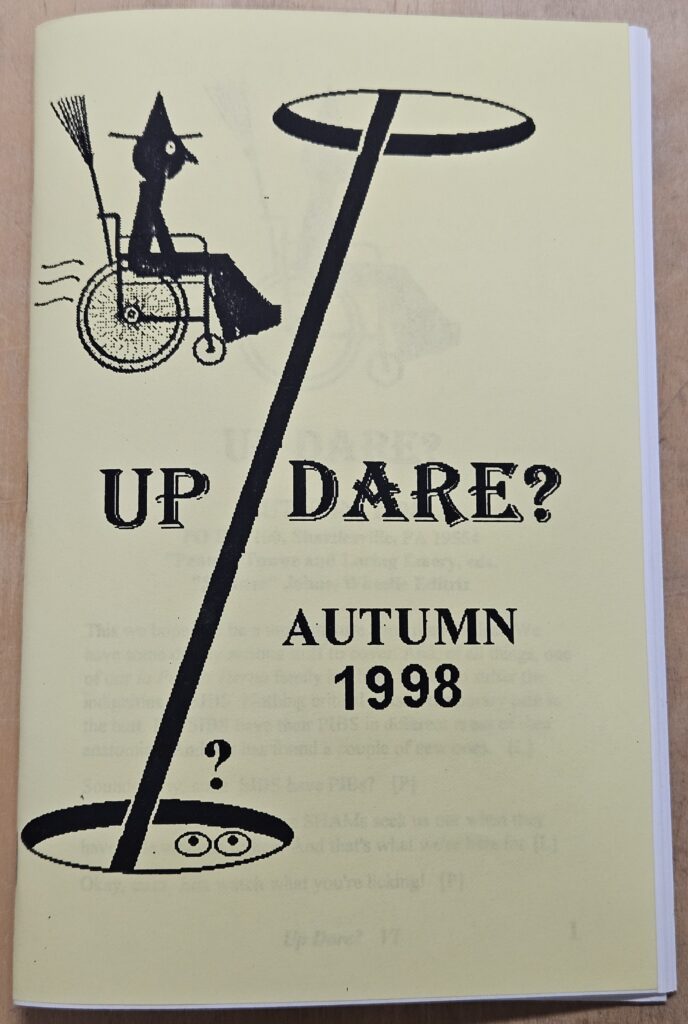
Other small-press favorites that Decker will include in the Underground Comix Showcase are Supermonster #4 and #7, The Bruno Cult, and Up Dare #16. Each reflects upon life, especially what it meant to exist nonnormatively in the 1990s, he said.
“I would recommend Up Dare #16 to anyone interested in disability, as it provides a nuanced discussion of topics that remain incredibly relevant,” Decker added.
The showcase will also highlight the work of Shea himself from issues of The Catbird Seat and Lunatic Chameleon.
About Joseph M. Shea
Born in 1943, Shea graduated from American University in 1966 with a degree in history. In 1970, after serving in Vietnam, he went to work for the U.S. Department of Agriculture and moved to the Capitol Hill neighborhood of Washington, D.C.
Shea began drawing and writing in Vietnam, becoming a prolific short-story writer whose work has been published in the United States, Canada, Denmark, the United Kingdom, Russia, and Poland.
His story “Tribute” was a second-prize winner in the 1982 Fandom Directory writers’ contest. In 1985, his story “Fever Dream” won the United Fanzine Organization (UFO) Award for Best Fiction. In 1986, he was nominated for the Small Press Comics Explosion Award for Favorite Writer.
His script “Viet Nam Was a Girl,” illustrated by Finnish artist Pekka A. Manninen, won the UFO Award for Best Single Strip of 1989. His poem “The Maiden and the Magician” was a 1993 Rhysling Award nominee. In 2000, his story “Books in Hell” won the Blue Plaque Publications Quality Awards for Best Fiction Piece and for Best Fiction Writer.
Examples of Shea’s artwork can be seen in such publications as Friends of American Living, Out of the Blue, 365 Women,Scavenger’s Newsletter, The Vinyl Elephant, The Catbird Seat, and Lunatic Chameleon.
Building an archive of underground comics
MASC has been building special collections of underground comics, comix, and small-press publications since the early 2000s. In addition to the Shea Collection, these include the Steve Willis Underground Comics Collection, 1966-1997; the Lynn R. Hansen Underground Comics Collection, 1899-1994; the Paul Brians Comics Collection, 1950-2004; the Clark Dissmeyer Comix and Small Press Collection, 1977-2002; the Jeff Zenick Comix and Small Press Collection, 1984-2003; and the Comic Art and Culture Collection 1969-2019. Combined, the collections total well over 350 boxes. Many archivists and students have contributed to their organization and care (Robert Franklin, Kathryn Manis, Jean Baker, and Decker).