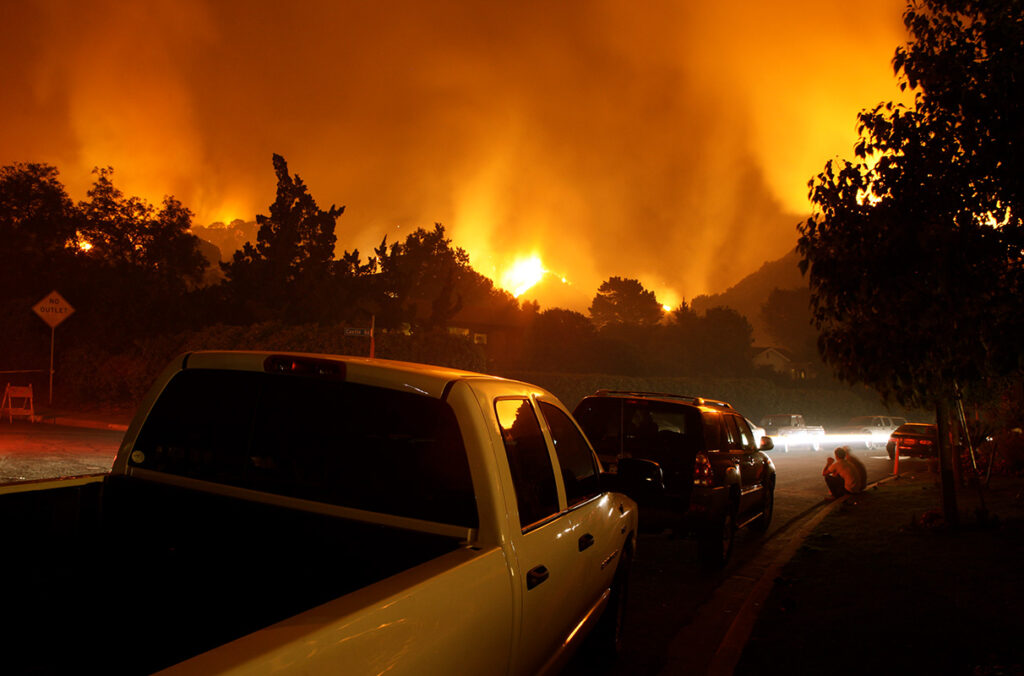
As wildfires affect communities across the Pacific Northwest, Washington State University researchers and Extension specialists are available to discuss topics ranging from property protection and animal evacuation to lightning-caused fire risk, power-grid resilience and postfire recovery.
The following experts are available to provide information and context for news coverage.
Andrew Perleberg
Forest and property fire risks
Andrew Perleberg can discuss wildfire preparedness, forest health, home ignition hazards, and precautions for forest and rural property owners. He can also explain how windblown embers, outdoor equipment and vehicles can ignite homes or dry vegetation, particularly during the dry summer months.
Perleberg is a professor, regional Extension specialist, and leader of the WSU Extension Forestry team.
Contact: 509-630-4217, andyp@wsu.edu
Related story: WSU foresters urge readiness for a dry, early wildfire season
Deepti Singh
Climate change and wildfire risk
Deepti Singh studies climate change, extreme weather and their societal impacts. She can discuss how rising temperatures and changing weather patterns affect wildfire conditions, including the growing risk of lightning-caused fires across the West.
Singh is an associate professor in the WSU School of the Environment at WSU Vancouver.
Contact: 650-468-8791, deepti.singh@wsu.edu
Related story: WSU study projects increases in lightning, wildfire risk
Anamika Dubey
Wildfires and power-grid resilience
Anamika Dubey studies how utilities can prepare the electrical grid for extreme weather, including wildfires. She can discuss how severe weather disrupts power systems and how utilities can make the grid more resilient.
Dubey is the Huie-Rogers Endowed Chair and an associate professor in the WSU School of Electrical Engineering and Computer Science.
Contact: 509-335-1865, anamika.dubey@wsu.edu
Related story: New tool can help utilities prepare for extreme weather
Linda McLean
Animals, Tribal communities and postfire recovery
Linda McLean can discuss wildfire preparedness and recovery in rural and Tribal communities, including evacuation planning for pets and livestock.
McLean is director of WSU Colville Reservation Extension and a 4-H educator.
Contact: 509-634-2305, ljmclean@wsu.edu
Related story: Tips on keeping animals safe during wildfires
Dr. Alyssa Marre
Livestock and ag animal veterinarian
Alyssa Marre is skilled in wildfire preparedness and emergency response for livestock and horses, including evacuation planning, animal identification, and reducing health risks from smoke exposure. She can also address veterinary care during disasters and strategies to help producers protect animal health before, during, and after wildfires.
Marre is a faculty member at Washington State University’s College of Veterinary Medicine with a focus particularly in large animal medicine.
Contact: 509-335-0711, vth.largeanimal@wsu.edu
Susie Craig
Food safety during evacuations and power outages
Susie Craig can discuss food safety during wildfire-related power outages and evacuations, and other natural disasters including when refrigerated or frozen food should be discarded and how families can prepare emergency food and water supplies.
Craig is a professor and WSU Extension food safety and health specialist.
Contact: 206-910-0528, scraig@wsu.edu
Related story: Food Safety in a Minute
WSU wildfire preparedness guides
The following WSU resources offer practical guidance to help individuals and families prepare for wildfires and other emergencies:
- How to protect your home from wildfires
Steps homeowners can take to reduce fire risks, prepare their property and assemble essential fire-safety equipment. - Wildfire preparedness tips
Landscaping recommendations from the WSU Master Gardener Program, including removing dry vegetation, pruning trees and shrubs and creating defensible space. - Prepare your pets and livestock for disasters
Guidance for making an evacuation plan and assembling emergency supplies for pets, horses and livestock. - Bug out!
Advice from WSU veterinary experts on preparing a portable emergency kit for pets and keeping important health and identification records accessible.
Additional information and resources for students and employees are available on a dedicated Emergency Support Resources page on the WSU Spokane website. Those who wish to donate in support of impacted students can make a gift to the WSU Health Sciences Emergency Fund or the WSU Health Sciences Campus Pantry.