By Seth Truscott, College of Agricultural, Human and Natural Science Resources
Millions of tons of cotton and cellulose waste are being kept out of landfills by spinning it into valuable fibers for new clothing, thanks to Washington State University scientists, new technology, and support from the M.J. Murdock Charitable Trust.
Fabric going to waste
Fiber consumption is on the rise as a growing world population demands textiles for clothing, homes and industries. At the same time, the recycling rate of textile waste is extremely low: less than 1 percent of clothing gets recycled into fibers for new clothing, representing a loss of more than $100 billion worth of materials each year.
“More than 13 million tons of textiles go to waste every year in the United States,” said Hang Liu, assistant professor in WSU’s Department of Apparel, Merchandising, Design and Textiles. “In Washington’s King County alone, 40,000 tons of textile waste that ended up in landfills in 2015.
“The textile industry is eager to put that waste back into use,” she added. Manufacturers are actively seeking sustainable practices that keep materials in use as long as possible, and find new value for them once they’ve been used.
Partnering with Ting Chi, associate professor in AMDT, and Jinwen Zhang, professor in the School of Mechanical and Materials Engineering, Liu this fall enhanced her research project through a new grant, “Environmentally Friendly Cotton/Cellulose Waste Recycling,” with $120,000 in funding, $60,000 from the M.J. Murdock Charitable Trust and $60,000 from the Washington State University Office of Commercialization.
Showing the value of regenerated fibers
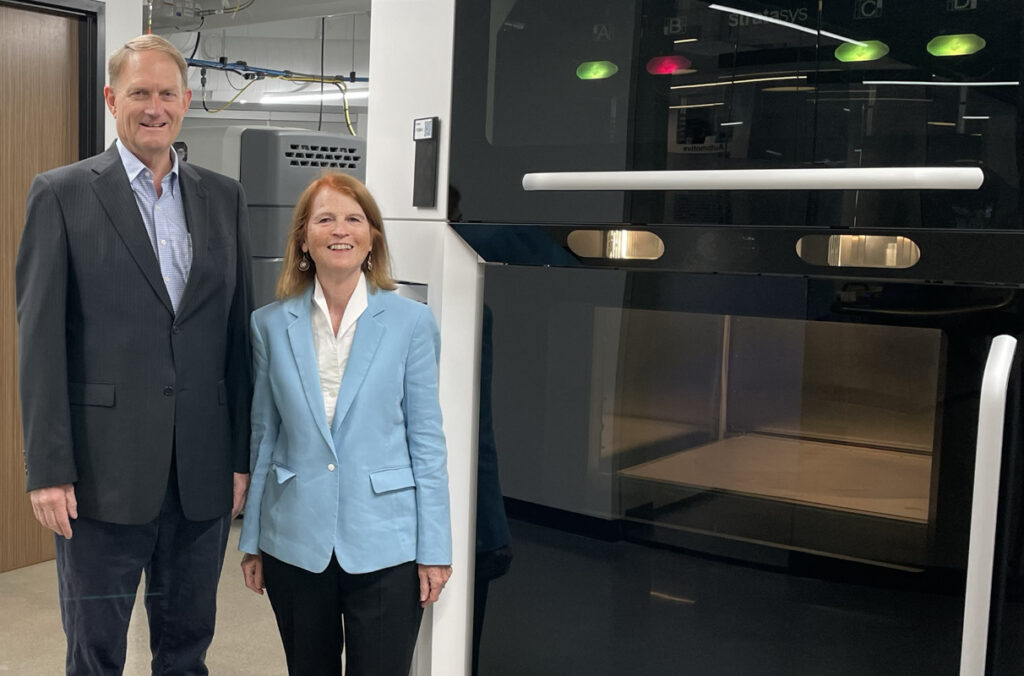
The grants allow the team to set up a large, laboratory-scale device, called a wet spinning machine, which produces new fibers from cotton waste textiles. She’ll use it to make fabric samples with commercial potential, helping the fabric industry learn how to use and develop regenerated fiber products.
“This technology helps close the loop, turning waste into high‑quality products in an environmentally friendly way,” Liu said.
“Given the tremendous amount of cotton waste available for free or at a very low cost, that savings is of big interest to the industry,” she added. “My project is an important milestone that could strengthen industry collaboration and show the commercial and environmental value of regenerating waste fibers.”
To learn more about Liu’s research, see the Department of Apparel, Merchandising, Design and Textiles website.