Washington State University’s Cougar Health Services (CHS) has been reaccredited for another three years by the nation’s leading accrediting agency for ambulatory health centers. It is an achievement CHS has maintained for 30 years since it first applied for accreditation.
Bill Butcher, executive director of CHS, said the news from the Accreditation Association for Ambulatory Health Care (AAAHC) was much anticipated as he and his staff had been intensely preparing for the reaccreditation visit.
“I’m delighted with how well we did,” Butcher said. “Our team performed extraordinarily well.”
The magnitude of the accomplishment was articulated in a statement AAAHC shared with the university: “Washington State University Health Services has maintained accreditation from the Accreditation Association for Ambulatory Health Care since 1996, demonstrating a longstanding commitment to delivering high-quality, student-centered health care.” It went on to say, “As a AAAHC-accredited student health center, Washington State University is part of an elite group of collegiate health programs nationwide that have achieved this distinction.”
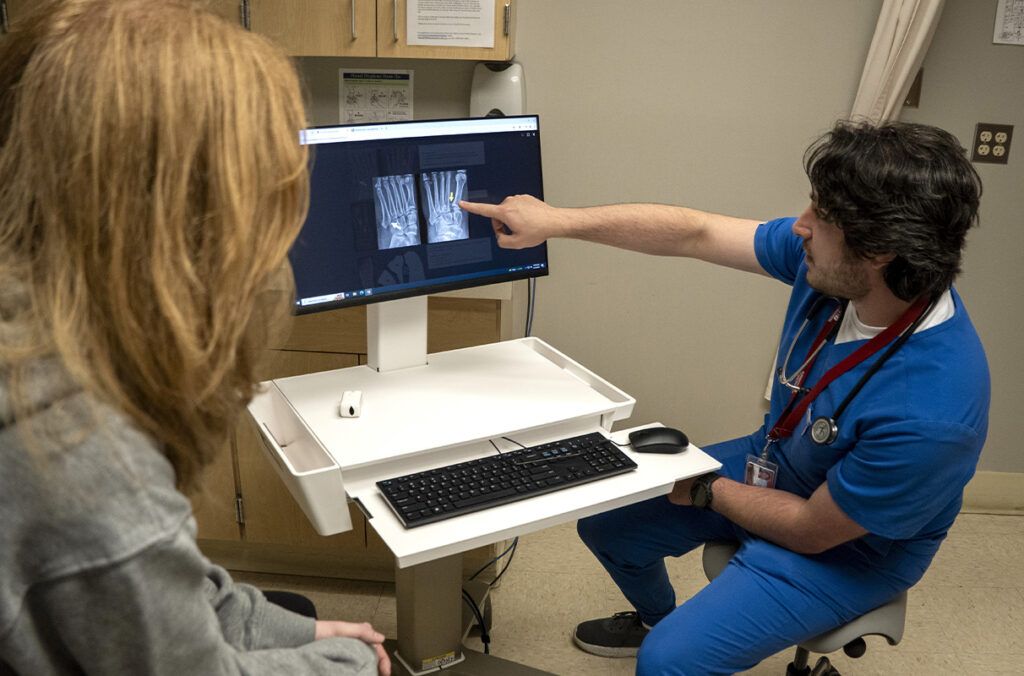
The accreditation applies to all aspects of CHS — the medical clinic, Counseling and Psychological Services, the pharmacy, vision clinic, and health education.
An important undertaking
As part of the reaccreditation process, CHS was evaluated on 191 curated standards that assessed performance and policies on everything from quality management, staffing levels, and facilities maintenance.
In addition to a thorough review of CHS’s policies and procedures, two AAAHC designated health professionals, also known as surveyors, visited the Pullman campus in June to view CHS’ facilities and talk with staff and students.
The accrediting agency determined that CHS was fully compliant in many areas including medication management, facilities maintenance, handling of clinical records, case management, and anesthesia and surgeries (minor procedures). CHS’ policies and procedures for patient rights and protections, laboratory and radiology, and infection prevention and control were also notable strengths.
Butcher said there are never perfect evaluations from these thorough reviews and AAAHC offered some recommendations for improvement in some areas such as staff training and orientation, health history documentation, and credentialing and privileging.
“The whole point in participating in the accreditation process is to get feedback so you can continue improving your organization’s performance,” Butcher said. “It’s an important undertaking.”
Through education, resources, and best practices, AAAHC said it is committed to helping CHS strengthen its quality programs and sustain operational excellence between surveys.
Meeting the highest standards
Butcher said as one of the largest primary care facilities in Whitman County, it is important for CHS to demonstrate it takes its work seriously. During the 2025-2026 academic year, CHS served 8,601 unique students across its entire operation, equaling about half of enrolled students. Half of those students utilized more than one service at CHS.
In its statement, AAAHC highlighted that CHS’ accreditation distinguishes WSU among outpatient health care organizations through its adherence to rigorous standards for quality, safety, and operational excellence.
“For everyone who participated in the accrediting process, it was good confirmation of the importance of the work we do to maintain quality standards and expectations around the care we provide,” Butcher said. “It speaks to our commitment to the quality of the student experience — something we’ve been doing for 30 years.”