The Washington State University Energy Program is partnering with KW Energy to help lower-income residents in rural Stevens County improve the energy efficiency of their homes through no-cost duct sealing.
The work is supported by a $250,000 grant from the Community Energy Efficiency Program, which is managed by WSU and helps homeowners and small businesses across Washington make energy-saving upgrades. Through the grant, family-owned KW Energy is providing no-cost aerosolized vinyl duct sealant to income-qualified residents, with a particular focus on manufactured and mobile homes. Manufactured homes are a priority because conventional insulation upgrades can be difficult to implement, while leaks in their ductwork can waste significant amounts of heated or cooled air.
CEEP Coordinator Erika Coveny said the partnership stands out because it “delivers a practical energy-saving service to an underserved rural community through a local family business.” She added that, in doing so, the project directly supports CEEP’s broader goals of helping residents make cost-effective energy investments, creating local jobs and advancing Washington’s climate goals.
KW Energy has upgraded 50 to 60 homes using CEEP funding and plans to serve 110 by combining the grant with rebates from Avista and the Bonneville Power Administration. The company will track participants’ utility data over the coming year to measure energy savings.
The grant also allows KW Energy to focus more of its time on technical work and community service rather than billing individual homeowners. For owner Kirby Weythman, the project provides an opportunity to grow the family business while helping neighbors lower their energy costs and make their homes more comfortable.
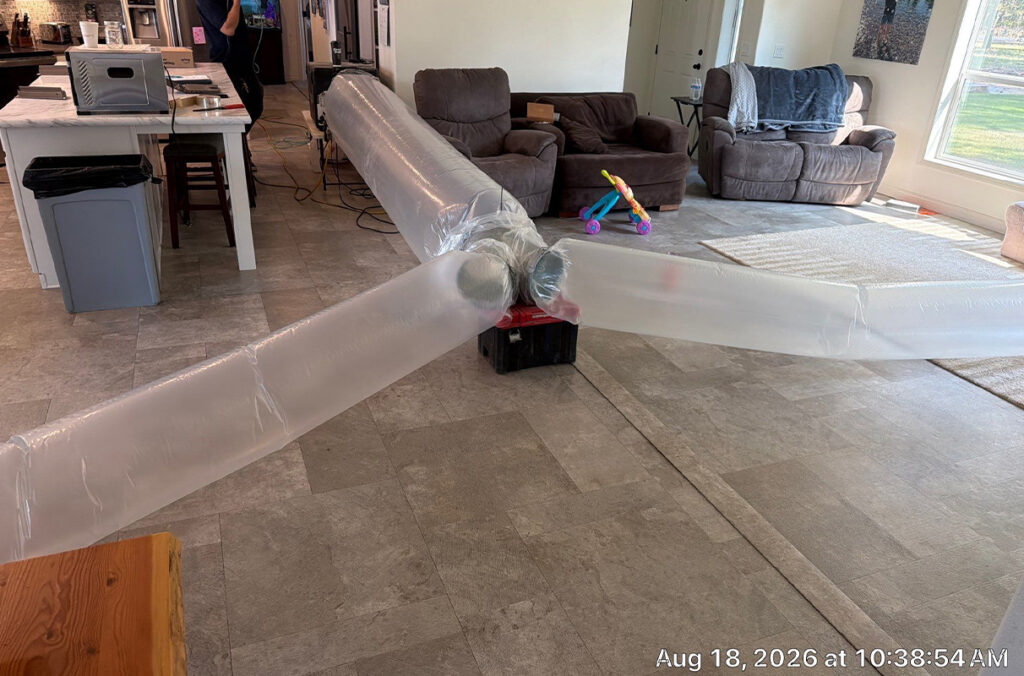
KW Energy uses Aeroseal, a process that pressurizes the ductwork and distributes a nontoxic aerosolized vinyl sealant through the system. The sealant fills small and hard-to-reach leaks that traditional hand-sealing can miss. Technicians measure air loss before and after treatment, which typically takes about an hour.
The results can be significant. Weythman said one manufactured home on the Spokane Indian Reservation experienced a 91% reduction in duct leakage after 17 minutes of sealing. Residents have also reported more consistent temperatures throughout their homes and improved airflow to rooms that were previously difficult to heat or cool.
Visit the WSU Energy Program website to learn more about CEEP and other initiatives.