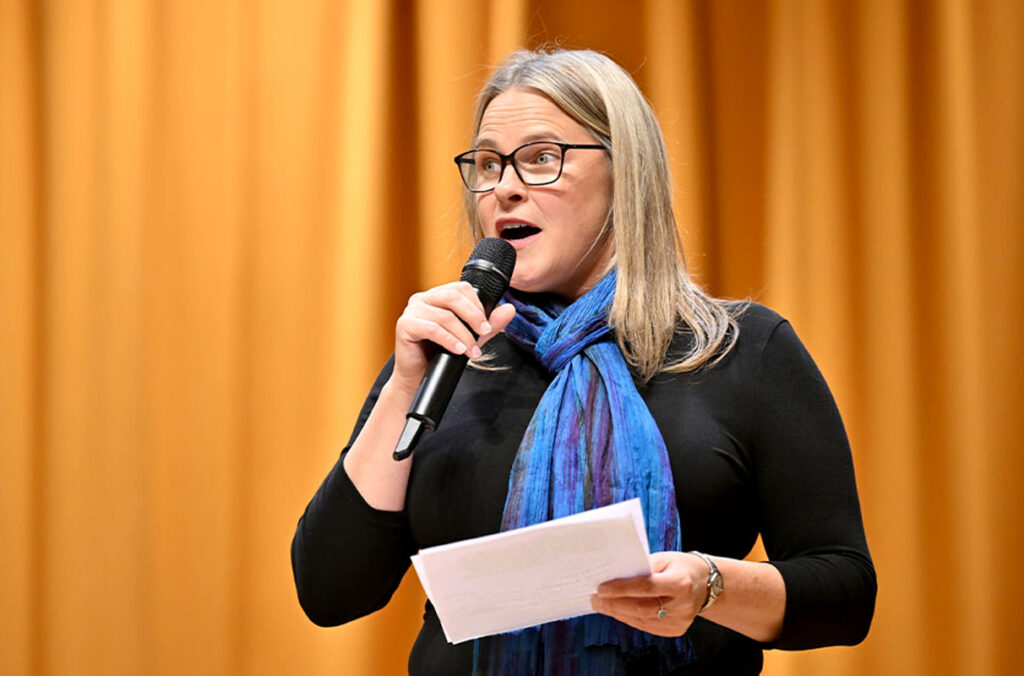
When Washington State University music professor Melissa Parkhurst learned that renowned North Indian classical music and dance troupe Anantya was touring the U.S. and planning to visit Pullman last fall, she used funding from her 2025–26 Bornander Honors Distinguished Chair appointment to help organize this concert, “Anantya,” in October.
“I knew it was going to cost somewhere between $6,000 and $6,500, and no one sponsor has that,” Parkhurst said. The Anantya event happened due to the dedicated and sustained organizational efforts of Profs. Susmita Bose and Amit Bandyopadhyay, along with generous support from the WSU Honors College, WSU School of Music, David G. Pollart Center for Arts and Humanities, the Allegro Student Arts Organization, and donations from WSU’s Indian and Bangladeshi faculty members.
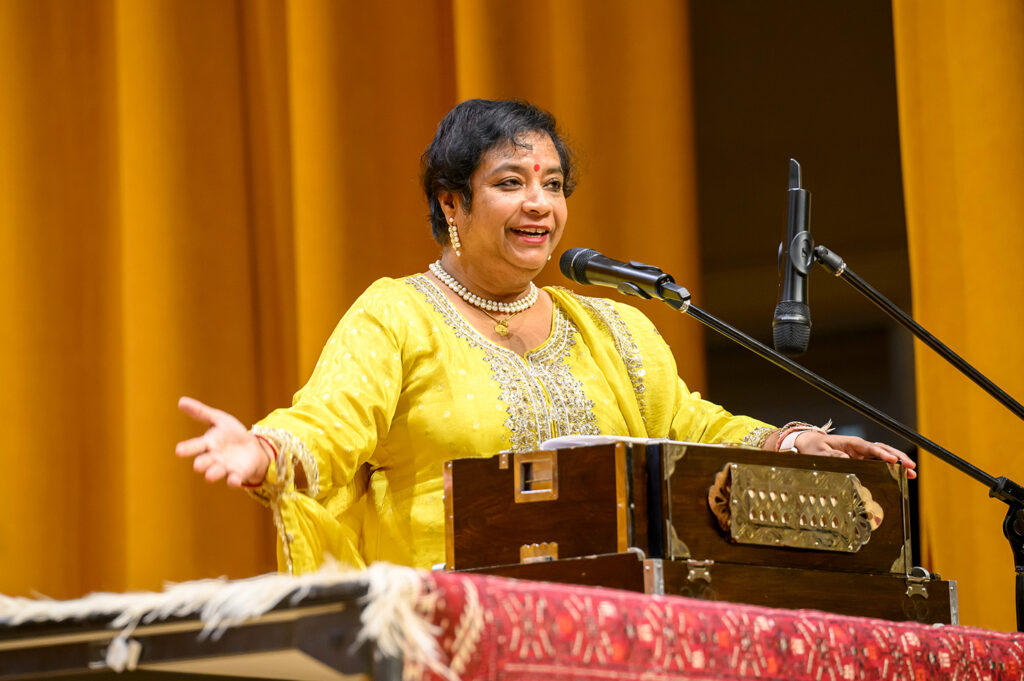
Parkhurst’s Bornander Chair endowment also funds Honors 380, Music and the Mind, a course she’s offering for the third time this semester. The course focuses on the power of music in cultural traditions and healing; the dance troupe Anantya focuses on these things, too.
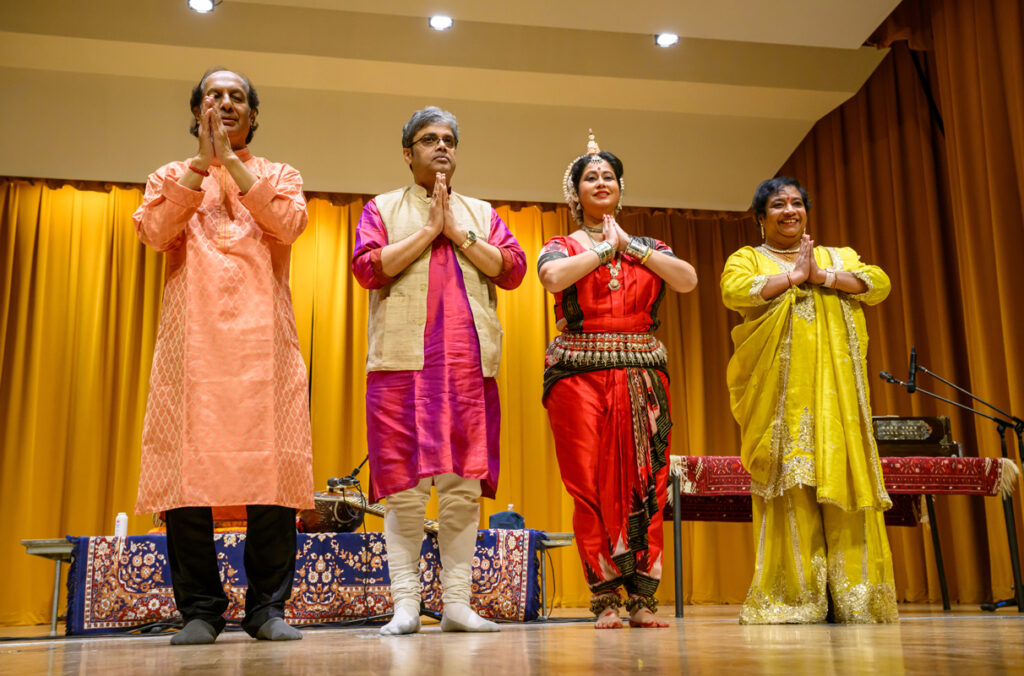
“We brought the musicians to the community and also organized a demonstration workshop for Honors 380 (students),” Parkhurst said. Anantya’s Kaberi Sen took them through Odissi, a Northern India dance form, focusing on arm gestures so seated students could participate.
The Kimbrough Hall main event played to a full house, including honors students and local Indian and Bengali communities. “It was intergenerational — there were grandmothers, small children and babies. It was really lovely,” Parkhurst said.
Music and the Mind uses ethnomusicological pedagogy to incorporate music perspectives from a variety of cultures and traditions, examining music’s role in aspects of peoples’ lives from biological evolution to mental, physical, and spiritual well-being.
“We come back a lot to what brain processes are involved when we experience music, whether we’re making it, playing an instrument, or listening to music — what’s going on in our brains?” Parkhurst said.
We come back a lot to what brain processes are involved when we experience music, whether we’re making it, playing an instrument, or listening to music — what’s going on in our brains?
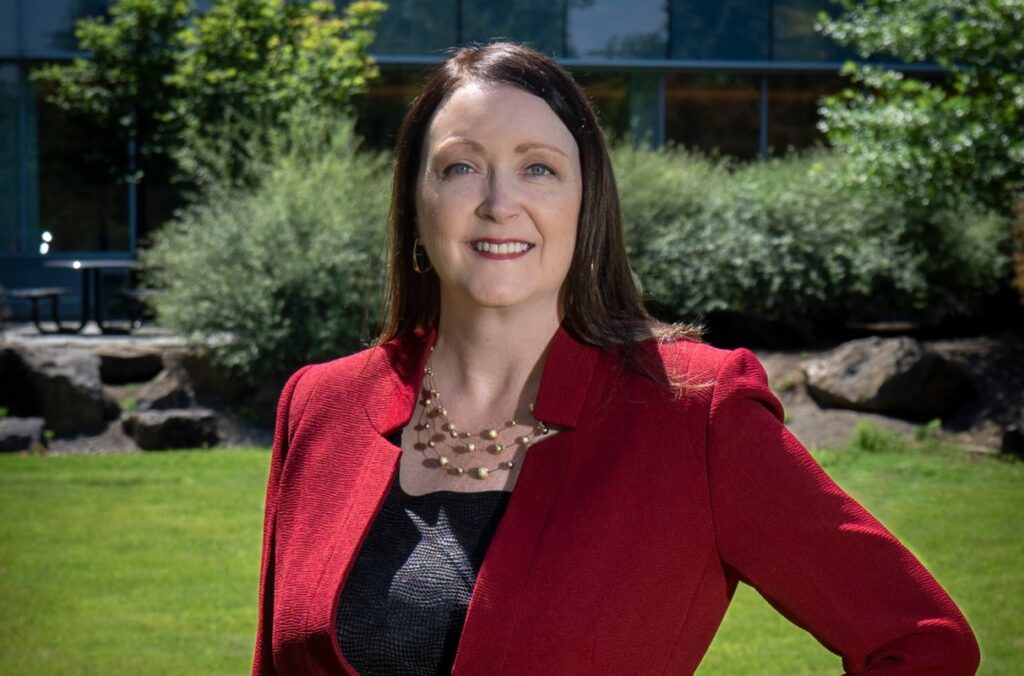
Melissa Parkhurst, professor
Washington State University
She added that music activities don’t happen in just one part of the brain, but in broadly dispersed neural networks that help sustain brain activity.
“Even when part of the brain gets compromised or injured, or goes offline for some reason, we have these richer networks and our brain can develop workarounds to get things done, maybe to help us retain memories or help us maintain our verbal abilities or our motor skills,” Parkhurst said.
Parkhurst’s curriculum also draws on other academic sources such as the work of Irish poet, theologian, and philosopher John O’ Donohue, who examines the power of beauty, why it is so important in peoples’ lives, and how music nourishes the soul and helps to counter despair.
“Music connects us to the divine, however people want to conceive of that or talk about it. O’ Donohue’s main thesis is that beauty isn’t a luxury for people who can afford to live in it or seek it out, but it’s a fundamental calling; something we all need and have a right to,” Parkhurst said.
The Bornander also supports Parkhurst’s research. She has presented at two Northwest conferences on the history of music at Chemawa Indian School, the nation’s longest continuously operated federally run boarding school for Native American children, and attended the Society for Ethnomusicology conference in Atlanta. There, she connected with UC San Francisco gerontologist Teresa Allison, a mentor she is consulting with on an NIH grant proposal exploring culturally specific music as an intervention for Indigenous people with dementia, and possibly on music’s potential role in early dementia diagnoses and caregiver wellness.
Parkhurst has also brought guest speakers, musicians, and culture bearers to campus through her Honors 380 courses. Nimiipuu (Nez Perce) tribal member Josiah Black Eagle Pinkham visited in September to discuss the repatriation of tribal songs and the role of music in Nez Perce culture. Nimiipuu tribal member, Andre Picard Jr. visited Parkhurst’s class last March, sharing Native American flute and Round Dance songs, and returned in the fall with family members to record music at campus facilities. Once mastered, the recordings will be preserved in WSU Libraries’ Manuscripts, Archives, and Special Collections and/or through the Plateau Peoples’ Portal in partnership with the WSU Center for Digital Scholarship and Curation, WSU’s Native American Programs, and several tribal partners.
“The Bornander let me bring these culture bearers here to preserve the songs and teachings for their families and tribal communities,” Parkhurst said.
After the performance by Anantya, Honors students Sairaghav Gubba and Jasleen Dhaliwal emailed Parkhurst about the event. A first-generation immigrant of Indian parents, Gubba said it harkened to temple holidays Lohri and Diwali.
“The Odissi dance reminds me of the Indian classical dance, Bharatanatyam, which both my mother and sister do,” he wrote.
Dhaliwal, from California, enjoyed tabla maestro Arup Chattopadhyay’s drum performance.
“It was a delightful experience… I could close my eyes and almost see myself back in the temple I go to at home, and it brought tears to my eyes,” Dhaliwal wrote.
Those interactions are what Parkhurst wants for her students.
“It was transformative getting embodied in how music can make us feel better and leave us in a different place than we were half an hour ago; I looked around and saw a lot of smiles,” she said.