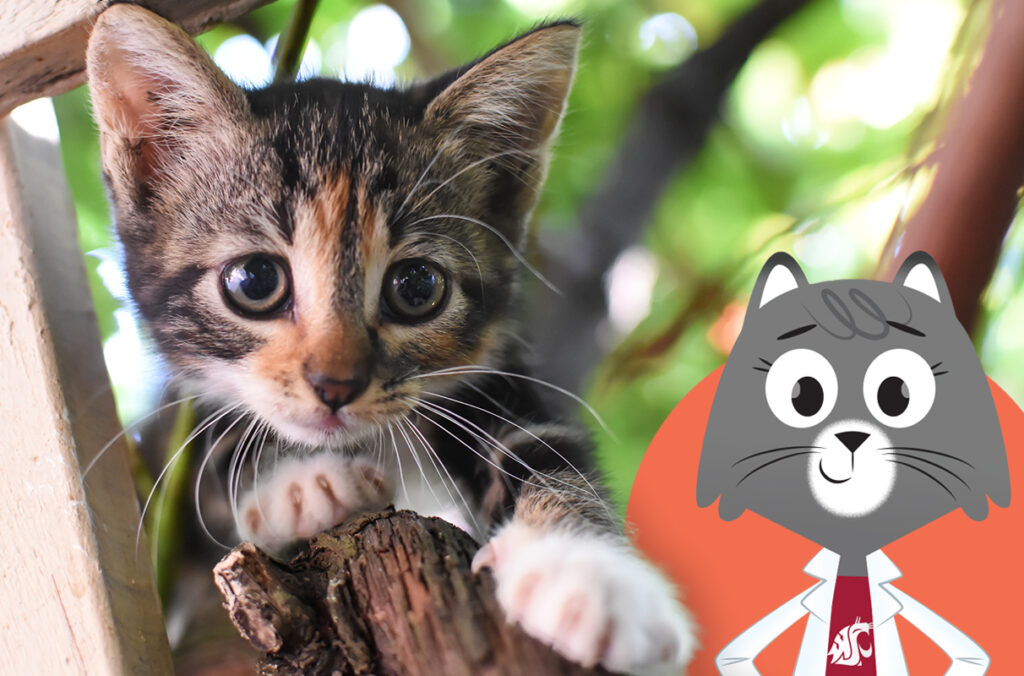
The latest installment of Washington State University’s Ask Dr. Universe series scales new heights — literally. In the newest column, WSU’s curious feline scientist investigates the mechanics of cat climbing with insights from Steve Lampa, who teaches small animal anatomy in the College of Veterinary Medicine.
According to Lampa, a cat’s ability to ascend trees and furniture comes down to powerful hind-leg muscles, flexible joints, and retractable claws that function like built-in grappling hooks. Domestic cats even have sharper claws than their wild cousins, helping them move silently and hunt alone.
The column also explores why descending is far trickier, revealing how cats rely on their flexible spines, long tails, and a remarkable “righting reflex” that allows them to twist midair and land on their feet.
Ask Dr. Universe publishes every week, connecting kids’ curiosity with WSU expertise. Read the full story, “How do cats climb?” and explore more science questions at the Ask Dr. Universe website.