Last Christmas Eve, over a dozen Washington State University students removed layers of warm clothes, plunged into the ice-cold water of an active volcanic caldera just off the Antarctic coast, then scurried back to shore.
“I questioned every step I took, but it was definitely a once-in-a-lifetime experience,” said Mikayla McDonald, an environmental science major from the WSU Global Campus.
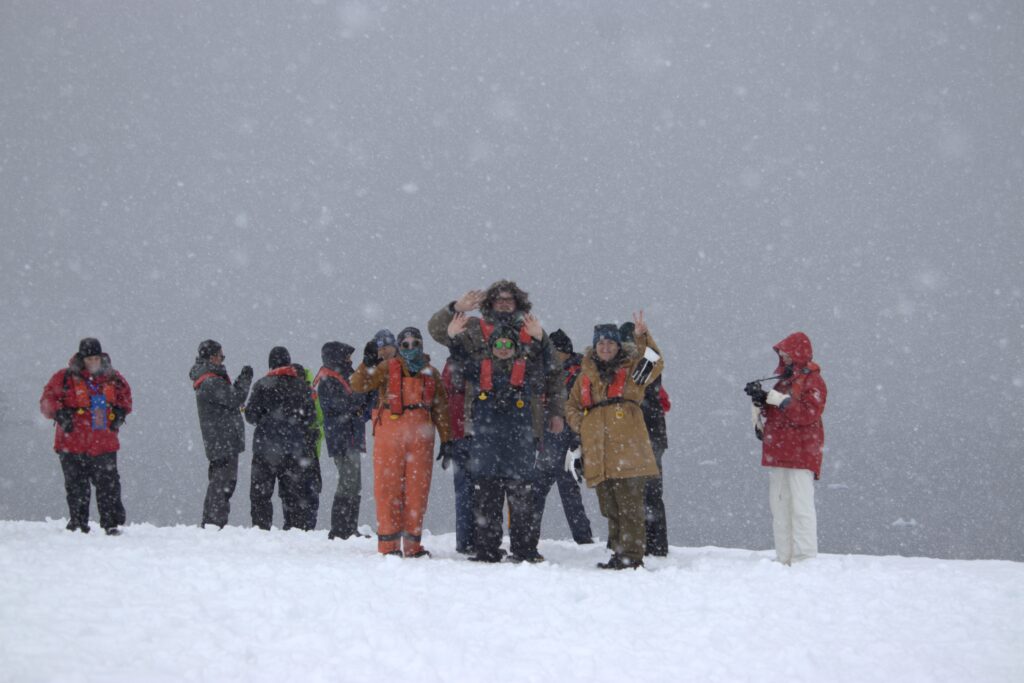
The chilling dip was just one aspect of WSU’s first study abroad trip to Antarctica in over a decade. On top of tempting aquatic hypothermia, the students conducted hands-on observational science and braved consistent swells greater than 25 feet in the open ocean.
The nine-day excursion was part of a semester-long class in WSU’s School of the Environment (SOE) last fall. In addition to preparing students for the trip and the science they would encounter, the course split students into three primary research groups by topic: glaciers and ice; seabirds; and human interactions and impacts on the region.
“We wanted small research groups so the students could bond and have a chance to provide input,” said Kara Whitman, an SOE scholarly associate professor and faculty co-leader on the trip. “They each did a literature review before going, then gave a presentation after we returned.”
Faculty co-leader Caitlin Bletscher from the Department of Human Development led the human interactions and impacts group.
“The multi-disciplinary aspect helped frame the assignments before the trip, the research modules, and how we approached sustainability conversations with such a fragile climate,” said Bletscher, who is based on the WSU Vancouver campus.
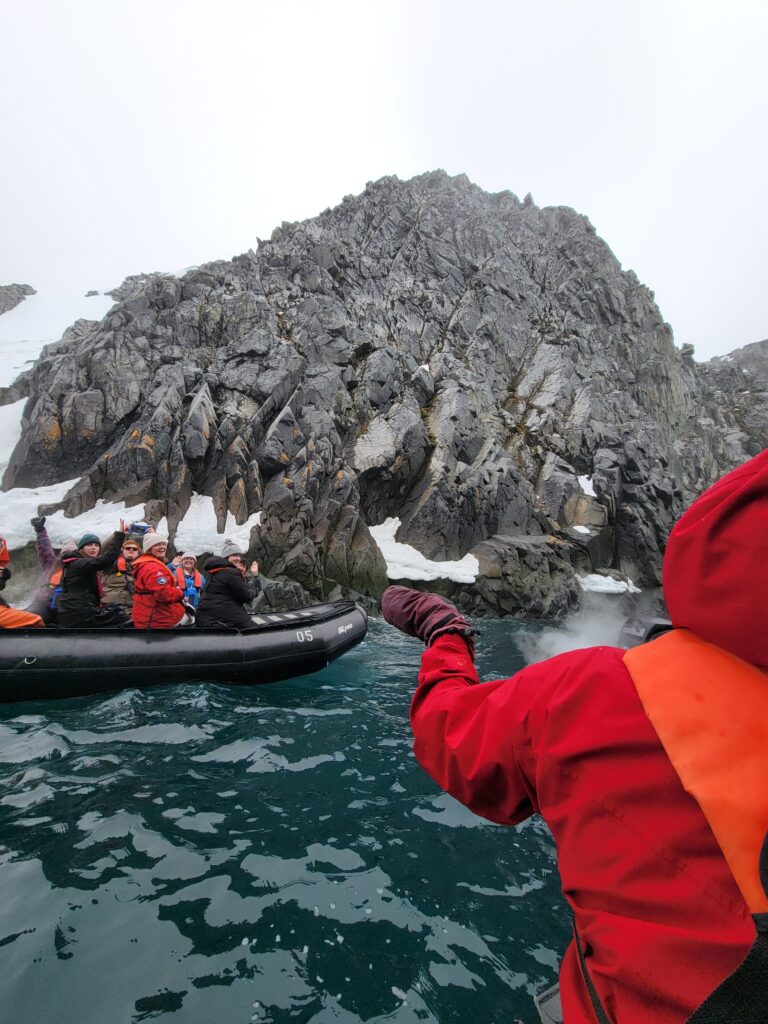
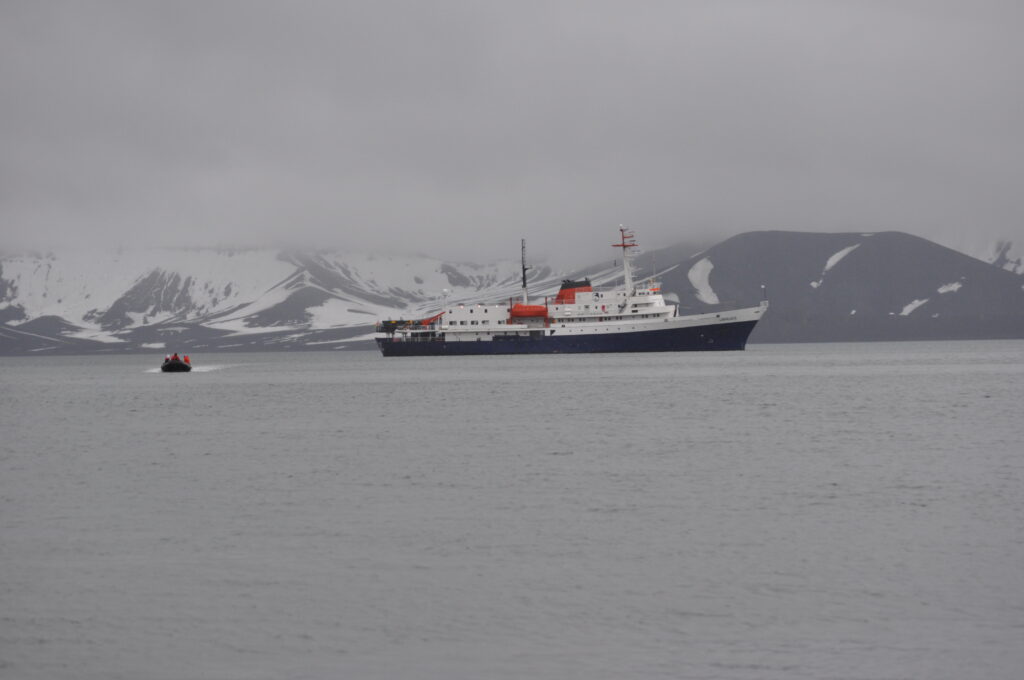
The group traveled over 1,500 nautical miles on a retired research vessel with around 50 other passengers, mostly from other universities. They departed from the southern tip of Argentina, battled sea sickness during a 36-hour journey across the Drake Passage, then toured around the South Shetland Islands and the continent of Antarctica. They jumped onto smaller boats for daily excursions.
The group was an eclectic mix that included several different majors, undergraduates from the Pullman and Global campuses, and even a graduate student.
“They built a strong bond with each other because it was such an extreme trip,” said Whitman, who has led several study abroad groups before, though never to Antarctica. “I was very impressed by their research projects because they took it very seriously. We had fun on the trip, but the students also gained real-world research experience they can use in the future.”
The non-traditional route
Mikayla McDonald, who lives in Oregon City, Oregon, has always been interested in the natural world. She heard about the Antarctica trip during her second week as a WSU Global Campus student in early 2024. She had just transferred to the fully online WSU campus, after earning an associate degree, when an email about the study abroad program got her undivided attention.
“I never would have imagined being able to go to Antarctica, especially because I’ve got three kids,” said McDonald, who plans to graduate in December 2025. “I do a lot of volunteer work rehabbing different environments affected by human impact, so that research aspect, on top of going somewhere so remote, made me want to try.”
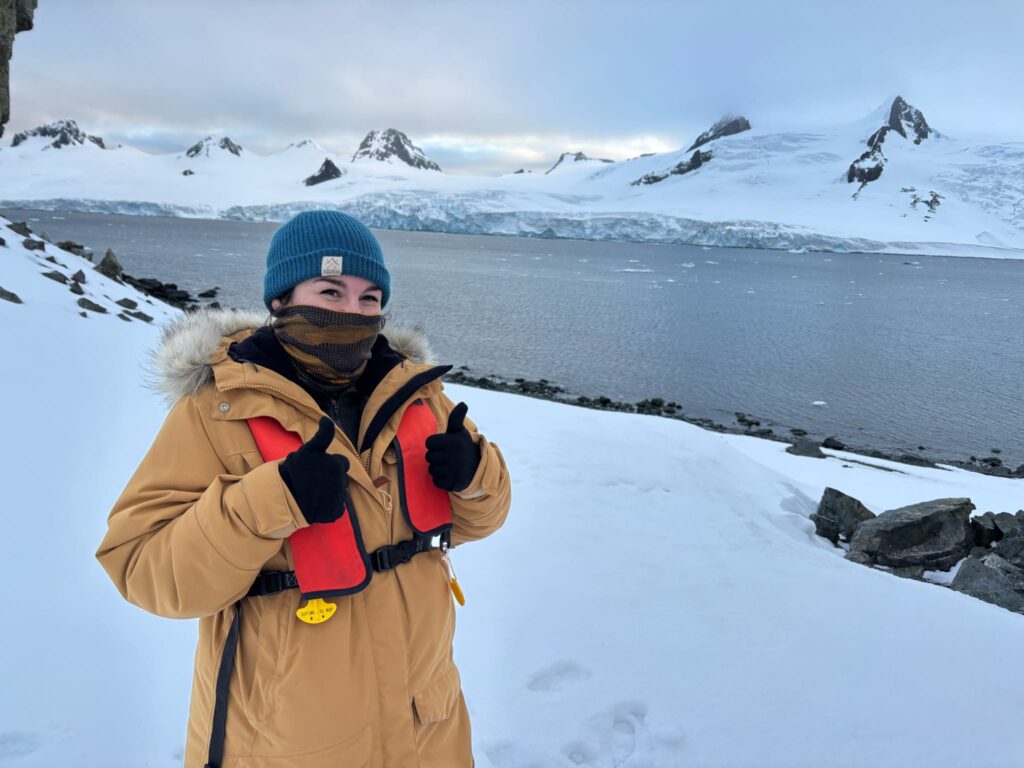
She and her family made significant sacrifices to afford such a grand adventure, holding bake sales and garage sales to raise funds. Their efforts were worth the experience.
“I can’t express how grateful I am for the people who helped me get there,” McDonald said. “I learned a lot about myself and grew as a person. My perspective shifted, not just in Antarctica but through the experience of getting there.”
That included 21 hours of plane travel to southern Argentina, before the long boat journey.
“I wanted to push myself,” she said. “I chose the human impact study because it would force me to talk with other people on the trip and ask them about their perspectives. I wanted to learn how all the tourists to Antarctica make an impact as environmental ambassadors when they return home.”
A graduate student perspective
Elizabeth Urban, a geology graduate student, wanted to leave her comfort zone, experience field research for the first time … and see penguins.
“My interest is geochemistry and I had never done field work,” said Urban, who will graduate with her master’s degree in May. “I have the opposite of wanderlust, but I recognized this was a one-time opportunity. And I’ve had a lifelong fascination with penguins and Antarctica.”
As the group’s sole graduate student, Urban had more responsibility than the undergraduates, leading the glaciers and ice research project.
“I’m not a biology person; I love rock and ice,” she said. “Taking the boat around huge chunks of blue ice, which is really rare because it forms very deep underwater, is something I will never forget.”
Even though Urban was one of the few who turned down the polar plunge opportunity, she still experienced her own zen moment.
“We did a beach landing on the actual continent, but the beach was rocky, not sandy,” Urban said. “I stood there listening to the water in a place I will see never again. It was beautiful and calm, then some penguins walked past, and I watched them exist in their world. It was so peaceful.”
A change in travel plans
Kamrynn Eddy was ready to spend the fall 2024 semester studying abroad in Kenya. The wildlife ecology and conservation sciences major who graduates in May loves animals, and Africa is a more traditional place to study exotic creatures. But an email last spring changed her plans almost immediately.
“I called my mom right away, then talked with my academic advisor,” said Eddy, a Colorado native who came to WSU because of her major. “Antarctica didn’t seem like someplace real people get to visit. I knew this was something I had to do.”
Eddy, who earned a prestigious Gilman Program scholarship to help defray costs, chose the seabird research project. Every day on the boat involved sessions observing different species of birds, then marking down where they were spotted and what they were doing. The students saw albatross, petrels, fulmars, several species of penguins, and more.
Before the trip, the students learned what species to expect and how to identify them as they flew or swam past the boat. But most of the trip wasn’t plannable.
“Everyone told us that there’s a lot you can’t really anticipate,” Eddy said. “You have to prepare yourself to not be prepared. For me, the hardest part was being away from family over the holidays.”
She said Christmas Eve was her favorite day of the trip, with the polar plunge and other excursions. But she couldn’t share the experience with family, as cell reception was impossible. As soon as she returned to her hotel in Argentina, she used Wi-Fi to make a video call.
“I told them so much, but it barely scratched the surface,” Eddy said. “It’s almost impossible to talk about everything I saw and did. I will treasure this experience and remember it forever. It was challenging, expensive, exhilarating, and completely worth every second.”