An idea to make concrete building bricks from low-value construction waste has received an American Institute of Architects R & D award.
The award, announced in Architect Magazine and one of eight awarded nationally, recognizes innovation in architectural technology.
The researchers, including Taiji Miyasaka, professor, and David Drake, adjunct professor, in the School of Design and Construction, began developing their unique building system made from drywall in 2017 with a grant from the American Institute of Architects. Their idea was to reduce waste while creating an affordable building material that could lower housing costs.
Building construction and demolition waste is a growing problem in the United States with 534 million tons of such waste in 2014. Drywall, also known as gypsum board or sheetrock, is a ubiquitous interior wall covering that is cost effective but wasteful to install. Building a 2,000 square-foot home generates more than a ton of drywall scrap. The material made up about nine percent of all construction waste in the U.S. in 2016. Furthermore, when it’s put into landfills, soil bacteria decompose the gypsum and produce a noxious gas, and some cities have banned it from landfills.
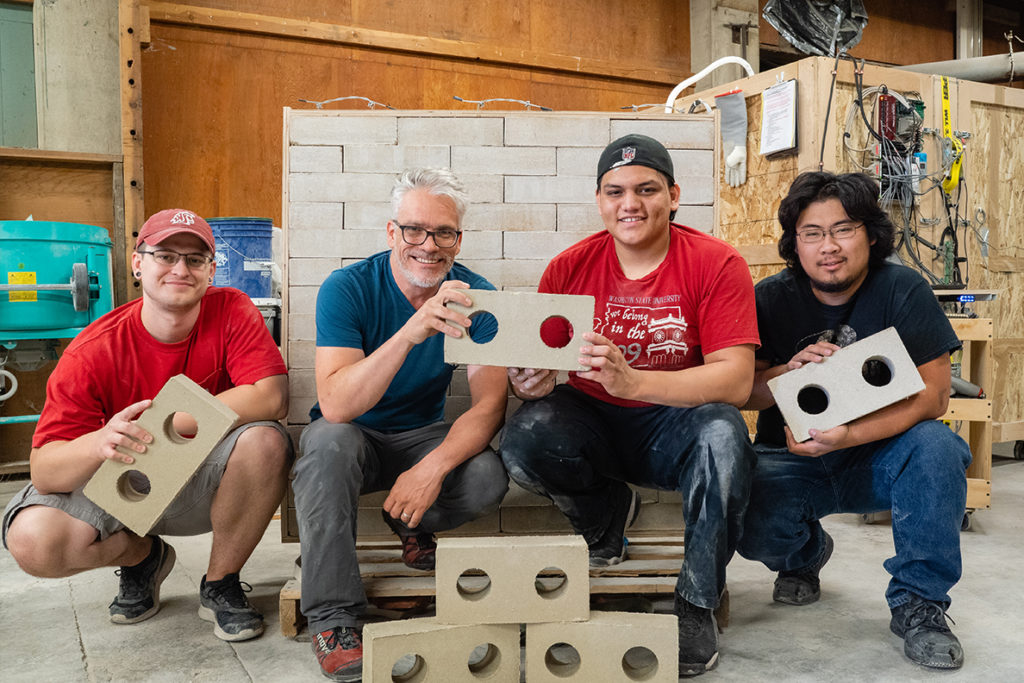
The blocks the researchers developed are made from a high percentage of drywall waste and a binder made from industrial byproducts. They are waterproof and two times lighter than earth blocks, bricks or concrete blocks. They also provide ten times more insulation value than traditional bricks. The researchers have developed a manufacturing method that can use the same machinery that is used for conventional concrete blocks.
Last year, they received an Amazon Catalyst grant and WSU Commercialization Gap Fund to move the project to a demonstration scale, and the work was also featured in a Washington State History Museum exhibit on recycling.