|
|
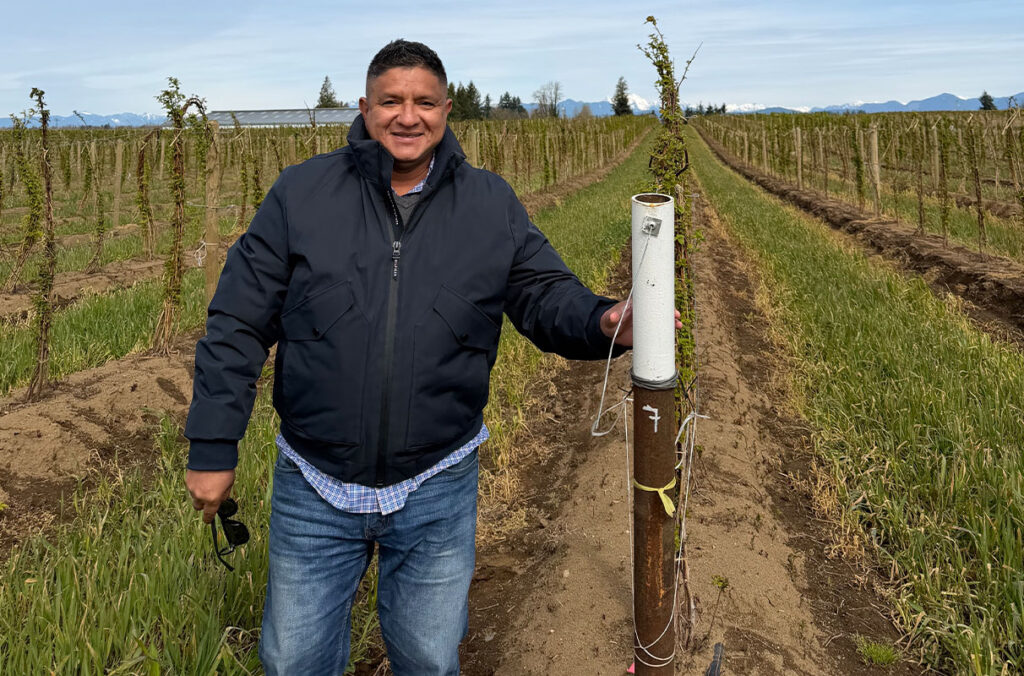
Doctoral student Suphasuk “Bird” Pradubsuck measures a Corcord grape vine prior to excavating and analyzing it. |
PROSSER – Without enough Vitamin C, people can get sick with scurvy. Similarly, micronutrients like boron, zinc and copper can have a profound effect on plant health.
Soil scientist Joan Davenport and her colleagues at the WSU Irrigated Agriculture Research and Extension Center in Prosser are studying micronutrient utilization in Concord grapes. Washington is the nation’s No. 1 Concord grape producer.
Micronutrient availability is a concern in Washington’s grape-growing region because of its high-pH soils. The soil availability of micronutrients decreases as pH increases.
“Right now, growers apply micronutrients based on their experience and on what’s commercially available,” Davenport said. “We want to give them quantifiable data to work with. Then they’ll be able to supply plants with what they optimally utilize without spending more than needed on inputs.”
If the vine doesn’t get enough boron, Davenport said, pollen lands on the flower but doesn’t germinate.
“That’s a disaster,” she said, “because if there’s no pollination, there’s no seed, and then there’s no fruit.”
Copper and zinc don’t affect the plants so dramatically, but do affect the size of the canopy.
Davenport’s current project is based on one her doctoral student, Suphasuk “Bird” Pradubsuck, finished recently.
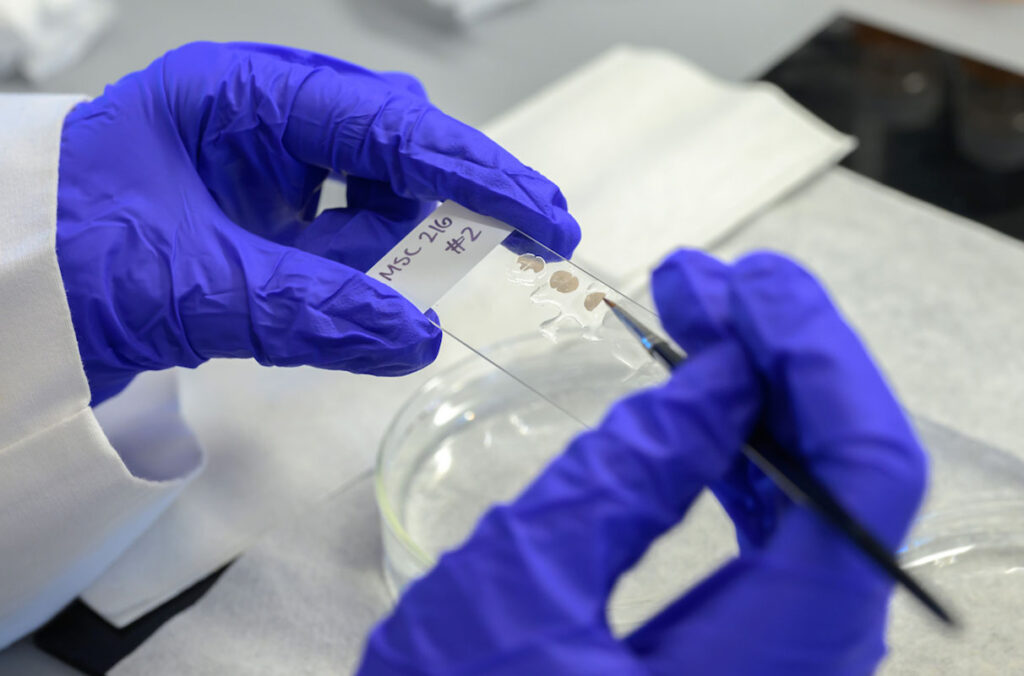
“Bird excavated Concord vines at various times during the growing season and then did detailed and comprehensive analysis of the plant parts in order to ascertain the amounts per acre of micronutrients the plants used,” Davenport said.
Macronutrients, such as nitrogen, are measured in pounds per acre, while micronutrients are generally measured in parts per million.
“A typical Concord yield is about eight tons per acre,” said Davenport. “To get that, the plants need about 50 pounds of nitrogen per acre, but only a third of a pound of boron.”
Davenport is running extensive field trials on micronutrient utilization with a cooperating grower.
“We’re putting on micronutrient fertilizers as both ground and foliar applications,” she said, in order to determine whether vines take up the nutrients from the soil or through their leaves.
Her research has direct impact on wine-grape growing as well. Her team is imposing nutrient deficiencies on cabernet sauvignon and semillon grapes.
“All micronutrients have different M.O.’s. By depriving plants of individual nutrients, we’ll be able to see what effects they have and, with the field study data, compare the results in ways that inform wine-grape growers.
“It’s all about yield and quality,” said Davenport.