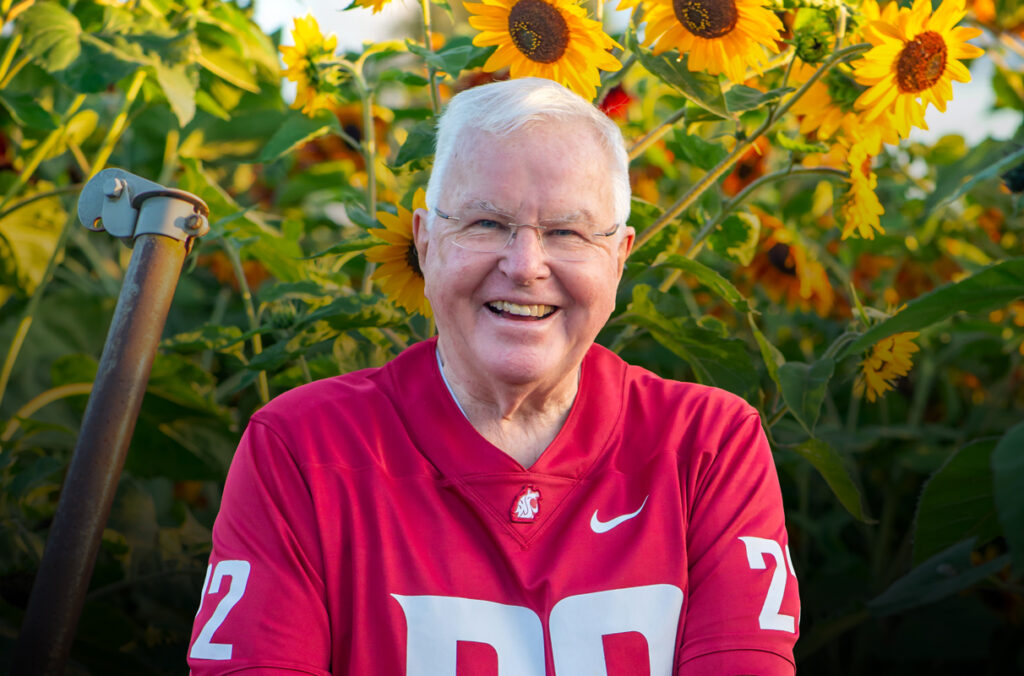
Part of an aging generation that continues to have a dramatic impact on society, the first Baby Boomers have begun to turn 60. In fact, the U.S. Census Bureau estimates that 7,918 Americans are turning 60 each day in 2006. WSU experts can provide information about changes, challenges and opportunities facing our society and the Baby Boomer generation. WSU experts listed here can share their expertise and opinions on the subject.
Living:
Will housing design change to accommodate an independent aging population?
“Gerontologists, designers, healthcare workers, city planners, they all should be talking to each other to help build an environment that is friendly for the aging population. All areas are related to each other,” said Robert Scarfo, an associate professor in landscape architecture at WSU. “If you build an environment that is pedestrian-friendly, you are saving energy, people are healthier because they move and they have more interaction with each other, which studies show helps aging people.” Scarfo gives presentations nationwide and brings together professionals of different areas to share their experiences with the aging population.
Robert Scarfo, associate professor, landscape architecture, scarfo@wwsu.edu, 509/358-7913
Leisure:
Baby Boomers will have more free time and money to spend on leisure activities once they retire, what are the sectors that they will favor for their free time?
“For the hospitality industry, the baby boomer generation represents a huge opportunity. In general, the Boomers have a large percentage of wealth concentrated in the hands of a uniquely positioned group. These folks are willing and ready to spend money on a wide range of leisure activities, including recreational tourism, upscale casual dining, and eco-luxury getaways,” said Dennis Reynolds, the Ivar B. Haglund Endowed Chair in Hospitality Business Management at the Washington State University School of Hospitality Business Management.
Dennis Reynolds, WSU School of Hospitality Business Management, 509-335-4344, der@wsu.edu
Health:
Memory loss might happen as we age. Can we detect it as early as possible and delay its effects?
Research has shown that people can experience subtle cognitive difficulties changes in memory, language and reasoning – as much as 10 to 15 years before being diagnosed with a dementia. “We are in the early stages of research studying how to teach strategies to aid memory and to delay the effects of memory loss. These techniques will help on everyday life tasks,” said Maureen Schmitter-Edgecombe, associate professor and co-director of clinical training, WSU Department of Psychology.
Maureen Schmitter-Edgecombe, associate professor, co-director of clinical training, WSU Department of Psychology, (509) 335-0170, schmitter-e@wsu.edu
Baby Boomers are expected to live longer and need health care longer than any other generation before. Are
“Most schools of nursing in the world are increasing their enrollments. At WSU, for example, we have doubled our enrollment in the generic nursing (BSN) programs at our
Renee Hoeksel, associate professor, nursing, WSU Vancouver, 360/546-9621, hoeksel@vancouver.wsu.edu
WSU offers a minor in aging and a certificate in gerontology to respond to national standards and a growing need in society.
“The minor in aging has been offered at WSU for more than a decade, but about 10 years ago, we added a certificate in gerontology, which includes an internship of at least 180 hours of work with older people,” said Margaret Young, an assistant professor in human development. “The reason to develop the certificate was not only to be on par with national standards, but also to prepare students who are looking to work in the new career opportunities that are opening up in the field of gerontology and aging as our society ages. Students interested in nursing, social services or working with the elder in community organizations are the typical students in this interdisciplinary program.”
Margaret Young, assistant professor, human development, 509/335-9203, youngm@mail.wsu.edu
With the raising cost of medication, are there safe alternatives for the elderly?
Jae Kennedy, a WSU associate professor of health policy and administration, estimated that 38.2 million
Jae Kennedy, associate professor, health policy and administration, WSU
Is there any social support for those taking care of their elderly?
WSU helps organize Caregivers Support Group meetings, for those providing care for an elderly person or a person with a disability. Sharing of experiences, joys and frustrations is an integral component of the group. “Baby Boomers probably don’t need care yet, however they are caregivers of their parents, which is a challenge and a strain in many cases. No one understands better than another caregiver. That is one of the benefits of the meetings,” said Troy Robey, from the
Troy Robey, Service for Seniors, Community Service Learning Center at WSU, 509/335-0578, robeyt@wsu.edu
Money:
With more free time and extra money to expend, how will the baby boomers affect the market?
Right now, the major television networks tell you that those between 18 and 49 years of age are the only ones who count. But that’s an assumption that needs to be revisited. Those in the 50-year-old-plus demographic are likely to be held in higher esteem in the future than they have been in the past, according to Darrell Muehling and David Sprott from the WSU College of Business.
Darrel Muehling, WSU College of Business, 509/335-0924, darrel@wsu.edu
David Sprott, WSU College of Business, 509/335-6896, dsprott@wsu.edu
If you have any other story ideas and need an expert, visit https://experts.wsu.edu/ or call WSU News Service for assistance at 509.335.1078.