Meteor showers over the Palouse. Every year Mother Nature offers an awesome show up in the sky, the Perseids, or meteor showers. “The Perseids are a meteor shower. They are caused by particles left behind by the comet Swift-Tuttle,“ said Sukanta Bose, an assistant professor of physics at Washington State University Department of Physics and Astronomy. During a meteor shower, one can see dozens of meteors in a short period of time. “This is because these showers are caused by the Earth going through a region of space that is strewn with a particularly dense concentration of space particles. Such particles are left on the tracks of comets, which are essentially dirty balls of ice. While approaching the sun, a comet melts and releases some of its dirt, which forms the space debris responsible for the meteor showers,” Bose said. The best time of the year to see this display of nature is from mid-July to mid-August because during this time of the year the Earth crosses the tracks of the comet Swift-Tuttle. Bose said that the bulk of the Perseids can be seen between August 8 and 14. The peak this year will be in the early hours of August 13. “The moon, however, will play spoilsport by washing out the fainter meteors,” he said. Usually, the best time to watch any meteor shower is between midnight and dawn. Bose said this is because that is when Earth’s spin causes your location to plunge along its orbital path and, therefore, dive into the meteoroid stream. “This year, however, owing to moonlight that time may not be the best for viewing. You may, therefore, want to try gazing before moonrise, between 8:30-10 p.m., on Friday, August 11, and Saturday, August 12,” he said. Bose suggests resting on a recliner or a blanket spread on the ground and facing north. The Perseids should streak overhead from north to south. Meteor showers are best viewed with bare eyes, so binoculars or telescopes are not necessary. “Although this year’s Perseids are not expected to be a spectacle, it is not unlikely that some of us who persist through the night are rewarded by a few occasional bright streaks,” Bose said. For more information about the meteor showers, Bose can be reached at 509.335.3698 or at sukanta@wsu.edu.
Next Story

Cross country bound for NCAA championships
Strong showings in West Regionals earns automatic NCAA berth for WSU women’s team while duo from men’s team punch ticket to the championships as well.
Recent News

Students tackle financial challenges at Gesa-supported AI hackathon
WSU business students developed AI‑powered apps to help people manage spending, pay down debt, and reach savings goals during a hackathon supported by Gesa Credit Union.

WSU Board of Regents meeting in Seattle Nov. 19–20
All of the board’s upcoming meetings will take place at 818 Stewart St. in Seattle, with the public portions being livestreamed and recorded for later viewing.
WSU writers earn three CASE awards
WSU’s Adriana Janovich and Bryan Boyle were recognized for outstanding storytelling in the 2026 Best of CASE District VIII Awards.
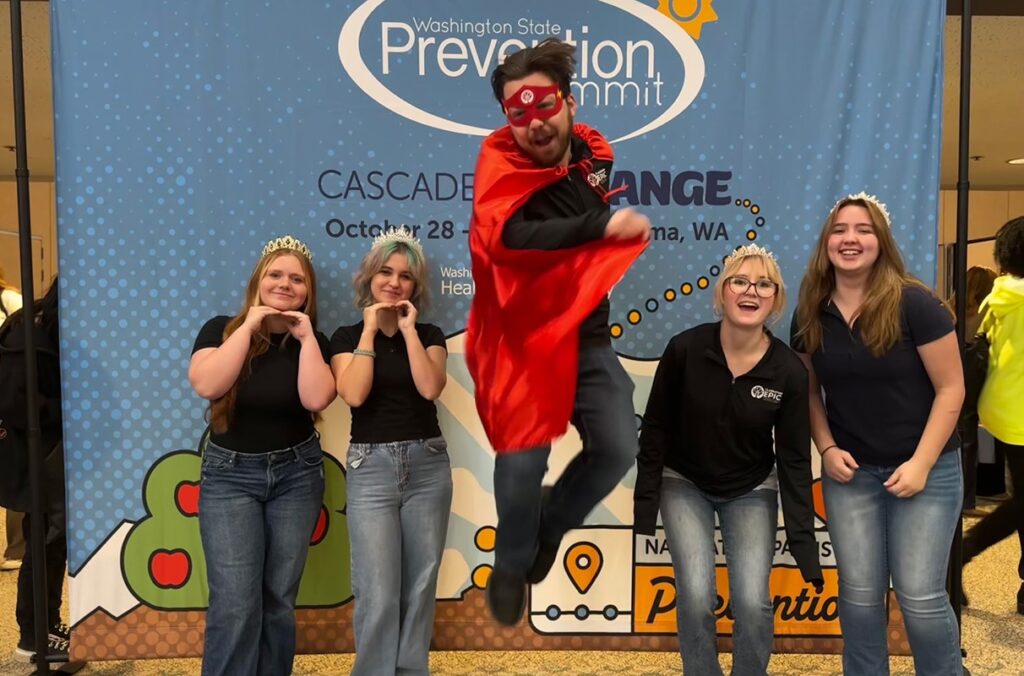
An ‘amazing’ partnership: WSU and state join forces to prevent youth substance use
Evaluations conducted by IMPACT Lab show that prevention programs across the state of Washington are slowing rates of substance use among young people.

Abby McCarthy connects global learning with career goals
When McCarthy began a five-month exchange at City University of Hong Kong, she became the first Carson College of Business student to participate in a bilateral exchange in China since 2019.
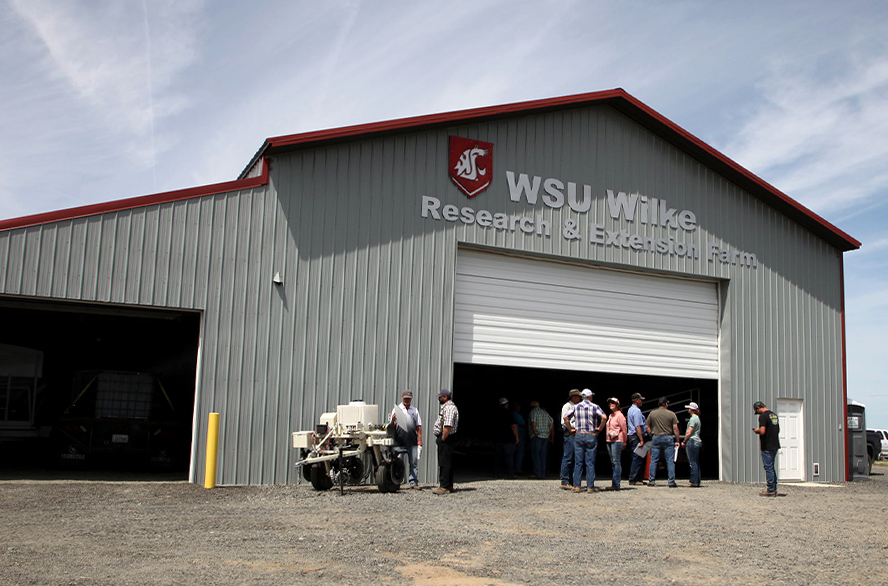
New WSU research challenges traditional crop rotation thinking
Nearly two decades of WSU research suggest Eastern Washington farmers could improve profitability and soil health by growing a wider variety of crops and reducing the time fields are left unplanted.