PULLMAN, Wash. Washington State University Department of Theatre will present its last production of the spring 2006 season “The Elephant Man” April 6, 7, 8 and 13, 14, 15 in Jones Theatre at 8 p.m. As part of the Mom’s Weekend activities, there is also a special matinee on April 8 at 2 p.m.
“The Elephant Man” was written by American playwright Bernard Pomerance. During the production’s opening season, it won all major drama awards, including three Tony Awards, three Obie Awards, the Drama Desk Award and the New York Drama Circle Award.
Tickets for the 8 p.m. performances will be available at the Daggy Hall box office starting April 4. Reservations can be made by calling (509) 335-7236. Ticket prices are $10 adults, $7.50 seniors, and $5.00 WSU students with a valid university ID. GPSA members and domestic partners are admitted without charge.
The play, which The New York Post referred to as “wonderful, moving and purely theatrical,” tells the true story of John Merrick, who lived in
After he is found abandoned and helpless, he is admitted for observation to Whitechappel, a prestigious
“I sometimes think my head is so big because it is full of dreams,” said
Prominent in the set design are six large mirrors, which along with the use of mask are unique features in the WSU’s production of “The Elephant Man.”
“Our setting literally holds a mirror up to the audience asking us to examine our own shortcomings, imperfections and oddities and try to appreciate the beauty, which lies within each person we encounter in our lives,“ said director Terry Converse.
“The mirrors, echoing the overriding metaphor of the play, symbolize our unfortunate preoccupation with appearance. At the same time, however, they also symbolize the potential for fruitful reflection and introspection. The play holds a mirror to the audience’s faces, allowing them to see both the beauty inside the grotesque shell of Mr. Merrick, as well as the ugly visage of a society obsessed with surfaces,” Converse said.
All of the characters wear masks. The only exception is the so-called Elephant Man. The absence of mask allows
“It can be very painful to have someone recoil from you like you’re a leper. But when this happens, when you suddenly find yourself on the ‘other side of normal,’ then you have a hint of what John Merrick faced every day of his life,” said Converse. “When life hurls upon us such horrors as divorce, disease and death, perhaps that is when we are most receptive to identifying with the Elephant Man, and tapping into what this play is really about: empathy and sensitivity.”
The cast of seven features Dave Herigstad in the title role, and Audrey Bensel, Erik Johnson, Todd Johansson, Brian Porter, Jared Rusnak and Anna Yoshida. The set designer is Richard Slabaugh, costume designer is Carole Urquhart, dramaturge is Laurilyn Harris, lighting designer is Ben Gonzales, technical director is Dean Bourland, sound designer is Joe Vales and stage manager is Robby Valliere.
For additional information, contact the Theatre Department at (509) 335-7447.
Next Story

Schweitzer Engineering Hall dedicated during community celebration
The opening of the new hub for Voiland College of Engineering and Architecture is celebrated with a ceremonial ribbon-cutting and chorus of gratitude.
Recent News

WSU team develops potential treatment for endometriosis
Therapy uses nanoparticle to deliver drug directly to disease site, and researchers are hoping to move toward human trials.

Regents approve President Cantwell’s goals for FY27, rename Champions Center
Members of the WSU Board of Regents on Friday approved President Betsy Cantwell’s goals for fiscal year 2027 as part of a suite of actions at the governing body’s first meeting of the fall semester.

Ferdinand’s Lane closure planned for Sept. 21
Avista crews will close Ferdinand’s Lane between Stadium Way and Fairway Lane beginning at 9 a.m. Monday, Sept. 21, for utility work. The Pullman campus road closure is estimated to last two to three hours.
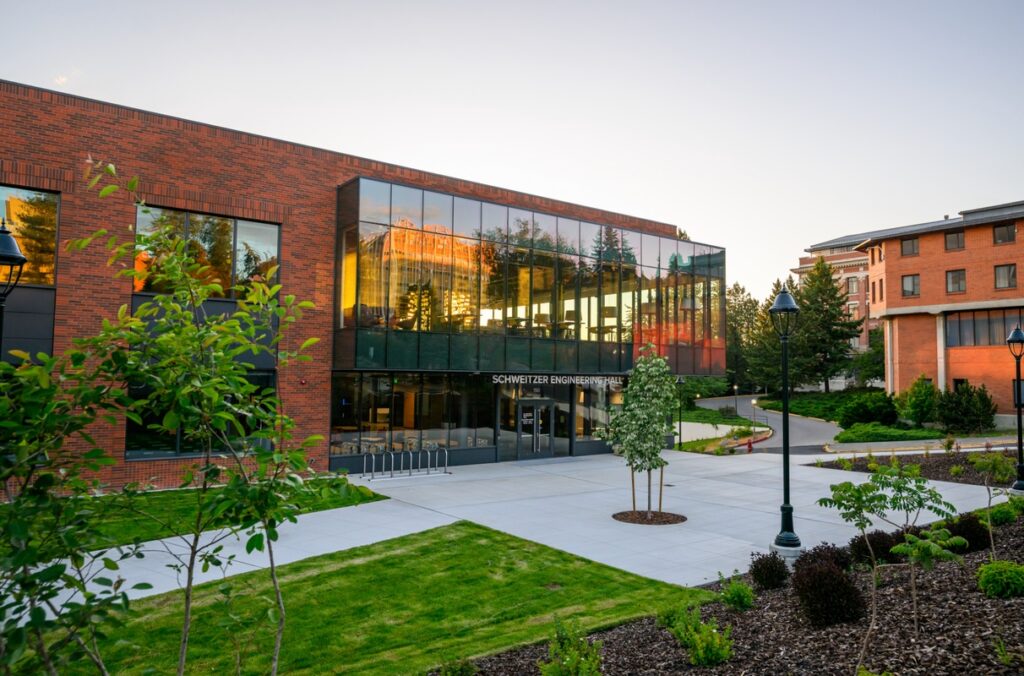
WSU celebrates Schweitzer Engineering Hall opening
The $80 million facility serves as the first major milestone in WSU’s broader engineering and design district modernization effort.

A new-look WSU Board of Regents
This month’s WSU Board of Regents meeting will be the first for three incoming members: Fé LopezGaetke, Mary Nam, and Student Regent Nicole Anthony.
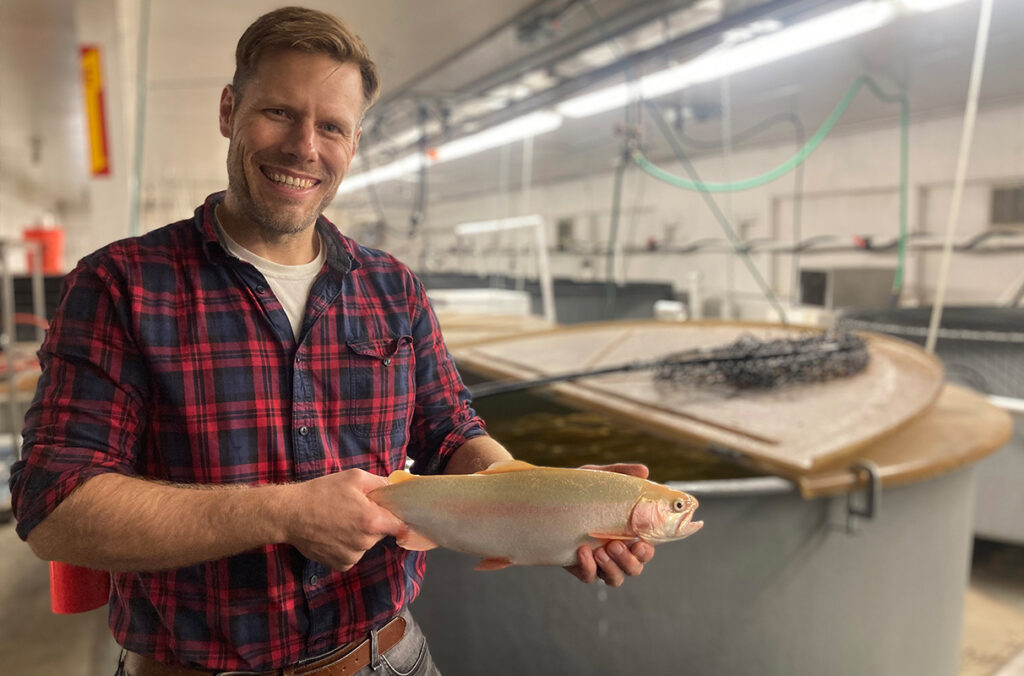
New WSU-led research aims to transform U.S. fish farming
A new, Washington State University-led approach to fish breeding could help U.S. aquaculture grow safely and profitably, with support from a Foundation for Food & Agriculture Research (FFAR) Growing Impact Award and matching funds from WSU and Troutlodge. The three institutions are providing a combined $1,566,716 to WSU researchers who are developing a practical way to produce healthy, sterile […]