Meteor showers over the Palouse. Every year Mother Nature offers an awesome show up in the sky, the Perseids, or meteor showers. “The Perseids are a meteor shower. They are caused by particles left behind by the comet Swift-Tuttle,“ said Sukanta Bose, an assistant professor of physics at Washington State University Department of Physics and Astronomy. During a meteor shower, one can see dozens of meteors in a short period of time. “This is because these showers are caused by the Earth going through a region of space that is strewn with a particularly dense concentration of space particles. Such particles are left on the tracks of comets, which are essentially dirty balls of ice. While approaching the sun, a comet melts and releases some of its dirt, which forms the space debris responsible for the meteor showers,” Bose said. The best time of the year to see this display of nature is from mid-July to mid-August because during this time of the year the Earth crosses the tracks of the comet Swift-Tuttle. Bose said that the bulk of the Perseids can be seen between August 8 and 14. The peak this year will be in the early hours of August 13. “The moon, however, will play spoilsport by washing out the fainter meteors,” he said. Usually, the best time to watch any meteor shower is between midnight and dawn. Bose said this is because that is when Earth’s spin causes your location to plunge along its orbital path and, therefore, dive into the meteoroid stream. “This year, however, owing to moonlight that time may not be the best for viewing. You may, therefore, want to try gazing before moonrise, between 8:30-10 p.m., on Friday, August 11, and Saturday, August 12,” he said. Bose suggests resting on a recliner or a blanket spread on the ground and facing north. The Perseids should streak overhead from north to south. Meteor showers are best viewed with bare eyes, so binoculars or telescopes are not necessary. “Although this year’s Perseids are not expected to be a spectacle, it is not unlikely that some of us who persist through the night are rewarded by a few occasional bright streaks,” Bose said. For more information about the meteor showers, Bose can be reached at 509.335.3698 or at sukanta@wsu.edu.
Next Story

WSU Global Campus student ambassador shines during #CougsGive Day
Aunjelique Andersen, a fully online student pursuing her degree in Media Innovation, ranked first on the #CougsGive Ambassador Leaderboard, inspiring 54 gifts through her outreach.
Recent News

WSU SURCA undergraduate researchers earn 65 awards
Seventy‑three students who participated in the Showcase for Undergraduate Research and Creative Activities 2026 were awarded prizes totaling $14,000.
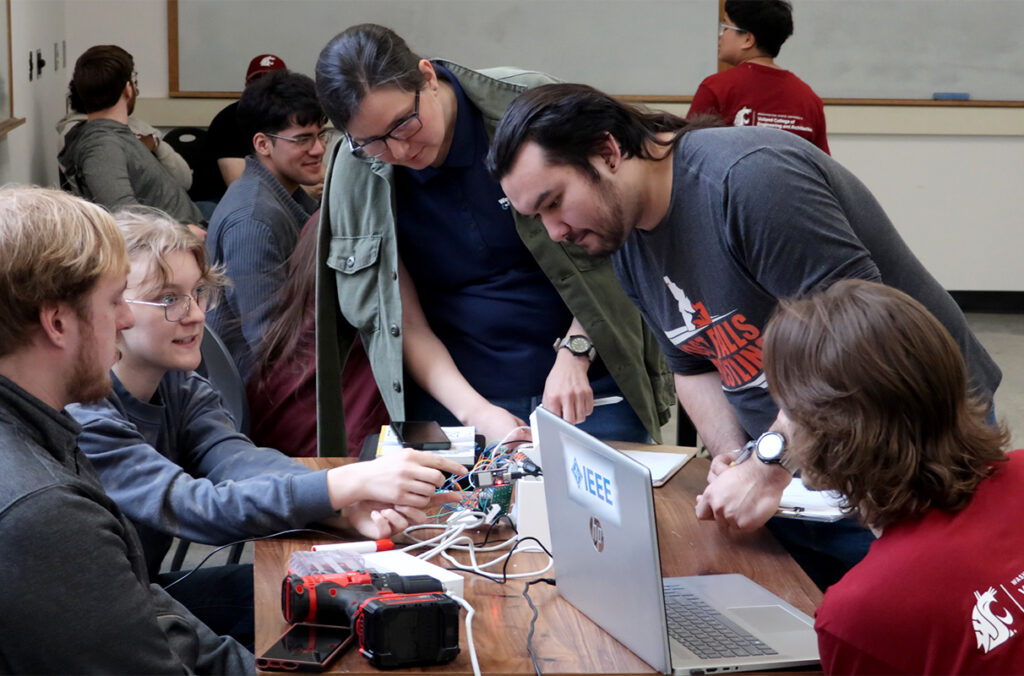
Inside WSU’s student-run hackathons
Hackathons have become a defining space for student innovation, with two taking center stage this year.
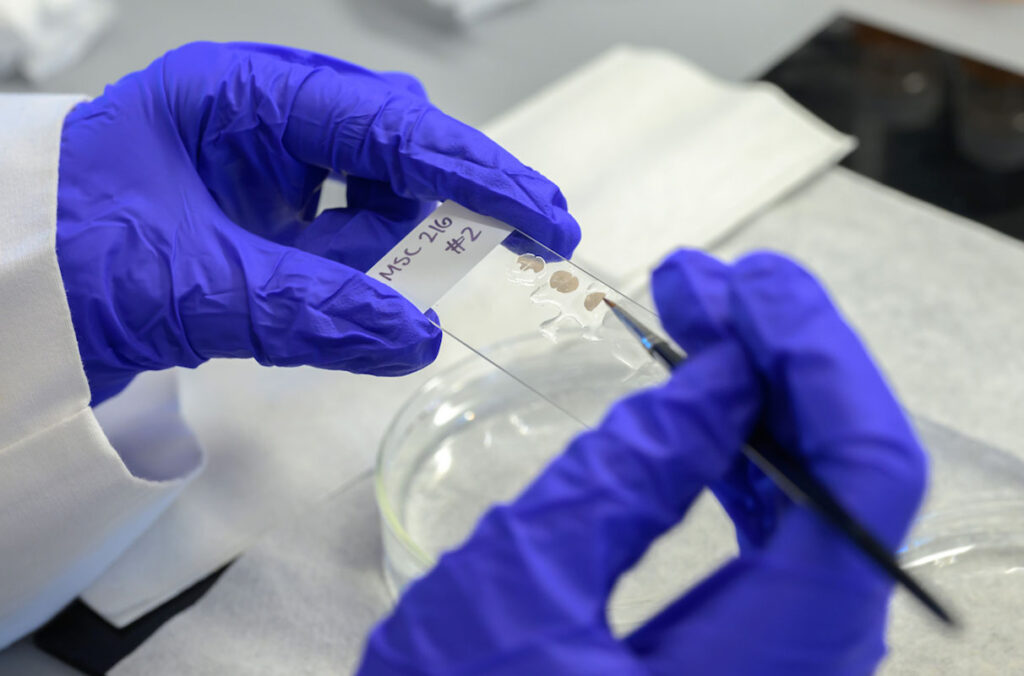
Undergrad researchers drive discovery in the College of Veterinary Medicine
Hands‑on research opportunities in the college are enabling students to contribute directly to major discoveries, including a recent Nature study.

New WSU raspberry breeder to continue career goal of helping farmers
Germán Sandoya-Miranda aims to develop improved varieties and work closely with growers to help Washington farmers boost yields and adapt to evolving challenges.

WSU Regent, longtime civic leader Sam Hunt dies following battle with leukemia
Hunt, a 1967 WSU graduate, devoted more than five decades to public service, education, and civic leadership across Washington.
WSU recognized for support of first-generation students
The university’s elevation to FirstGen Forward Network Champion reflects growing enrollment, improved retention, and expanded support programs helping first-generation students succeed.