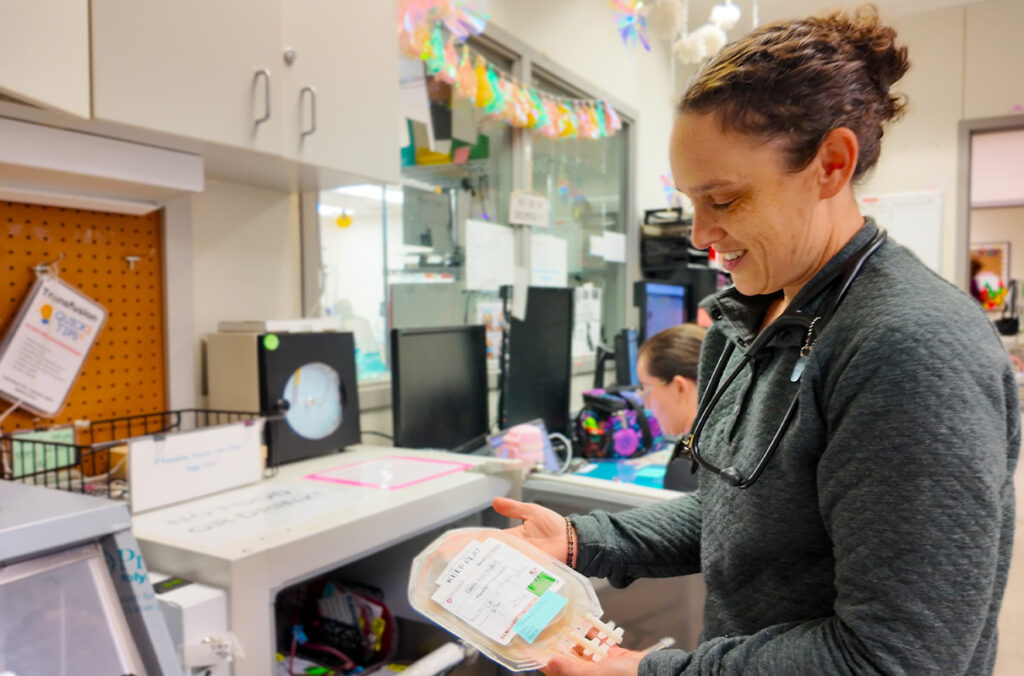
The Washington State University Voiland College of Engineering and Architecture (VCEA) has redesigned its first-year engineering program around the student experience, replacing large lectures with small, peer-led sections.
The changes are part of an expanded first-year program that now spans two courses, Engineering 101 and 102, instead of a single semester. The new approach gives incoming students more opportunities to develop practical engineering skills while building connections with fellow students and undergraduate mentors. This fall, 17 undergraduate peer coordinators are leading 14 sections, each with approximately 20 to 25 students.
Peer coordinators, undergraduate students who have been trained to lead the course themselves, serve as primary contacts, offering new students approachable support as they navigate the transition to university life and the engineering curriculum.
“I’m really just in the background,” said Kimberlee Hughes, scholarly assistant professor and instructor for the courses. “It’s really helpful for the students to have that point of contact who’s a little less intimidating.”
Engineering 101 introduces students to academic planning and career preparation while providing hands-on technical training. Students learn computer-aided design using Fusion 360 and practice circuit soldering. They also have access to free 3D printing at the Frank Innovation Zone (FIZ).
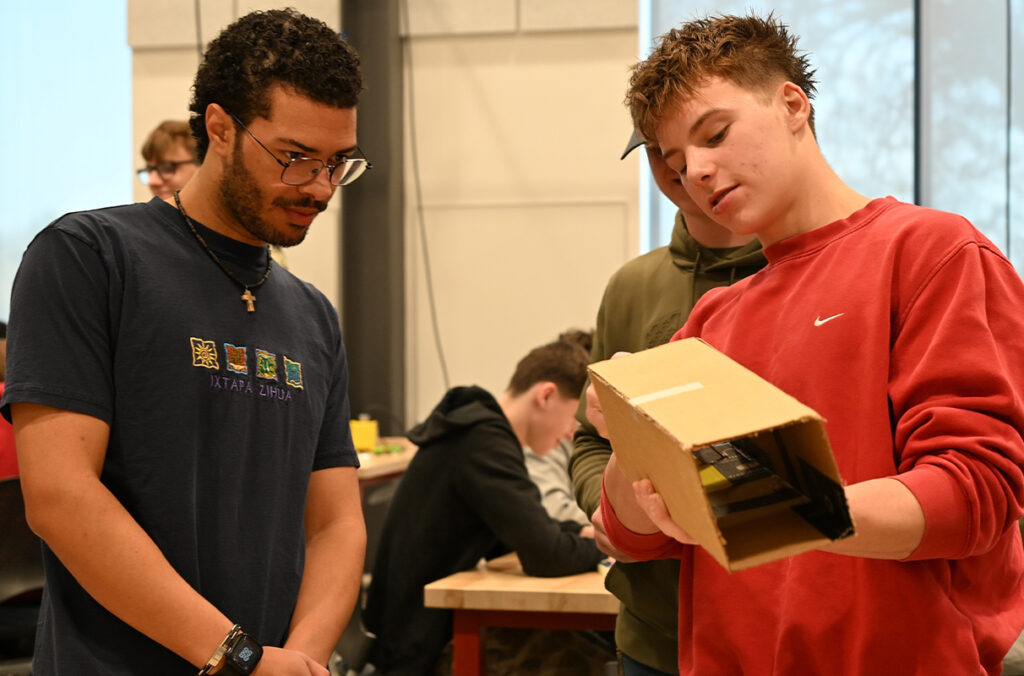
Students put those skills to work through engineering design projects, including building a prosthetic hand mechanism from simple materials such as cardboard and string.
Engineering 102 builds on that foundation with discipline-specific activities in the Boeing Flight Deck G12 classroom in Schweitzer Engineering Hall.
The new approach also provides valuable experience for the peer coordinators who lead the classes. Many began the fall 2026 semester nervous about standing in front of a class every day. After observing their sessions, Hughes has watched that change.
“They’re all growing. They’re not scared anymore to go up and talk in front of students,” she said. Several coordinators have told her the confidence carries over to presentations in other settings. “These are all really important skills that they’re going to need as future engineers.”
Future peer coordinators will prepare for their roles by taking Engineering 390, a one-credit course focused on developing leadership and communication skills. Through practical exercises, students will learn how to lead groups and apply those lessons in Engineering 101 and 102.
“Being a peer coordinator pushed me out of my comfort zone and helped me grow in public speaking, confidence, and time management,” said Minh Ngoc Nguyen, one of the peer coordinators. “I am really proud of how far I’ve come from struggling to make eye contact with fellow peer coordinators to making great friends through this position. That strong sense of community is what makes me want to continue in this role.”