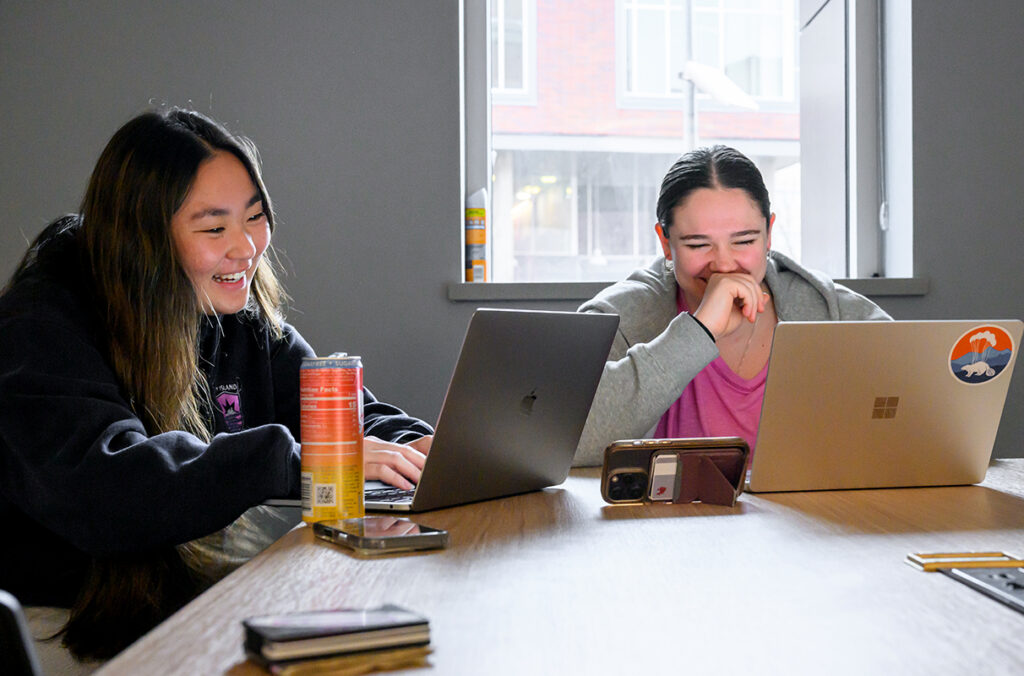
Jaeve Proberts had a lot to acclimate to upon arriving to Washington State University in the fall of 2022.
The Brisbane, Australia native traveled more than 7,000 miles to join WSU’s Women’s Rowing Team. On top of getting accustomed to life on the Palouse and withstanding the step up in training and conditioning at the collegiate level, she also needed to reconsider her approach to academics.
“Beginning in grade nine or so at school, rowing was really my primary focus,” Proberts recalled. “But when I got here, I realized that student comes before athlete, and so I spent the first year or so applying the routines that were successful for my rowing career to my academics.”
The effort paid off. Proberts is about to graduate with a fine arts degree and is planning on pursing a master’s degree in Australia while trying out for the national Under 23 rowing team en route to competing for a spot on the 2032 Olympics team.
The support and encouragement she received from her academic counselor was pivotal, and so when the chance to help her peers arose, Proberts jumped at the opportunity.
The academic support available to student-athletes is contributing to WSU’s strong national showing in NCAA and other annual measures of academic accomplishment among Division 1 student athletes. Last year, for example, more than 50 student-athletes earned 4.0 GPAs and more than 280 were named to the President’s Honor Roll.
Student-athletes team up
WSU’s Peer Academic Counselor program is part of a suite of academic services offered by WSU Athletics. It’s a program that pairs academically outstanding student-athletes with several first-year peers. Peer Academic Counselors meet with incoming student-athletes once a week for a holistic conversation about how the week ahead is looking.
“It’s more about the mental aspect of being a student-athlete, rather than just focusing on what their grades are,” said Lauren Wille, a member of the WSU Swim Team who has been a Peer Academic Counselor for the past two years.
While counselors and their first-year peers are rarely competing in the same sport, they bond over the shared experience of balancing everything required of student-athletes. Proberts, for example, can share with her peers how she manages to do homework while traveling for competitions. Bus rides and flights are the best time for outlining and rough sketches, with the finer details being saved for when she’s back on stable ground.
It’s more about the mental aspect of being a student-athlete, rather than just focusing on what their grades are.
Lauren Wille, student-athlete
WSU Swim Team and Peer Academic Counselor
Washington State University
Wille said she tends to focus on celebrating the accomplishments of her younger peers.
“That first meeting is always a little awkward because a student-athlete might not know necessarily what they are getting into, and so I focus on making it a safe space,” she said. “I want to be a friend and a resource as opposed to someone that’s so focused on checking grades and telling on them to their coaches.”
Hundreds of WSU students like Proberts and Wille pursue athletic greatness alongside their diplomas. It’s a delicate balancing act, requiring diligent planning, commitment and resilience. They are bolstered by a dedicated team comprised of support staff and student volunteers, offering a slew of resources and support to help keep them both in the game and on track to graduating.
How WSU supports student-athletes
The onboarding process for new first-year student-athletes can actually start months prior thanks to WSU Athletics’ Summer Bridge Program. This program brings dozens of future Cougs to campus to map out their surroundings, build camaraderie with their peers and connect with resource services before the start of the fall semester.
“The most important thing is that we want our student-athletes to have a good experience transitioning to college,” said Heather Erwin, associate director of athletics, academic services and student-athlete development. “We want them find a community and support system, and so we try to get them here as soon as possible to get a jump start.”
First-year student athletes meet weekly with a counselor during their first semester. During these appointments, counselors go over a student-athlete’s pending coursework, upcoming tests, and assess how they are feeling overall about their workload. They must also attend up to six hours of in-person studying sessions per week, where they can get help with their coursework from more than three dozen student tutors as well as an in-house writing advisor.
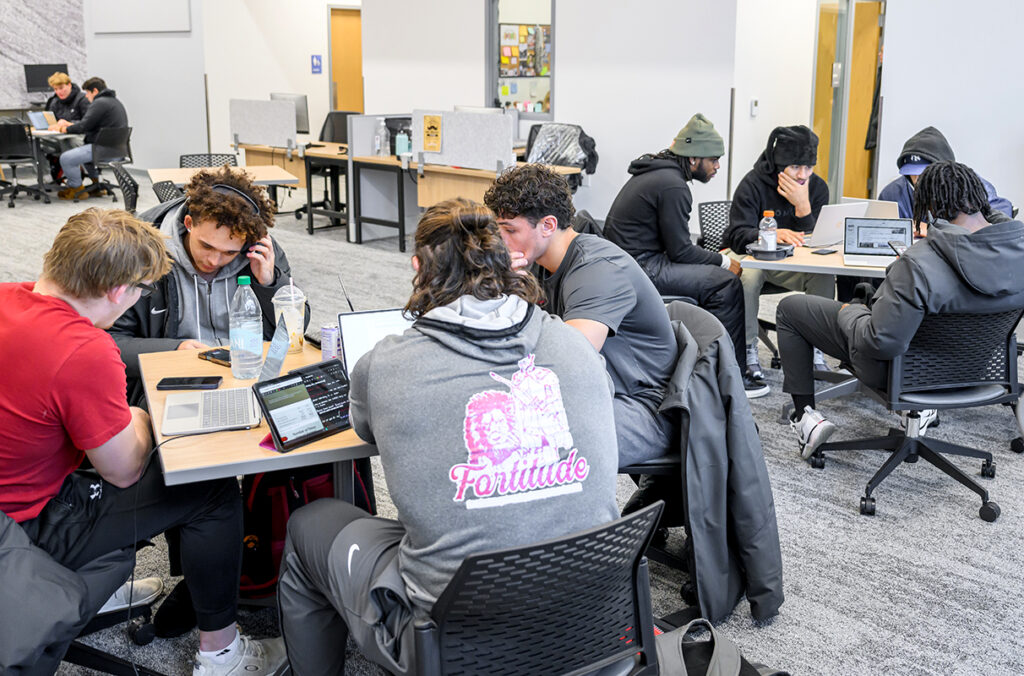
The amount of traveling student-athletes are required to do varies by sport, but can be significant during busier times of the season. Fortunately, academic counselors and student-athletes keep faculty and instructors apprised of upcoming events and work to mitigate the impact of missed classes. Some counselors also travel with teams to ensure they are able to keep up on coursework.
The number of transfer student-athletes arriving to WSU continues to grow thanks to NCAA transfer portal. While the portal is expanding the Cougar community, it also brings with it unique challenges, like ensuring all of a student-athlete’s previous work translates toward completion of a WSU degree.
“With the increase in transfer students we have been looking to reevaluate some of our service to best help them as new students to WSU but not new students to college,” Erwin said. “Their situations are more complex when it comes to evaluating transfer credits and helping them find a major that best fits them.”
Outside of academic advising, student-athletes also have access to career preparation resources like resume building as well as guidance on navigating the emerging Name, Imagine, and Likeness landscape.