Last fall, honors student Miles Boudinot became a facilitator of Honors 198: Honors First-Year Experience. The optional one credit, student-led, pass/fail course, is offered every fall on the Pullman campus to incoming honors students to ease the college transition and to promote retention and success. Boudinot was glad for the offer to lead the course because of what it meant for him to take it as a freshman. While many honors programs offer a similar course, having it led by students is unique to WSU.
“Honors 198 provided me an opportunity to breathe during my first semester. My facilitators did a tremendous job at serving as resources for my questions and concerns as I made that transition,” he said.
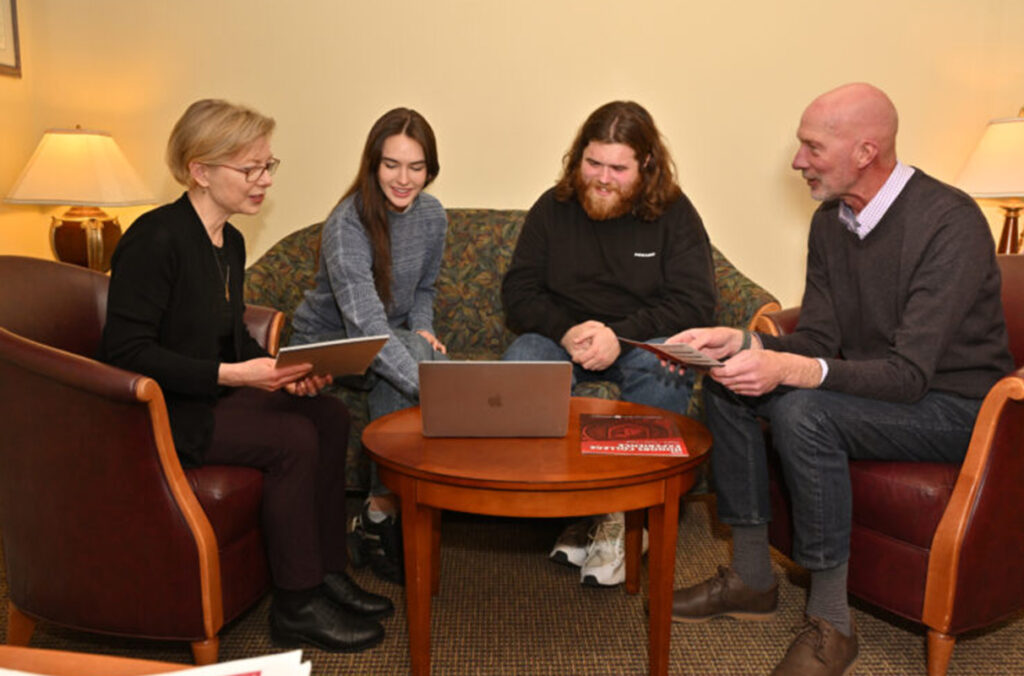
Sections of the one credit, pass/fail course are capped at 15 students for a low-key, collegial environment, with content focusing on everything from how to get involved in university clubs and undergraduate research opportunities to internships, study abroad, and applying for awards and scholarships. Incoming students also get advice on registration, resume building, and on preparing for interviews. Eleven sections of the popular course were offered last semester.
Honors 198 provided me an opportunity to breathe during my first semester. My facilitators did a tremendous job at serving as resources for my questions and concerns as I made that transition.
Miles Boudinot, honors student
Washington State University
“The idea was to come up with a first semester class to help students feel connected to the Honors College and community,” said Assistant Dean Robin Bond. “Right from the start, it was decided that it would be taught by honors students, so it would be a peer mentoring program as well.”
Two sections of the course, focused on building leadership awareness, are co-facilitated by Bond and Honors Dean Grant Norton. Student facilitators are recruited as early as their sophomore year to make sure the classes are advised by peers who recall the first-year experience. Honors student Emma Johnson was invited to teach by Bond and Griffin Rinauro, the student who taught her course.
“My freshman year facilitator…inspired me to work hard and to follow my passion. It’s an honor to be part of such a high-achieving and supportive group,” Johnson said.
Last year, Bond presented on Honors 198 at the National Collegiate Honors Council conference in Chicago.
“People were really excited to know more about how it works, how students are chosen, and how they’re trained to lead their own classes,” Bond said.
Prior to leading courses, incoming facilitators meet as a group to learn program goals and to explore honors community and facilitator values. “Belonging” is a value that often arises. “We really want new students to feel that their facilitators are mentors who can help them with that,” Bond said.
For her part, Johnson hopes first-year students leave with a sense that their WSU experience is uniquely theirs and that they have the potential to make a meaningful impact.
“Above all, I want them to know they can always lean on the supportive honors community we’ve built together,” she said.