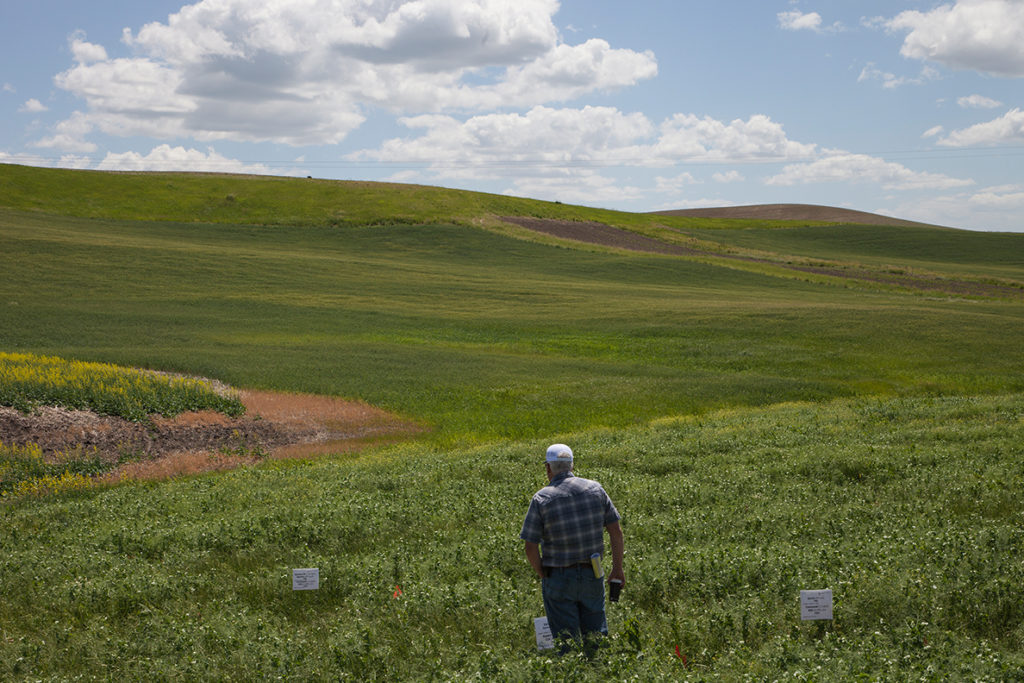
PULLMAN, Wash. – Palouse agriculture continues to be challenged by low pH soils, with confounding factors often masking the issues, even as the extent of soil acidity increases. At the same time, remediation is difficult without immediate economic justification.
To help inform growers about the problem, Washington State University will host a soil acidity workshop featuring top experts sharing what we currently know about soil acidity in Eastern Washington and Northern Idaho.
The event will broadly cover soil acidity and amendments as they relate to the region. Other topics will include soil pH, and microbes, and disease, soil acidity and phosphorous in Montana, soil pH and roots, alternative amendments, lime application methods, and strategies for managing soil acidity on the farm. Speakers include scientists from WSU, the University of Idaho, the U.S. Department of Agriculture, and Montana State University.
The workshop begins at 8 a.m. on Thursday, Jan. 16, at The Courtyard Marriott in Pullman.
Continental breakfast, buffet lunch, coffee, and snacks are included with registration for the day. This workshop is eligible for seven Certified Crop Advisor credits.
For registration and more information go to the WSU Farmers Network website.
Media contact:
- Carol McFarland, WSU Department of Crop and Soil Sciences, 509-339-4978, carol.mcfarland@wsu.edu