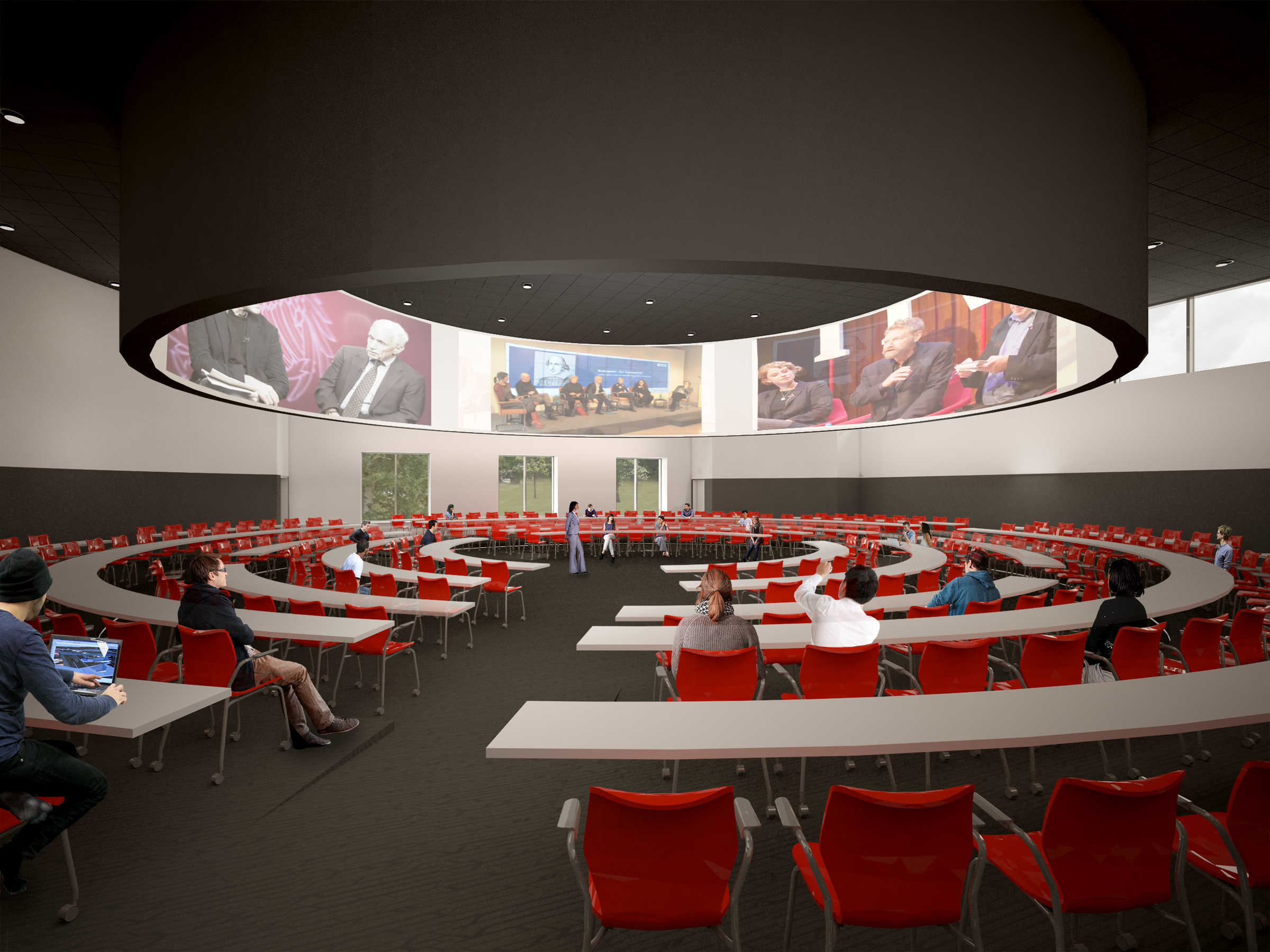
Tuesday, Aug. 15, 11:30 a.m.-12:30 p.m., Digital Classroom Building G45 Are you interested in learning about teaching “in the round” in the new Digital Classroom Building’s Active Learning Hall? Join Academic Outreach and Innovation for a presentation by David Harlan, acclaimed educator and theatre artist, to learn strategies for success based on proven techniques from theater in the round.
Harlan will demonstrate how teaching in this environment differs from traditional classroom spaces and will share methods for engaging the entire classroom, including movement and focal point techniques, using physical sight lines to your advantage, and maintaining audience focus. Come check out the new space and learn more about methods for teaching in this unique classroom design. Everyone is invited to attend!
Throughout his theatre career, Harlan has promoted the unique power and creativity of performance in the round, even creating a performance space in a cylindrical grain silo. He has directed and performed in dozens of productions in the round, and taught directing and acting students about the challenges—and benefits—of 360 degree performance.