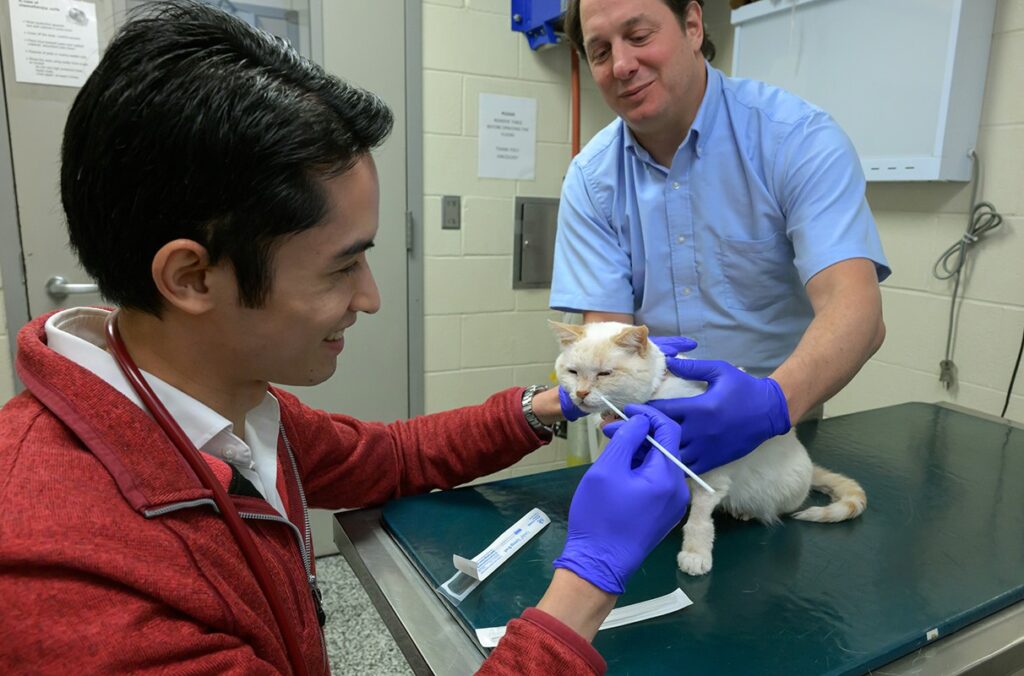
PULLMAN, Wash. — With a swab of their cat’s cheek, pet owners can now determine if their cat is at high risk of developing one of the most common chronic diseases years before any clinical signs emerge, and it could allow them to take measures to prolong their cat’s life.
The advancement is made possible by a genetic test that detects predisposition to progressive chronic kidney disease that has been developed by veterinarians at Washington State University’s College of Veterinary Medicine. The test, known as Feline Apoptosis Inhibitor Macrophages, or FAIM, will be available to veterinarians and cat owners.
Chronic kidney disease is a progressive condition that causes deterioration of the kidneys and often results in kidney failure and death; about 30 to 50 percent of cats older than age 11 have some form of the disease. It can lead to cardiovascular disease, anemia, and hypertension. In extreme cases, it can cost thousands per year to manage cats with chronic kidney disease, for which there is no cure.
The test is made possible by a genetic variation that affects the productivity of a protein responsible for kidney repair. WSU associate professor Dr. Nicolas Villarino and collaborators from WSU’s Program in Individualized Medicine (PrIMe) identified the genetic marker in 2016.
Now, pet owners and veterinarians can explore if the disease is likely to develop in their cat and patients and address it before their pet’s kidneys begin to deteriorate.
Catching the disease early means cat owners can cut out certain foods and medications to maintain their pet’s health and slow the disease’s progression.
Dr. Nicolas Villarino, associate professor
WSU College of Veterinary Medicine
“Catching the disease early means cat owners can cut out certain foods and medications to maintain their pet’s health and slow the disease’s progression. That’s the big problem with this disease; you don’t know it is coming until it is too late,” Villarino said. “Once it is identified, there’s no way back, and those cats will likely require lifelong medical therapy.”
The test will soon be available online through WSU’s PrIMe.
Once owners receive their sampling kit in the mail, they can swab their cat’s mouth and send their sample to the service center on the WSU Pullman campus.
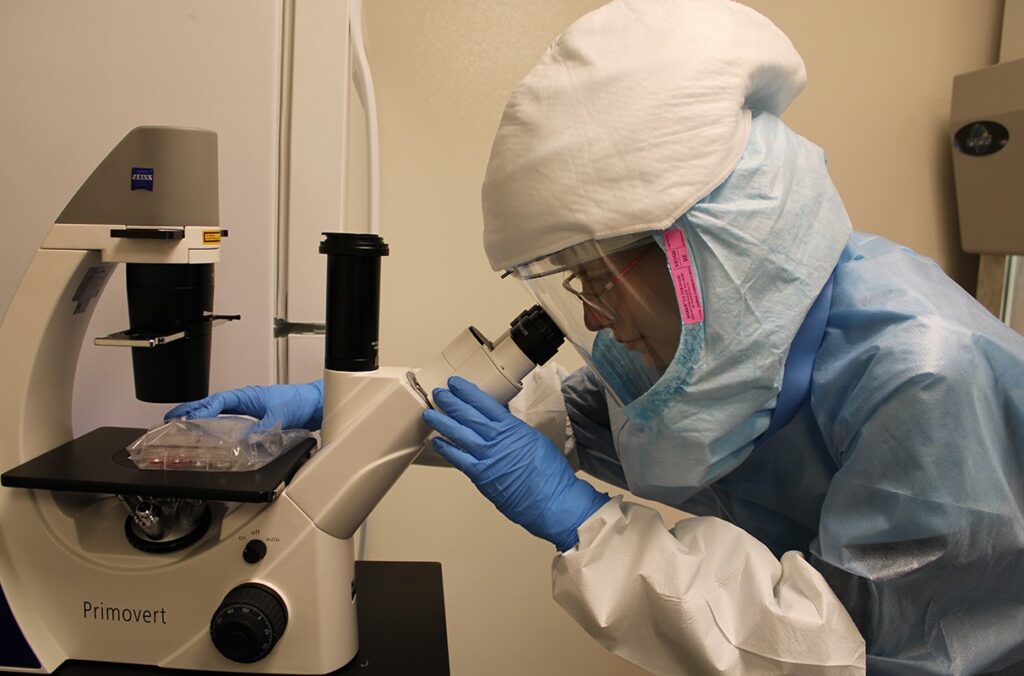
Samples are processed using droplet digital PCR testing.
Villarino first noticed the genetic mutation during a WSU study examining biomarkers of kidney disease in cats.
“There was one cat that we noticed was behaving differently from the others,” Villarino said. “This cat was resistant to the disease.”
Looking closer, Villarino and colleagues discovered an alteration in a gene that codes for a protein responsible for kidney repair.
“I’m a scientist, and so we’re always doing studies, and so to get to a point where we can actually take the science and potentially help pets live a longer life, it’s a really great feeling,” Villarino said.
Villarino hopes the test opens the door to drug development and treatment of the disease. He said it could also be used by professional cat breeders to limit the number of cats with the disease.
The test would not have been possible without support from the WSU Office of Commercialization, the Washington Research Foundation, and dedicated donors Kay Fowler and Kay Yarborough Nelson, who were all determined to see the test come to fruition.
“This test aims to benefit the lives of so many cats and their owners, and there is no way we could have done this without donor support,” Villarino said.
Media Contacts
- Nicolas Villarino, WSU College of Veterinary Medicine, nicolas.villarino@wsu.edu
- Josh Babcock, WSU College of Veterinary Medicine, 509-339-3423, joshua.babcock@wsu.edu