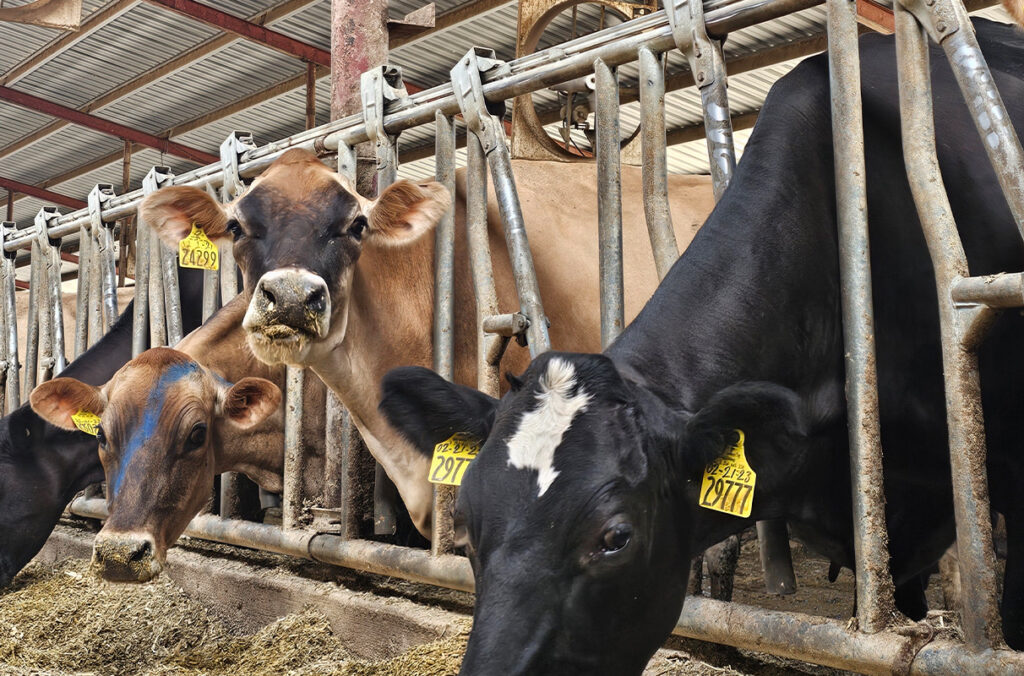
ROYAL CITY, Wash. — Scientists from Washington State University and Cornell University will share an in-person look at their experiments this spring field-testing new technologies that could help dairy producers curb their farms’ greenhouse gas emissions.
The Climate-Smart Dairy Farming: Research & Demonstration Field Day, 9 a.m. Friday, May 30, at Royal Dairy in Royal City, Washington, will showcase projects using sensors, weather monitoring, biochar, and feed additives to understand and manage emissions. The field day is part of a one-year research and demonstration project WSU Associate Professor Lav Khot is conducting with colleague Francisco Leal-Yepes, assistant professor of precision livestock at Cornell. The research is funded by the Washington State Conservation Commission through the state’s 2021 Climate Commitment Act.
“Accurate and continuous emission information can help farmers reduce their greenhouse footprint,” said Khot, project leader of the Climate-Smart Dairy Farming test bed. “As scientists, we want to provide low-cost, reliable technology to support data-driven decisions that improve sustainability.”
Dairy cow physiology, and thus their greenhouse gas emissions, are linked to seasonal, monthly, and daily weather conditions. Tying weather and diet to emissions will help our team find interventions that reduce emissions and support climate-smart dairy farming.
Lav Khot, associate professor
Washington State University
Khot’s team is gathering baseline and treatment-specific data using a local network of emission sensors to monitor methane, ammonia, and carbon dioxide, as well as real-time weather conditions at various locations around the farm.
“Dairy cow physiology, and thus their greenhouse gas emissions, are linked to seasonal, monthly, and daily weather conditions,” Khot said. “Tying weather and diet to emissions will help our team find interventions that reduce emissions and support climate-smart dairy farming.”
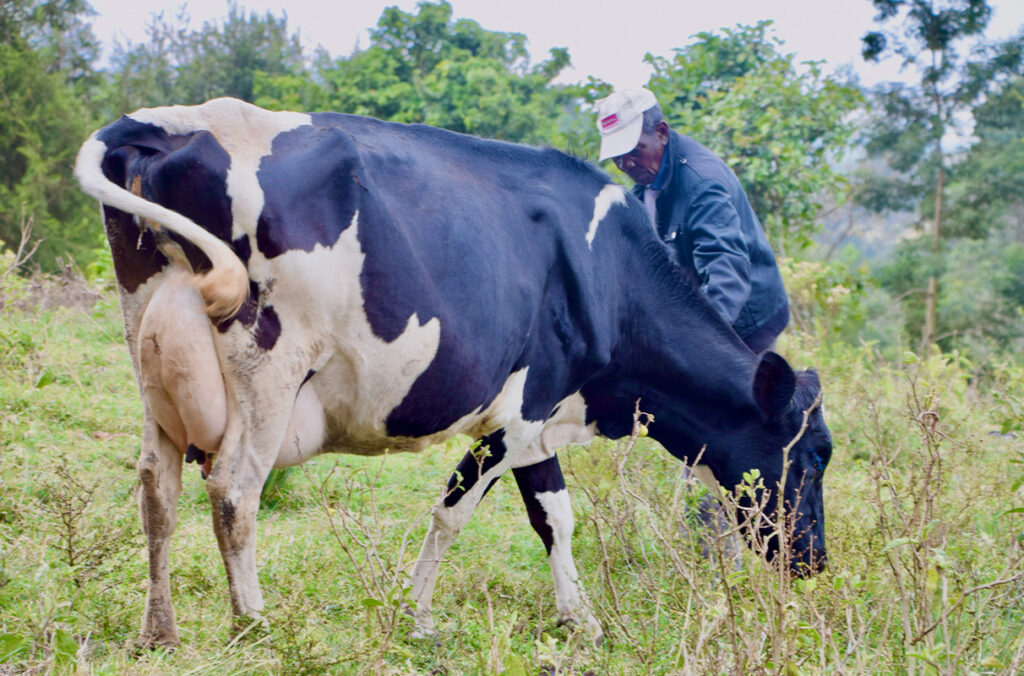
Cornell scientists are using the WSU-collected data to create strategies that reduce or mitigate emissions. One idea being tested treats manure with biochar; another uses cattle feed additives to reduce methane gas emissions from the cows themselves.
The event also showcases research led by Birgitte Ahring, professor at WSU’s Bioproducts, Science, and Engineering Laboratory, on managing manure to curb emissions and improve animal bedding.
The day includes a tour of the experiments and Royal Dairy’s regenerative farming projects, as well as farmer perspectives and an overview of the Washington State Conservation Commission’s Sustainable Farms and Fields Program.
A lunch follows the tour. Admission is free. A schedule and registration to attend the event is available online.
Media Contacts
- Lav Khot, WSU Biological Systems Engineering, 509-335-5638, lav.khot@wsu.edu