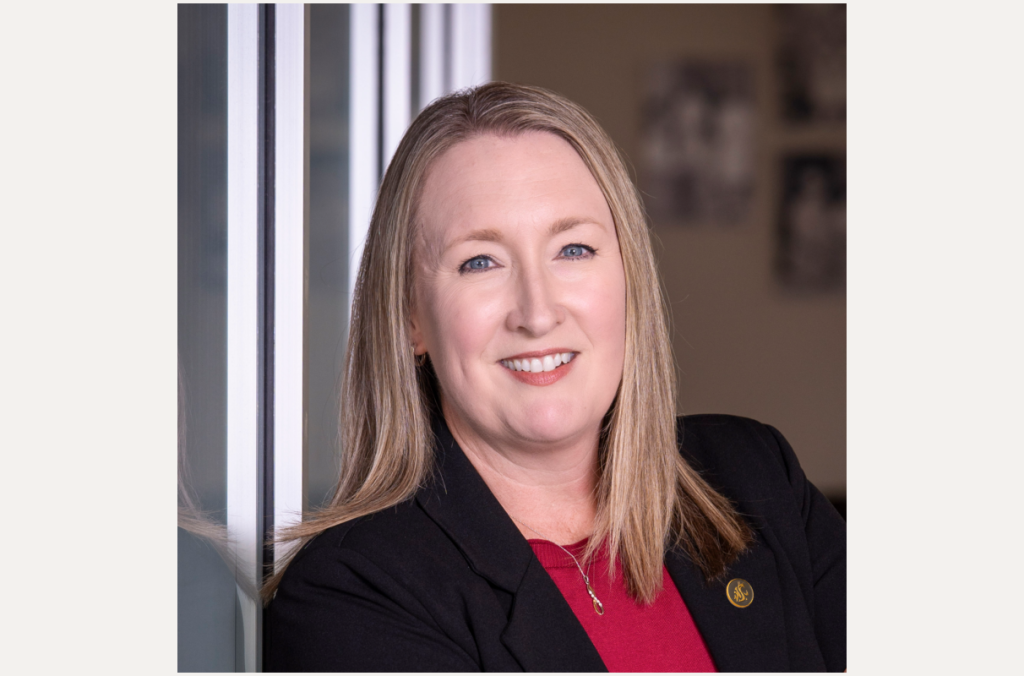
Amanda Boyd has been appointed as the new executive director of Native American Programs, effective Nov. 24. Boyd currently serves as co-director of the Institute for Research and Education to Advance Community Health (IREACH), a leading WSU research institute focused on health care equity for Indigenous and rural populations. She is also a professor in the Elson S. Floyd College of Medicine and affiliated faculty in the Edward R. Murrow College of Communication.
In her new role, Boyd will provide strategic leadership for Native American Programs and the Center for Native American Research and Collaborations, including the Native American Student Services, the Tribal Nation Building Program, and the Native Coug Scholars Program.
“I am delighted to have Dr. Boyd join the Office of the Provost in this critical role,” said Provost and Executive Vice President Chris Riley-Tillman. “Dr. Boyd brings over 20 years of experience working directly with tribal nations, and I am excited for her to continue to build upon the strong foundation established by Dr. Zoe Higheagle Strong.”
Boyd will provide strategic leadership for Native American Programs and the Center for Native American Research and Collaborations, including the Native American Student Services, the Tribal Nation Building Program, and the Native Coug Scholars Program.
Boyd is a member of the Métis Nation of Alberta and received her PhD in Communication Studies from the University of Alberta. She is an elected member of the Washington State Academy of Sciences and a member of the Standing Committee for the Advancement of Science Communication for the National Academy of Sciences, Engineering, and Medicine.
Boyd’s research spans communication, Indigenous sciences, management studies, and rural sociology, with nearly 10 years of continuous funding from the National Institutes of Health. Her work ranges from studying biomarkers and genetics with Indigenous populations to exploring energy systems such as carbon capture and storage and partnering with Indigenous youth to create culturally relevant health messaging. Her broad portfolio has provided Boyd with the opportunity to collaborate with every college at WSU.
“I am excited to join the Office of Native American Programs as the executive director,” said Boyd. “I have witnessed the deep dedication WSU has for Native American students and am committed to building on that work, and expanding opportunities that honor our students, families, and Tribal Nations. WSU is a leader in advocating for Indigenous excellence, and I look forward to advancing that work with the Native American Programs team.”
Boyd will work closely with Terri Parr, the incoming special assistant to the president and tribal liaison to ensure alignment with Executive Policy 41 and advance WSU’s commitment to meaningful tribal engagement.