As a member of Washington state’s CHIPS and Science Act Working Group, Partha Pande, dean of Washington State University’s Voiland College of Engineering and Architecture, is working to spearhead research and workforce development in semiconductor manufacturing in Washington.
Pande, professor and Boeing Centennial Chair in Computer Engineering, is one of 11 members of the group recently announced by the Washington State Commerce Department who are considered leaders in the state’s semiconductor industry.
Semiconductors are used in virtually all computer chips in all modern electronics, allowing high-powered computing for everything from smart phones to laptops and watches. The industry generates $4.5 billion in economic impact statewide and employs nearly 8,600 people in Washington, according to the Department of Commerce.
“The U.S. should be self-sufficient in chip design and production fabrication,” said Pande. “We need to provide investment, we need to do it now, and we need to do it aggressively. Otherwise, the world will leave us behind.”
The U.S. should be self-sufficient in chip design and production fabrication. We need to provide investment, we need to do it now, and we need to do it aggressively. Otherwise, the world will leave us behind.
Partha Pande, dean
Voiland College of Engineering and Architecture
Washington State University
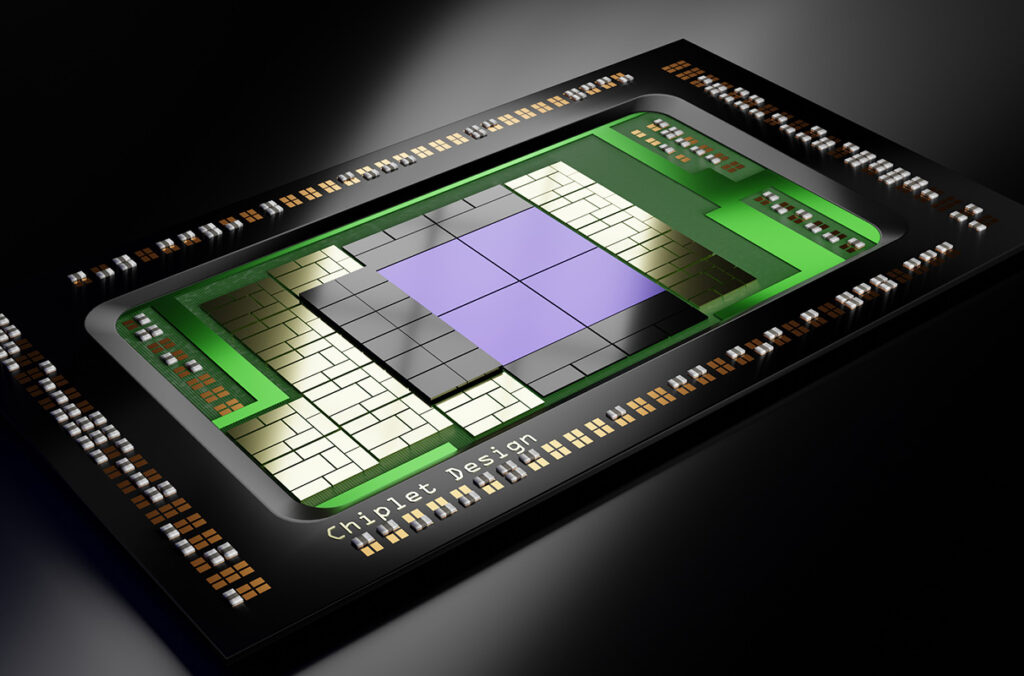
Pande’s research focuses on design and optimization of manycore chips and emerging multi-chiplet architectures. The work could improve energy efficiency of data centers and other enterprises that require high-performance computers.
At WSU, researchers in WSU’s School of Electrical Engineering and Computer Science also conduct research in circuits and systems of chip design, designing heterogenous, manycore architectures in machine learning, bioinformatics, and high-performance computing. The school has recently hired several new faculty members.
Working collaboratively between the public and private sector, the working group aims to seek out funding opportunities and increase research and workforce development.
“This is a great opportunity to bring Washington into a leadership role in semiconductor research and education,” said Pande.
The group aims to address some of the major challenges in computer chip manufacturing. Producing chips is costly, and the initial investment for companies to develop domestic manufacturing facilities is high.
Workforce development also has to be done at all levels of education, including at high school, community college, and the university level. The goal has to be to provide trained computer scientists and engineers as well as skilled technicians. Research, training and workforce development for semiconductors is also increasingly multidisciplinary, including researchers in materials science and physics.
“Both federal and state governments need to get involved with private industry,” said Pande. “To jump start chip manufacturing will require a learning curve.”