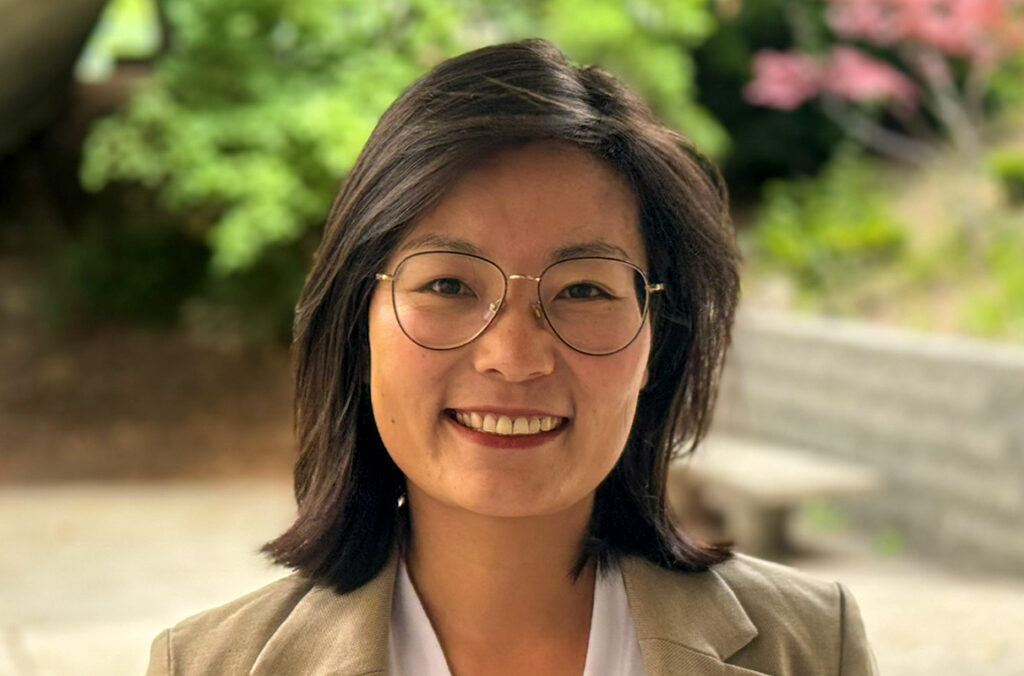
Tingting Li, an assistant professor of science education at WSU’s College of Education, Sport, and Human Sciences (CESHS), has been awarded a Spencer Postdoctoral Fellowship, one of only 25 given out nationwide this year.
The $70,000 fellowship, run by the National Academy of Education and funded by the Spencer Foundation, supports early-career researchers whose work has the potential to improve education in meaningful ways.
Li’s research focuses on how artificial intelligence (AI) can be used to help, not replace, classroom teachers.
Instead of treating AI as something that acts on its own, she sees it almost like a parter — one that needs to be carefully shaped by the knowledge, culture, and experiences found in real classrooms.
Her goal isn’t to blindly embrace new technology or reject it outright. Instead, she’s taking a middle path, pushing back against one-size-fits-all tech solutions and working to create tools that reflect the needs of diverse students and teachers. She focuses on making sure these tools are culturally relevant, language-friendly, and adaptable to different classroom settings.
We’re not building a tool to do the teacher’s job. We’re building a tool with teachers — something that learns from their input and augments their expertise.
Tingting Li, assistant professor of science education
Washington State University
Li said this is especially true when it comes to designing accessible science assessments that are fair, engaging, and aligned with national standards.
“There’s been a lot of buzz about generative AI lately,” Li said. “But in science education, we’re still facing some big challenges — like creating assessments that meet the Next Generation Science Standards and work well in diverse, real-world classrooms.”
Li’s project uses a large language model-based AI system that works alongside teachers to help them build better assessments. Unlike many tools that just focus on science content, this one also takes into account the classroom environment, student voices, and the language used to deliver lessons.
“We’re not building a tool to do the teacher’s job,” she said. “We’re building a tool with teachers — something that learns from their input and augments their expertise.”
CESHS dean Karen Thomas-Brown said Li’s work exemplifies the research mission and values.
“Dr. Li is an exceptional scholar dedicated to innovating in educational research and exploring the cutting-edge integration of technology, such as AI in K–12 and higher education,” she said.
The research will explore how teachers and students interact with the AI system, how their feedback shapes the tool, and how the process affects both teaching and learning.
Li hopes the work will lead to new ways of thinking about assessment — shifting from just testing what students know to using assessment as a tool for learning and growth.
“This fellowship is an incredible honor,” Li said. “It’s a chance to show that smart, practical tools can help teachers do their jobs better — not by replacing them, but by working alongside them in meaningful ways.”