The College of Education, Sport, and Human Science’s Learning and Performance Research Center (LPRC) recently hosted its 12th annual Methods Workshop, continuing its tradition of delivering advanced statistical modeling training to faculty and students across a wide range of disciplines.
Led by Educational Psychology Regents Professor and LPRC Director Brian French, the two-day event focused on intensive longitudinal data analysis — a methodology that allows researchers to better understand how individuals change over time in ability, behavior, or thought. From assessing daily attitudes toward school to examining treatment responses, the techniques taught at this year’s workshop offer new insights into time-sensitive data and personalized patterns of change.
“This year we learned about understanding how intensive longitudinal data analysis can assist in examining change over time to understand how a person changes on an ability, behavior, or thought,” said French. “The beauty is that the methodology brings together researchers from many areas. These topics cut across areas from psychology and health to economics.”
The beauty is that the methodology brings together researchers from many areas. These topics cut across areas from psychology and health to economics.
Brian French, Educational Psychology Regents Professor and LPRC Director
Washington State University
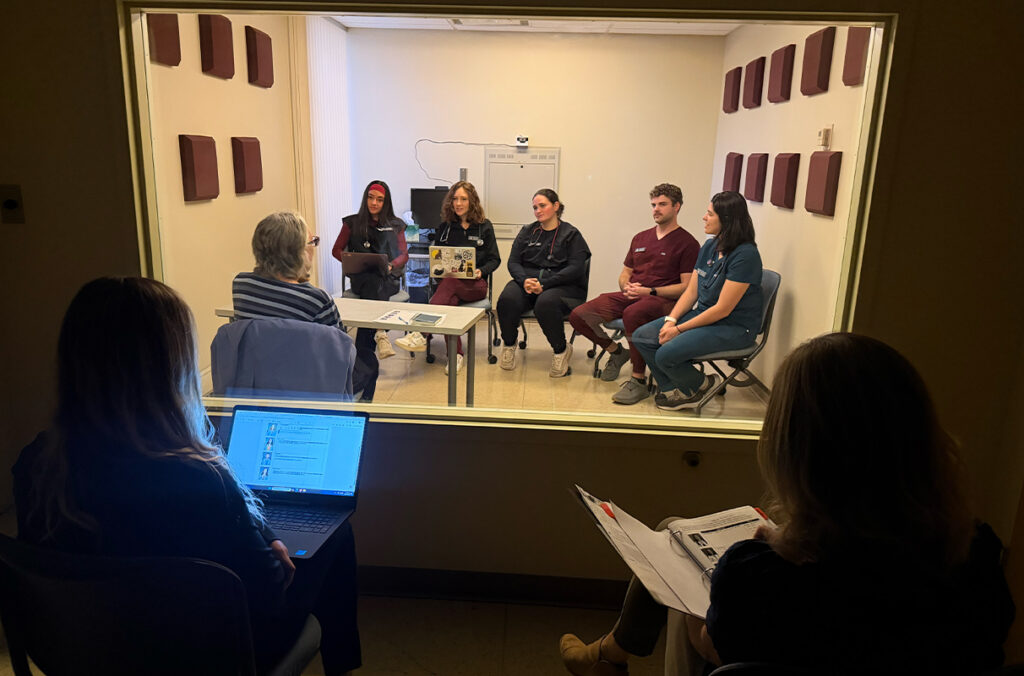
The workshop, which drew participants from WSU campuses in Pullman, Spokane, and Vancouver, represented a wide array of academic fields. Faculty and students came from the College of Education, College of Arts and Sciences, CAHNRS, the Edward R. Murrow College of Communication, and the Elson S. Floyd College of Medicine. Specific subfields included psychology, math and statistics, criminology, educational psychology, strategic communication, economic sciences, health, nursing, and extension youth and families.
In addition to lectures and hands-on sessions, the event fostered collaborative conversations among attendees, many of whom plan to integrate the methods into their own research and grant proposals.
“The conversations are engaging, and folks are using this information for their research, including grant writing,” French said.
The guest instructor for this year’s workshop was Daniel McNeish, a rising leader in statistical methods for longitudinal research. Attendees praised both the depth and accessibility of the content.
“That was a terrific workshop,” said Doug Weeks, faculty in Health Sciences. “Dan is pretty much a rising star and his command of methods of analysis for longitudinal data are amazing.”
Participants also expressed appreciation for the workshop’s design and impact.
“Thank you so much for organizing such a well-structured and extensive training program,” said Fahima Khanam, a communication graduate student. “It was incredibly helpful for me to learn new methods.”
Psychology student Talia Leman added, “I found this workshop to be invaluable.”
The annual Methods Workshop has become a hallmark event at WSU, previously featuring well-known scholars like Tracy Sweet and Gregory Hancock. This year’s iteration upheld the workshop’s reputation as a hub for methodological innovation and interdisciplinary exchange.
“Each year, we’re reminded that great research starts with great methods and methodology,” said French.