One of the challenges of adapting a book about a serial killer to the big screen in 1950 was that the moral codes of the time made it difficult to portray the story with the same violent and sexual realism a modern audience would expect.
And yet, as Washington State University students discovered in an Honors 280 class this spring, that didn’t mean early crime films were entirely PG. On the contrary, writers from the 1930s–50s harnessed the nation’s growing fascination with crime to launch film noir — a genre marked by a portrayal of evil and menace that wouldn’t be out of place streaming on Netflix today.
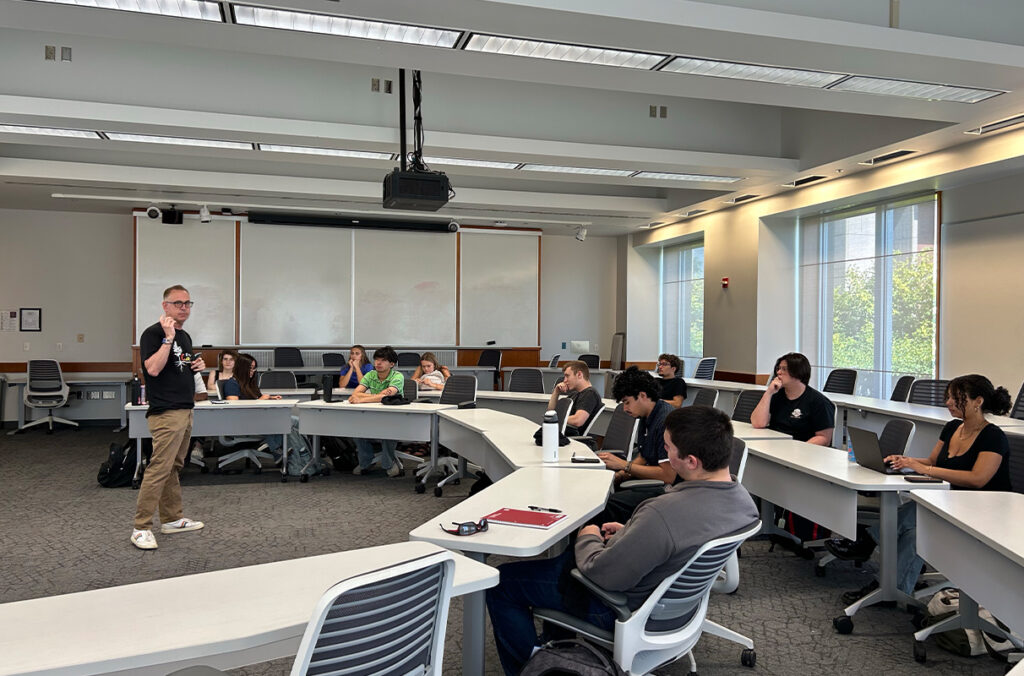
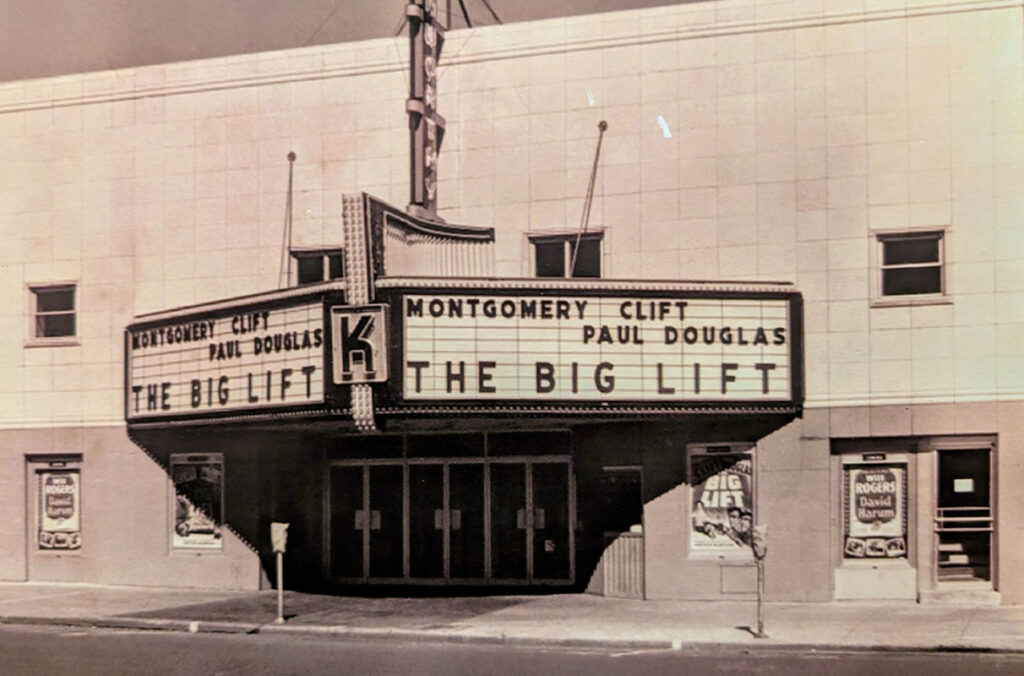
Students in the class, 20th Century American Crime Fiction, explored how noir novels and their screen adaptations reflected the cultural mood during three eras of instability: the Great Depression, World War II, and the rise of Cold War paranoia. They also had the chance to see one of the genre’s most unusual film adaptations — Nicholas Ray’s In a Lonely Place — at the historic Kenworthy Theater in Moscow, Idaho, where the film premiered in 1950.
It’s fascinating to watch historic noir fiction wrestle with psychological and cultural fault lines that still resonate in today’s cultural climate.
Colin Mannex, executive director of the Kenworthy and course instructor
“Intimations of sex, violence, and evil just beneath the surface are omitted visually in the film but conveyed through dialogue and innuendo in a way that often catches students off guard,” said Colin Mannex, executive director of the Kenworthy and the instructor of the course. “It’s fascinating to watch historic noir fiction wrestle with psychological and cultural fault lines that still resonate in today’s cultural climate.”
The class traced noir’s deep psychological undercurrents in novels such as Double Indemnity by James M. Cain and The Talented Mr. Ripley by Patricia Highsmith. But it was Dorothy B. Hughes’ In a Lonely Place that gave students the most startling window into the genre’s darker possibilities — and its limitations on screen.
Hughes’ 1947 novel follows a charming but deranged serial killer hiding in plain sight in postwar Los Angeles. A feminist twist arrives when a whisper network of women ultimately brings him down.
In Ray’s film version, the killer becomes a brooding screenwriter (played by Humphrey Bogart) who may or may not have committed a murder.
“It’s both an adaptation and a metafictional response,” Mannex said. “The movie becomes a commentary on the impossibility of adapting this story within the moral constraints of Hollywood.”
For Mannex, who holds an MFA in dramaturgy and has spent years studying cinema and pop culture, these tensions between book and film are precisely the point. “You start with Depression-era anxieties about masculinity, and then you watch those themes mutate in the 1940s and ’50s,” he said. “The private eye and the loner criminal both move fluidly through different social strata — they’re outsiders with power, which makes them fascinating and dangerous.”

Mannex said his hope was that students would leave the class with a greater ability to sustain deep attention through reading and develop independent, critical thinking in their writing — skills he sees as increasingly rare in the age of AI and digital distraction. Ultimately, he wanted the texts to spark genuine engagement — “just fun,” as he put it.
The Kenworthy screening served as both a class event and a historical callback. The theater, after all, has its own noir-worthy past. In the early 1950s, its founder, Milburn Kenworthy, was held at gunpoint during a weekend box office robbery — by a 19-year-old who had been casing the place from a hotel window across the street. Kenworthy escaped his bindings using his pipe, flagged down a taxi, and helped chase the thief down. The kid was caught, convicted, and later pardoned.
Mannex plans to offer the class again, though perhaps not every year. “Teaching this kind of seminar, especially for honors students, takes a lot of energy,” he said. “But it’s worth it when you hear students talking about the books before you even walk in.”
As for his recommended reading: Mildred Pierce.
“It’s not a crime novel, but it got rewritten into one for the screen,” Mannex said. “That tension — between what the author wrote and what Hollywood needed — is where the most interesting stuff happens.”