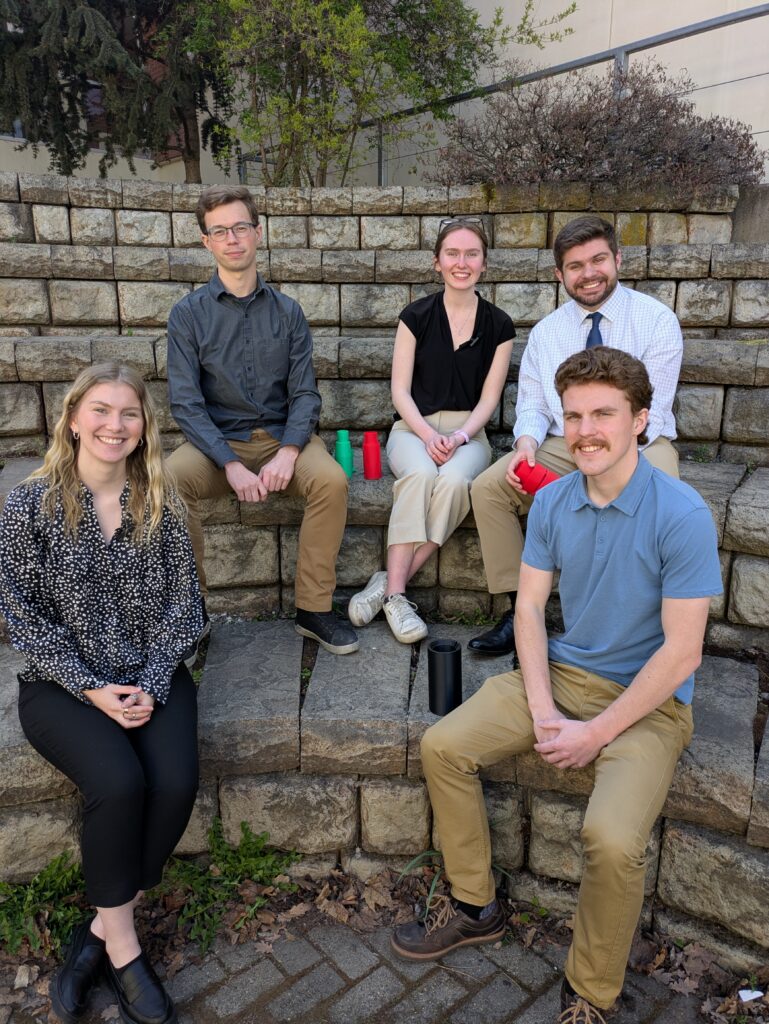
A team of Washington State University students is one of 12 groups from around the U.S. who were selected by NASA as finalists in the 2025 Human Lander Challenge.
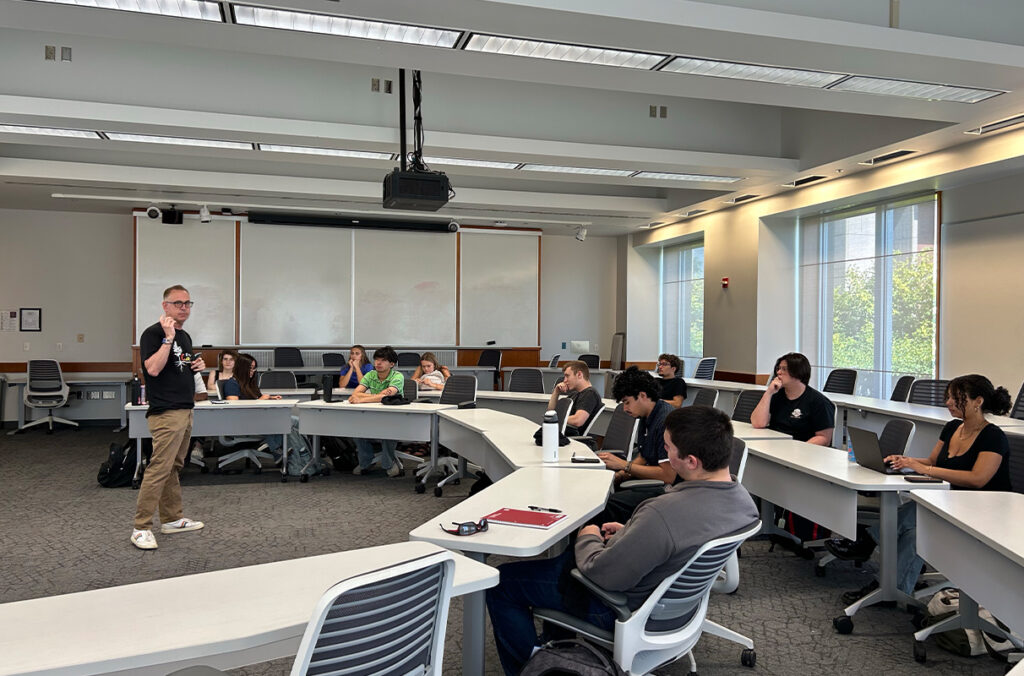
The team, made up of seniors in the School of Mechanical and Materials Engineering, are tasked with developing solutions for storing and transferring super-cold liquid propellants that are needed for long-term space exploration. The WSU team is designing a coupler, or a connector, for transferring liquid hydrogen. They received a stipend and will travel to NASA’s Marshall Space Flight Center in Huntsville, Alabama in June to present their work.
“This has been the coolest experience ever,” said Reagan Dodge, who has worked on the project since the fall. “It’s the first step toward the moon for us and the start of a really exciting career. It is an incredible opportunity.”
The NASA competition aims to inspire and engage the next generation of engineers and scientists, according to a NASA press release. The human landing systems being developed by NASA aims to transport astronauts and, later, cargo from lunar orbit to the surface of the moon. The WSU team is the second group in the past four years who have become finalists at a national NASA competition. In 2021, WSU students won the top honor at a NASA competition for their project to clean lunar dust from spacesuits.
As part of the competition, the students were invited to develop in-space cryogenic, or super cold, liquid propellant, storage, and transfer systems. Cryogenic fluids, like liquid hydrogen or oxygen, are needed for long-duration space travel and have to be kept at extremely cold temperatures to remain liquid. Currently, cryogenic liquids can only be stored for relatively short periods of time as they tend to leak and boil off.
Dodge and teammate Alexis Williams both have an interest in hydrogen research and future careers in aerospace. They learned about the competition and began working on it through their work in WSU’s Hydrogen Properties for Energy Research laboratory.
“Hydrogen offers a really cool opportunity for spaceflight,” said Dodge. “It is the vehicle for getting us to space.”
Hydrogen can also serve as a renewable energy source on Earth, said Williams. When it’s produced renewably, hydrogen can be used in industries that currently rely solely on fossil fuels, such as aeronautics and heavy-duty trucking.
The students have been advised by Jake Leachman, professor, and Emily Larsen, assistant professor in the School of Mechanical and Materials Engineering. In January, they brought their work into their senior capstone project, adding three students to the project.
“Once we had five people instead of two, we were able to narrow down our idea to what we believe will produce a functioning coupler, and we have solidified that design,” said Williams.
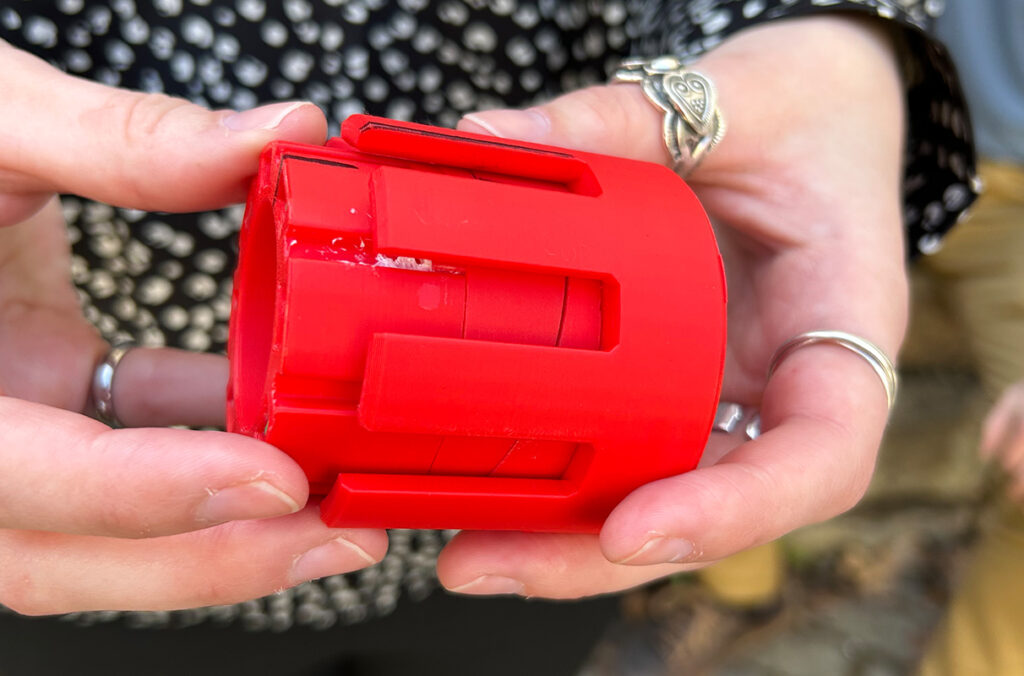
The coupler the students developed uses a novel polymer sealing technology to create a seal on the coupler, allowing for a quick connecting and disconnecting mechanism without having to purge the entire transfer line.
“You can do transfers quickly and safely without the added cost of purging and the excessive leakage that causes your hydrogen to boil off,” said Dodge.
Their coupler also uses a new aluminum composite that can be printed on a 3D printer. The material is one-third less dense than stainless steel, which is traditionally used in cryogenics, and is able to match the thermal properties of stainless steel without becoming brittle, which is a problem with a lot of lighter materials.
“We can make more complex geometries at a lower cost when manufacturing,” said Dodge.
Their coupler is going to be scalable, so depending on the industry, it could eventually be used for a variety of purposes, such as filling a hydrogen gas tank in heavy-duty trucking.
“I think it’s a really big component that the industry doesn’t have a firm grasp on yet,” said Williams. “When we create a coupler that will allow for these quick connections that are also safe, it can open doors to a lot of industries.”
So far, the students have 3D printed plastic prototypes to check the functionality of their mechanisms. They will test the aluminum composite prototype with liquid nitrogen later this year.