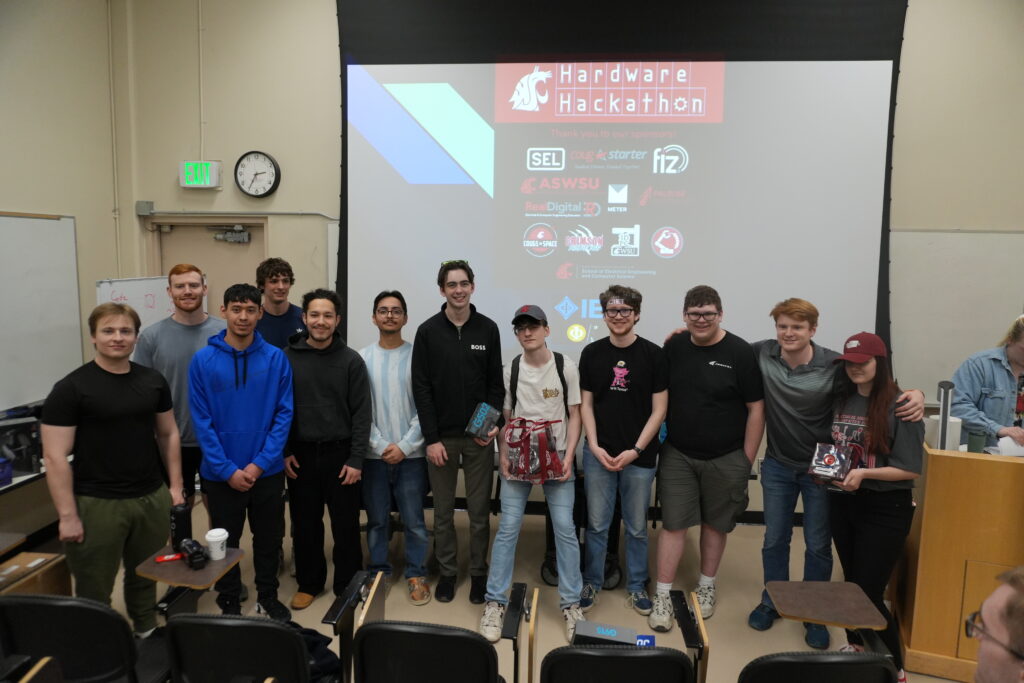
More than 130 engineering students recently worked for 24 hours straight to create game gadgets as part of Washington State University’s Hardware Hackathon.
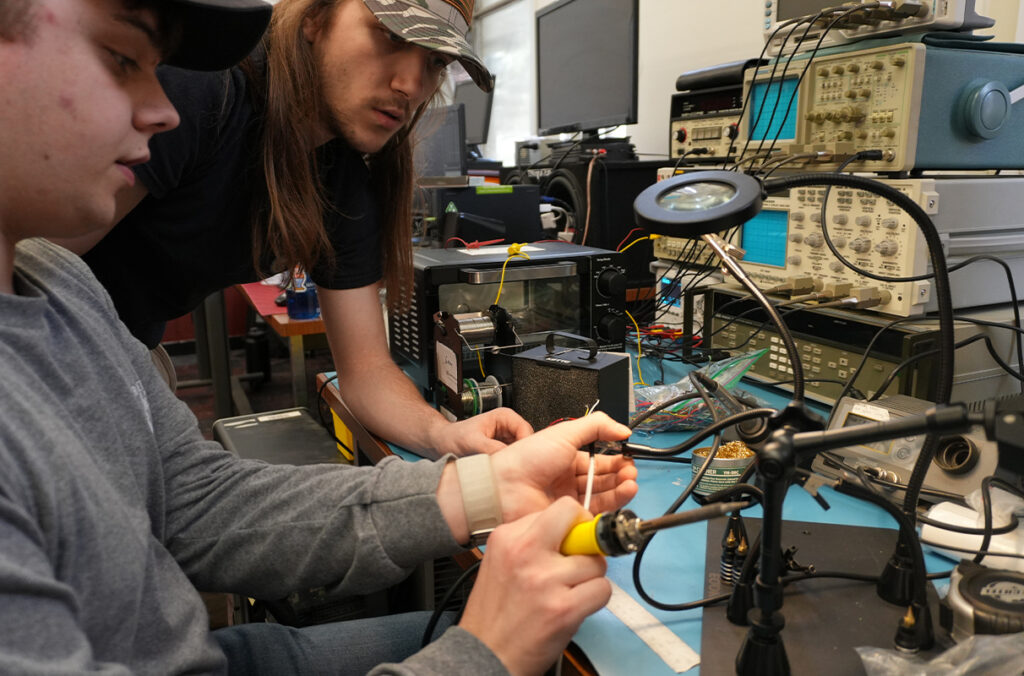
Sponsored by WSU’s student chapter of the Institute of Electrical and Electronics Engineers (IEEE), the hackathon, which took place March 29–30, was made up of over 30 teams who were tasked with creating a project using electronics, components, materials, and tools. They had 24 hours to build and write code and build their projects.
Gilen Garcia and Anthony Johnson, the lead organizers and students in the School of Electrical Engineering and Computer Science, were inspired to bring the event back after the COVID-19 pandemic brought it to a halt.
“While the club was moving offices, we saw all these pictures of people’s projects that they did in the past,” said Johnson. “We just really wanted to recreate that environment for people and give students a space for 24 hours of project building and mentorship.”
We just really wanted to recreate that environment for people and give students a space for 24 hours of project building and mentorship.
Anthony Johnson, student
Washington State University
The students created a variety of inventions. One team made a racing simulator glove that translated hand motions into steering a car in a custom game. Another group created an automated dice roller with a webcam and website that allowed players to pick custom dice and calculate rolling odds.
Engineering mentors from Schweitzer Engineering Laboratories (SEL) and METER Group helped out at the event, and WSU student clubs also offered their working space, tools, and equipment for the participants. Donations and sponsors such as ASWSU, Coug Starter, and local businesses also helped this event come to life.
“It is always good to try something new even though it is intimidating,” said Garcia. “Anthony and I and other volunteers are there answering questions and helping out. You do have a lot of time and even if you don’t finish it is still a great learning experience.”
After the competition, all teams presented their project in front of a panel of judges that included SEL engineers and WSU faculty. Winning teams were awarded prizes at the closing presentation.