Sometime this year a manufacturing plant in India will begin producing corrugated bamboo panels developed at Washington State University.
The panels are durable, affordable, and sustainable, but best of all for people living in very hot climates, they reduce indoor temperatures by 7 degrees compared with typical metal or concrete roofing materials.
A team of researchers at WSU’s Composite Materials & Engineering Center developed the panels in partnership with Ocean, a Tacoma startup founded by Alexa Bednarz.
Bednarz managed global health programs at the Gates Foundation. Working in Delhi, India, she learned how building materials affect living conditions, especially among the very poor.
“I realized roofing was a big pain point, and if you could develop a roof that could keep people cooler, last longer, is quieter and more sustainable, there was an opportunity there,” she said.
I realized roofing was a big pain point, and if you could develop a roof that could keep people cooler, last longer, is quieter and more sustainable, there was an opportunity there.
Alexa Bednarz, founder
Ocean
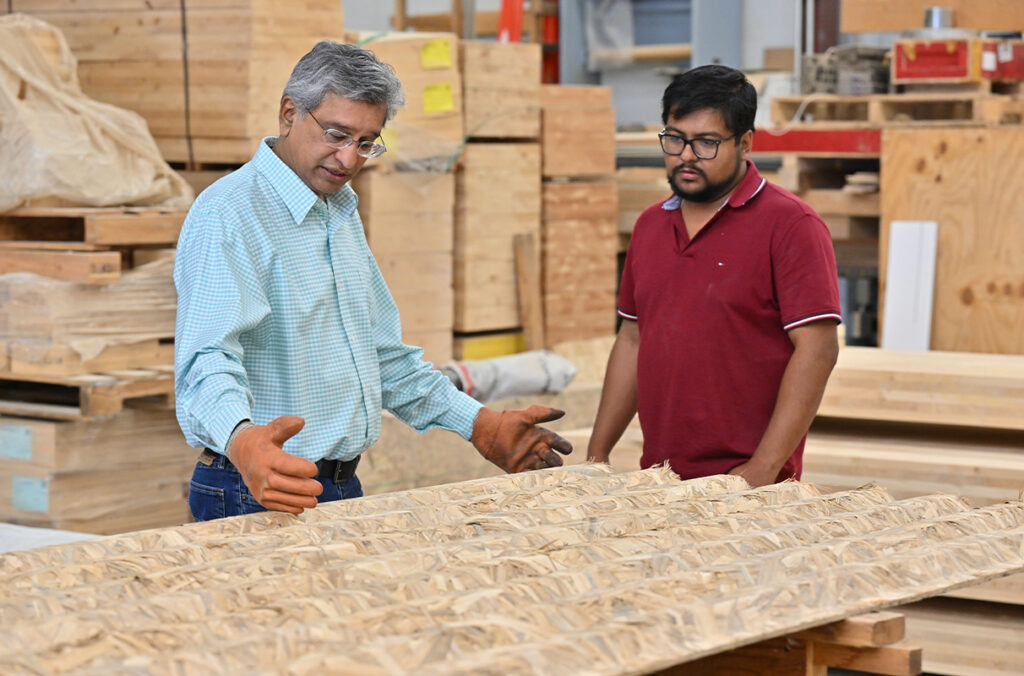
She knew that roofing made from fast-growing bamboo existed, but also knew it needed improving. So she approached Vikram Yadama, director of the Composite Materials & Engineering Center (CMEC) at WSU, who has long experience in creating building products from natural fibers.
“I explained the technical challenges and parameters we needed to innovate on, and asked him if it was possible,” Bednarz recalled. “He said yes.”
Ocean, which was previously named Eco-Shelter, has received $1.8 million in National Science Foundation grants to support the work in collaboration with WSU. Bednarz also landed $1.8 million in angel investments last fall.
Yadama said Ocean has leased a location in India and is assembling equipment for the plant. The goal is to begin production this fall.
“It’s going to happen,” he said. “While we’re doing all that we’re continuing to make panels at CMEC and do further testing and development. We’re looking at roofing panels, but we’re also looking at siding and structural wall panels, and evaluating different kinds of coating and adhesives.”
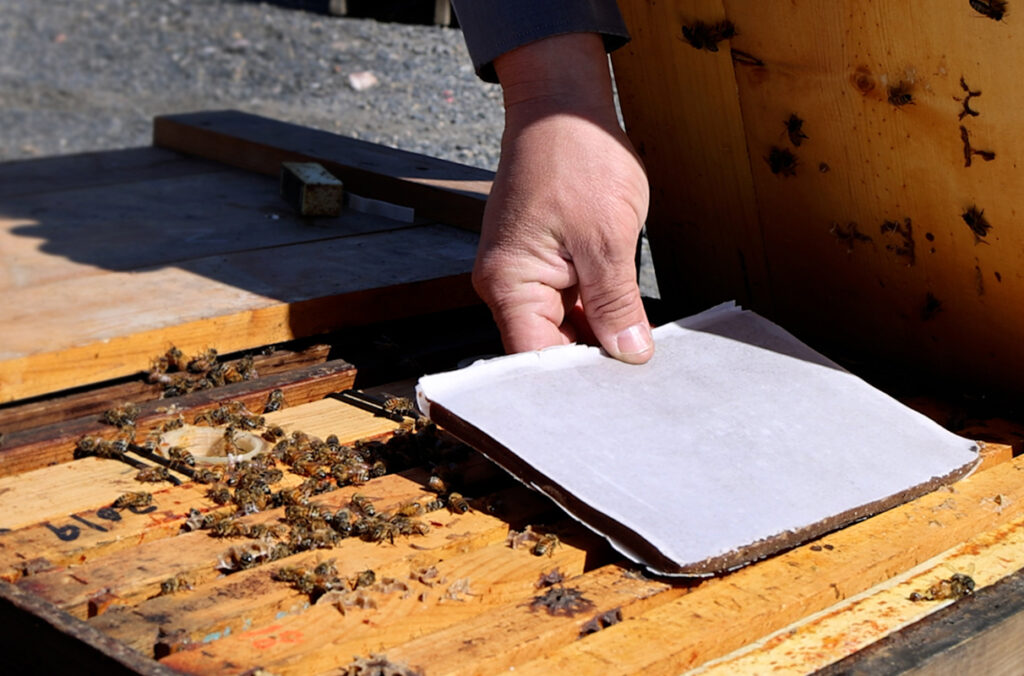
The panels are made of bamboo fibers that are pressed and glued together. The result is a panel that’s weather-, moisture- and fire-resistant.
Manufacturing will remain in India, but Bednarz and Yadama envision Ocean panels being used in interior and exterior applications worldwide eventually. “It’s very desirable for high-end, sustainable architecture,” Bednarz said.
The company’s new name, Ocean, says it all: “At the core of our mission has been and is a connected humanity. We just so happen to connect people through their built environment. Ocean embodies this core value of connection.”