Tommy Moore left Texas in 1939 for the Pacific Northwest because he wanted to do more than pick cotton. The 19-year-old found work in a Seattle restaurant, then in 1943, after hearing about good-paying jobs at Hanford, Moore landed a job on a railroad survey crew. Blacks like Moore who left the Jim Crow South to work on the Manhattan Project soon discovered they really didn’t leave its segregationist laws behind, however.
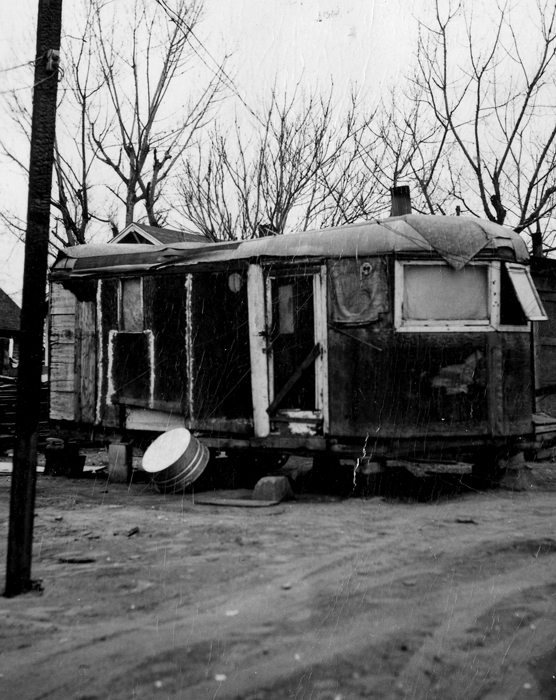
At Hanford, the work crews, barracks, mess halls, bathrooms, housing, restaurants, businesses, and neighborhoods were all segregated. Blacks and Asians were forced to live in east Pasco. Kennewick was a sundown town banning Blacks after dark, and Richland became a segregated white bedroom community because Hanford’s contractor, DuPont, wouldn’t hire Blacks for permanent positions.
When the work on the railroad survey crew ended, Moore enlisted in the Army, where the barriers of racism were not much different than life at Hanford. After the war, Moore returned to Pasco with the dream of starting his own business, but little if anything had changed in the Tri-Cities.
Moore’s story is now documented as part of the Hanford History Project, thanks to the work of his son Leonard Moore and Leonard’s wife Vanessa Mitchell Moore, as well as two history professors at Washington State University Tri-Cities, Robert Bauman and Robert Franklin. Nearly 20 years ago, the Moores initially led the effort, conducting interviews with Blacks who worked on the Manhattan Project at Hanford, capturing for posterity their contributions and the challenges they faced. The Moores also helped found the African American Community Cultural Education Society in Pasco.
“It was important to us to tell the stories of our fathers and those African Americans who came here during that time,” said Vanessa Moore, whose father also came from Texas to work at Hanford.
WSU Professors Bauman and Franklin used these histories, along with other research, in developing their second book on Hanford history, Echoes of Exclusion and Resistance: Voices from the Hanford Region (WSU Press, 2020), in which they assert that the Tri-Cities area during World War II had a system of segregation similar to that of the Jim Crow South caused by a combination of federal policy, racism among local White residents, and an influx of Southern White migrants to the area.
“Segregation and discrimination against Blacks were pervasive across the country in varying degrees and this can be seen in the infrastructures of many cities across the country,” said Franklin.
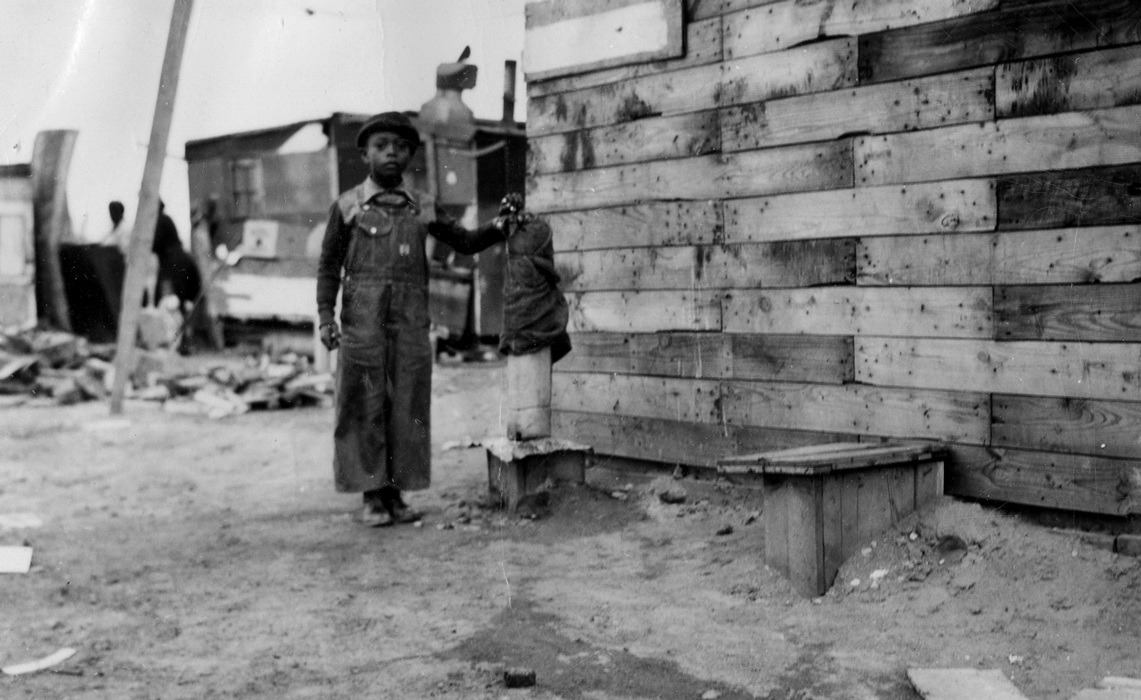
In Pasco, for example, train tracks separate Pasco from east Pasco, where the Black and Asian population lived. For decades, residents had to wait for long, slow trains to roll by before they could cross to access services and businesses in Pasco.
The Lewis Street Underpass was built to allow east Pasco residents to get to the town’s businesses, alleviating those long waits. However, because the underpass was for decades the only means by which Black and Asian residents could leave east Pasco — a neighborhood perceived to be literally on the wrong side of the tracks — it also became a symbol of segregation. Of course, the larger example of infrastructural racism was the railroad tracks itself, as well as the decision to designate east Pasco as an isolated non-White space in the 1880s for the purpose of housing the very people who were building that railroad.
When the underpass was recently slated for demolition, Franklin sought to document it as an example of how the built environment can be wedded to segregation and discrimination.
“The Lewis Street Underpass is an undeniable example of infrastructure racism,” said Franklin. “And while the underpass made it easier for east Pasco residents to get to Pasco, even its dark, dank, and smelly walkways — smelly from stagnant runoff water — might also be considered another form of infrastructure racism.”
This gave Franklin the idea for a WSU architecture/history course. He contacted his friend Phil Gruen, a WSU architecture professor in Pullman, suggesting, “Let’s teach architecture students who are going to go out in the world and practice to look at underrepresented communities and at how architecture and infrastructure shapes those communities.”
After weeks of course readings and discussion about the marginalized populations of east Pasco, 21 architecture students and two history students from WSU Pullman spent time in the Tri-Cities, where they encountered the built consequences of racism.
That idea became the spring 2024 “Issues and Architecture” graduate course co-taught by Gruen and Franklin at WSU Pullman, examining how racism and discrimination have shaped and continue to shape the built environment in communities. After weeks of course readings and discussion about the marginalized populations of east Pasco, 21 architecture students and two history students from WSU Pullman spent time in the Tri-Cities, where they encountered the built consequences of racism.
“It was an opportunity for WSU students to not only hear from community members in east Pasco, but it was also a chance for these students to confront real-life urban conditions,” Gruen said. “Tackling on-the-ground conditions by seeing them in person is part of our land-grant institution’s mission.”
The course was supported by a combination of private and government funding, including a National Park Service grant and a gift from ALSC Architects in Spokane.
Franklin and Gruen wanted students to consider the role Pasco’s infrastructure played in furthering discrimination and how that discrimination contributed to the marginalization of east Pasco, the most economically disadvantaged area in the Tri-Cities.
Students incorporated information they learned on-site as they completed projects highlighting Pasco’s legacy of segregation and discrimination. Projects included a digital walking tour, historical essays, design concepts, and a story map. Students have sought community feedback on their projects, which will eventually be incorporated into an app and website for the National Park Service (available to the public), which has funded this work as well as the work of the Hanford History Project.
Before the study tour, Rae Hendricks, an architecture student originally from Richland, said she hadn’t connected the dots between the racial history of the Tri-Cities and modern architecture.
“As a future architect, I hope to speak and address important topics that others may be inclined to ignore due to their sensitive nature,” she said.
Said Gruen, “The hope is that our students will go on to create a better future of built environments free from discrimination and barriers designed to separate people from the rest of our society.”
Learn more
See some of the work developed by students in the course by visiting the Hanford History project website.